



Euthanasia prevention advocates say a B.C. government document that discourages strictly applying oversight measures for medical assistance in dying (MAID) providers who commit infractions raises questions about the system’s ability to protect ineligible patients.
Alicia Duncan, a euthanasia prevention advocate whose mother died via MAID in B.C. in 2021, says oversight must protect individuals from “unlawful death” rather than “shield providers from scrutiny.”
The document notes that up to that date, the B.C. MAID Oversight Unit lacked a formal oversight policy, with decisions about the need to refer MAID case files to police or professional colleges made on a case-by-case basis. It says MAID providers were concerned the referral process was “not transparent” and didn’t ensure administrative fairness.
“Transparent, objective, and consistent oversight is required to ensure that public confidence is maintained,” reads the 2023 decision briefing note, which was reviewed by The Epoch Times.
“At the same time, oversight should provide opportunities for education or warning depending on the severity of an infraction, as overly strict or severe use of referrals to law enforcement or professional colleges may discourage physicians or nurse practitioners from providing MAiD despite high demand.”

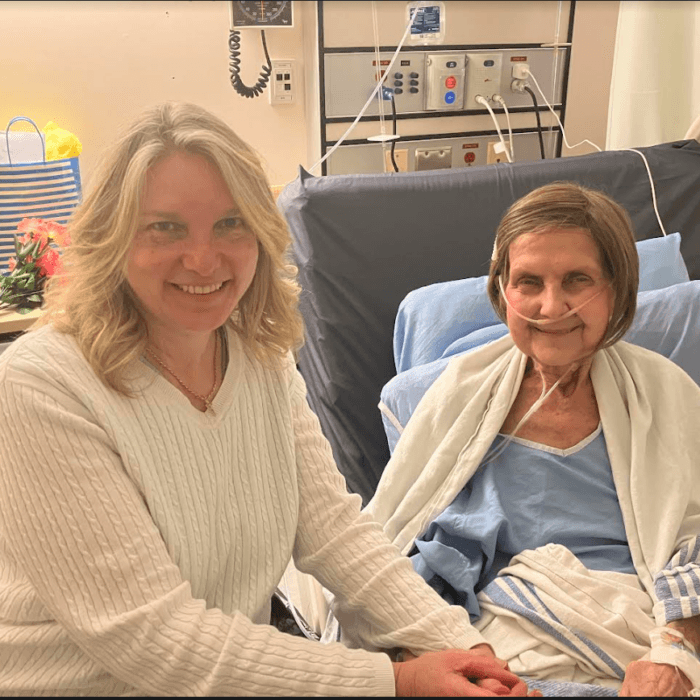
Duncan says the document’s recommendation against the strict use of referrals for MAID providers for non-compliance raises concerns about the reliability of the system’s safeguards.
“Families and patients have a right to expect that MAiD assessments are meticulous and that any doubts are referred to police, coroners, or medical colleges rather than filtered by conflicted civil servants,” she told The Epoch Times in an email.
“If we cannot trust these safeguards to function, then we cannot trust the system itself.”
The B.C. health ministry acknowledged receipt of a media request from The Epoch Times but did not respond by publication time to questions about whether a formal oversight policy has been adopted or what the government’s position was on concerns regarding a lack of oversight. The ministry told The B.C. Catholic that it doesn’t investigate wrongdoing but rather reviews documentation submitted by MAID providers to ensure compliance with regulations.
It added that while the B.C. MAID Oversight Unit may follow up to clarify missing or incomplete information, it doesn’t determine misconduct or impose disciplinary action. In rare circumstances, the unit may refer cases to the police, but such cases are only reserved for “the most serious compliance issues” and not just cases that “represent allegations of misconduct,” the ministry said.
The B.C. MAID Oversight Unit took over MAID accountability from the B.C. Coroners Service in November 2018. Federal legislation and regulations determine eligibility criteria as well as monitoring and reporting requirements for MAID, while oversight is left to the provinces and territories.
A Case of Non-Compliance by a MAID Provider
Among the documents obtained by The B.C. Catholic through its FOI request is another decision briefing note approved by the B.C. deputy health minister on Jan. 27, 2021, which describes a case involving a MAID provider who may have contravened the Criminal Code.It says that a MAID physician reported a death to the Oversight Unit but failed to include a second assessment by another assessor confirming the patient’s eligibility for euthanasia as per requirements. After the Oversight Unit sought clarification, the physician acknowledged there was indeed a second assessor who had made a “conclusion of ineligibility” for euthanasia, but that he or she assumed the assessor “had made an error” in that conclusion and proceeded with providing MAID anyway. Because of a redaction, it is unclear what the cited error might have been about.
The B.C. MAID Oversight Unit also found additional issues with the physician’s documentation of the case, contravening the regulatory college’s practice standards.
The 2021 briefing note says the physician potentially violated two sections of the Criminal Code and recommended the case be referred to both the police and the regulatory college for investigation.
It also says that, up to that point, referrals in the province had been handled on a case-by-case basis, raising concerns about the absence of a structured policy for referring cases of MAID provider non-compliance.
Reporting Errors and Referrals
In 2023, B.C.’s MAID Oversight Unit recorded 2,833 reporting issues involving MAID providers and pharmacists who dispense substances for euthanasia, according to additional information obtained through the FOI request.Of those errors, 485 involved MAID eligibility criteria, including mistakes in forms completed by assessors and prescribers, such as missing signatures or dates, incomplete follow-up on eligibility questions, or partially completed assessments. In particular, there were nearly 90 reporting errors that year concerning the conclusion on a patient’s eligibility for assisted death.
According to the documents obtained under the FOI, the number of non-compliance cases that the oversight unit has referred to police or regulatory colleges amounts to 24 since November 2018 and as of July 2024, including 22 referrals to regulatory colleges and 2 to law enforcement. This represents less than 0.2 percent of the total cases reviewed by the unit.
“Despite [the] high rates of euthanasia and the often questionable circumstances under which it is carried out, not a single doctor has been prosecuted in Canada,” she told The Epoch Times. “A patient is a person who needs someone to be their advocate, and it is never in a person’s interest to be killed.”
Jack Fonseca, director of political operations at Campaign Life Coalition, a pro-life non-profit, says the limited investigation into potential non-compliance—highlighted by the low number of referrals despite a high volume of reporting errors—demonstrates a lack of “strict safeguards.”
He says the province should implement a more rigorous process to enable criminal prosecution of MAID providers found to have violated the Criminal Code.
“Serious jail time is needed,” he told The Epoch Times. “This would send a strong message to every other euthanasia provider in B.C. that they’d better start taking the law seriously from here on out.”


