The number of 7-year-olds with very poor reading skills has doubled since the COVID-19 pandemic, new research has found.
The attainment gap between Year 3 and 4 pupils eligible for free school meals and their peers is wider than before the lockdowns, NFER found.
The research—funded by the Education Endowment Foundation (EEF)—followed more than 6,000 pupils who were in Reception and Year 1 in March 2020 when the first set of school closures took place.
It tracked the estimated “COVID-19 gap” and “disadvantage gap” over time, with the most recent assessment in spring 2023, to gain an understanding of pupils’ attainment as a result of the pandemic.
The data suggest that in spring this year there was no significant difference in Year 3 pupils’ reading and Year 4 pupils’ maths performance compared to the pre-pandemic pupil sample.

For both reading and maths, in Years 3 and 4—where pupils are aged 7 to 9, the COVID-19 gap significantly reduced compared with spring 2021 and spring 2022, according to the report.
But the study found that Year 3 and 4 pupils eligible for free school meals were estimated to be around seven months behind their more well-off peers for reading in spring 2023.
Behaviour Challenges
Meanwhile, the disadvantage gaps for maths in spring 2023 for Year 3 and 4 were estimated to be around six months, which is significantly down on spring 2021 but still wider than gaps before the pandemic.Ben Styles, head of classroom practice and workforce at NFER, said there should be a greater focus on very low-attaining pupils and closing the disadvantage gap.
“Schools have been working tirelessly following the pandemic to put strategies in place to support pupils’ learning recovery,” he said.
“Our evidence suggests there should be a greater focus on very low-attaining pupils and closing the disadvantage gap. It is essential that schools are both adequately funded and supported to do so using evidence-based approaches. This will be required over the long term.”
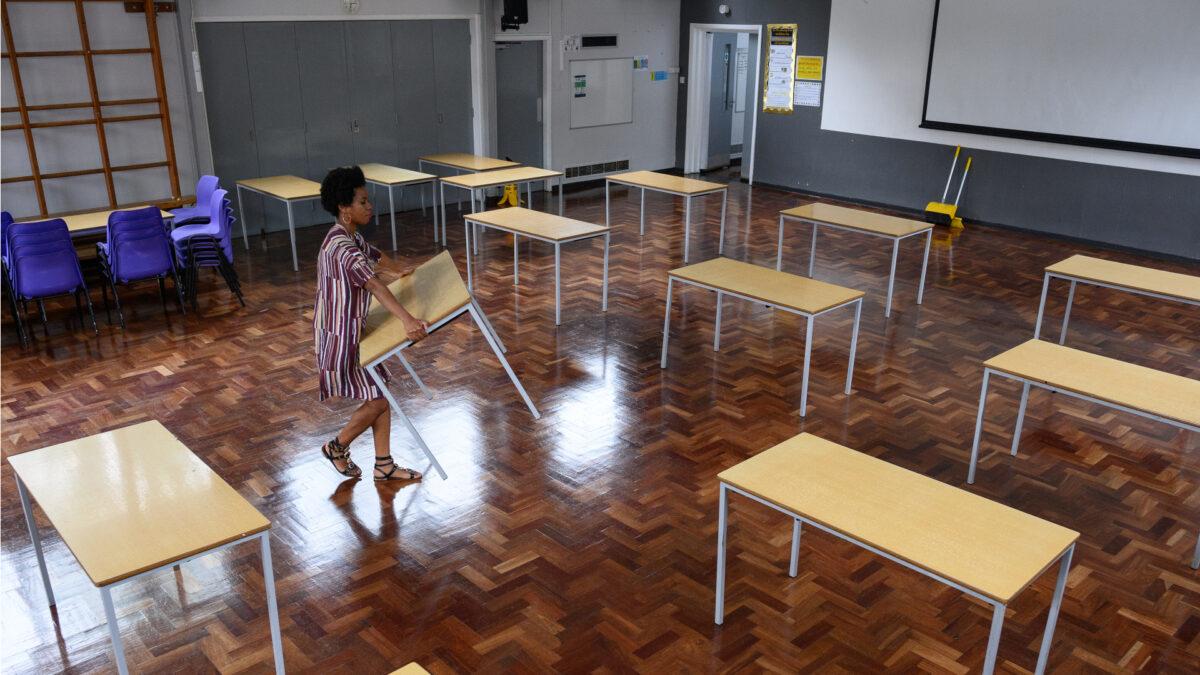
Schools that reported disruption to learning gave the most common reason as being related to pupils’ behaviour and well-being, a much more commonly reported challenge than in previous years.
They also reported “insufficient funding” to support pupils who had missed learning, the report said.
Paul Whiteman, general secretary for school leaders’ union NAHT, said the research shows more work needs to be done with a “real focus” on pupils from disadvantaged backgrounds so that the attainment gap is narrowed.
“This will require significant effort and resources,” he said.
Cost of Living
Geoff Barton, general secretary of the Association of School and College Leaders , said it was clear children from disadvantaged circumstances have been severely impacted by both the pandemic and the more recent cost-of-living crisis.“Although they are doing everything they can to help all children succeed, primary schools are particularly poorly funded and the disadvantage gap will continue to persist unless there is significant, targeted intervention,” Mr. Barton said.
Responding to the NFER findings, a Department for Education spokesperson said: “We’re pleased to see that pupils are continuing to catch up on learning following the pandemic.
“We have made £5 billion available since 2020 for education recovery initiatives, which have supported millions of pupils in need of extra support.
“We are also supporting disadvantaged pupils through the pupil premium, which is rising to almost £2.9 billion in 2023–24, the highest in cash terms since this funding began.
“This is on top our ongoing £10 million Behaviour Hubs programme and £9.5 million for up to 7,800 schools and colleges in to train a senior mental health lead.”