Kyiv targeted the Moscow region with 400 drones overnight, as part of Ukraine’s ongoing assault on Russia’s oil and logistical infrastructure.
Moscow Mayor Sergei Sobyanin said in a post on his Telegram channel on July 20 that more than 400 “enemy drones” were launched at the region between 8:30 p.m. on July 19 and 5:00 a.m. the following day, local time.
“Most were neutralized by air defense forces on the distant approaches,” Sobyanin said, adding that 85 drones were destroyed on their approach to the Russian capital.
Moscow’s regional governor, Andrei Vorobyov, said in a Telegram post that 10 people had been wounded in the drone attacks in Domodedovo, Odintsovo, and Podolsk, including one child.
Ukrainian President Volodymyr Zelenskyy said in a July 20 post on X that his forces had struck an oil depot and logistical facilities in the region of the Russian capital.
Zelenskyy said the strikes were carried out by Ukraine’s Unmanned Systems Forces, alongside Special Operations Forces, Ground Forces, and the intelligence services.
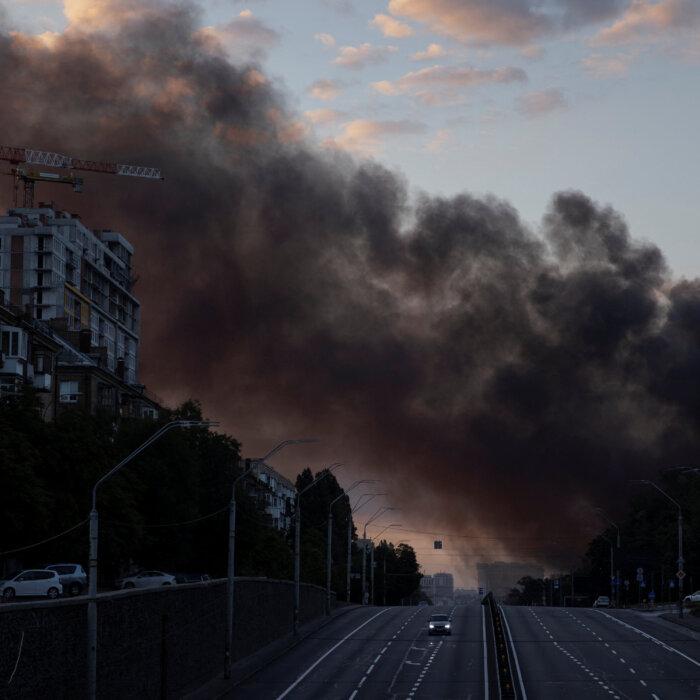

Ukrainian forces also hit two shadow fleet tankers and four cargo ships in the Black Sea, he said.
“We are responding, justly, to every Russian strike against our cities and communities,” Zelenskyy said. “This war must be brought to an end, and that is only possible by increasing the pressure on the sole cause of this war – Russia.”
Ukraine Targets Russian Infrastructure
Ukraine hopes to cut off supplies to the Russian armed forces through strikes on oil facilities, as well as by hitting military targets.
Last week, the Ukrainian military said it struck two major oil facilities in Russia, including a petrochemical giant hundreds of miles away from the front line, using long-range drones.
Overnight on July 14, Ukraine said it had struck the Gazprom Neftekhim Salavat oil refinery complex in the Republic of Bashkortostan, Russia, about 870 miles from the front line. It is one of the largest oil refining and petrochemical complexes in the Russian Federation, producing about 10 million tons of oil per year and processing gasoline, diesel, and other oil products for both the Russian economy and military purposes.
Russian Strikes on Ports
Russia has also increased strikes on deep-water ports in southern Ukraine, including ones that handle much of the country’s shipment of critical cargo, such as grain.
The Russian defense ministry said on July 20 that overnight, forces struck the port of Odesa, targeting fuel and lubricant storage tanks intended for Kyiv’s military, according to Russian state-run news agency TASS.
Ukrainian officials said on July 19 that Russia had hit an international cargo vessel in the Black Sea off the coast of Odesa, killing five of its 17 crew members.
Ukrainian Prime Minister Sergii Koretskyi said the Guinea-Bissau-flagged ship had left port carrying a shipment of corn.
Acting Ukrainian Minister of Foreign Affairs Andrii Sybiha said in a July 19 post on X that the crew included Indian and Syrian civilians, confirming that one Ukrainian crew member was killed.
On July 18, one person was killed when Russian forces attacked port infrastructure in Odesa, hitting a vessel under the flag of Antigua and Barbuda. The day before, three people were killed during Russian strikes on Odesa and Mykolaiv.
Both Russia and Ukraine say that they do not deliberately target civilian populations or infrastructure.