
A jury at London’s Old Bailey court on July 8 convicted Nii Mensah, Jakeem Rose, and Ugnius Asmena of aggravated arson with intent to endanger life. They had denied the charges. A fourth man, Paul English, 61, was acquitted.
Jurors were told that the attack was orchestrated by Dylan Earl, 20, and Jake Reeves, 23. Both had already pleaded guilty to aggravated arson and offenses under the National Security Act 2023, which created new measures to combat political interference, espionage, and working for foreign intelligence services. The fire caused about £1 million ($1.35 million) in damage to the industrial unit in Leyton, east London.
Prosecutors said the gang planned to carry out arson attacks on two other businesses in the upscale neighborhood of Mayfair in central London.
The jury heard the targets were a wine shop called Hedonism and a restaurant called Hide, which were both owned by a wealthy Russian dissident who had criticized Russian President Vladimir Putin and the war in Ukraine.

Prosecutors said the tycoon, who wasn’t named, had also driven aid trucks from Britain to Ukraine.
Mensah, 23, live-streamed the arson on his phone as he and Rose, 23, set fire to the building, while Asmena, 20, waited in a car, jurors heard.
Prosecutors said Earl was the architect of the attack and had been recruited by the Wagner Group via a channel on the messaging app Telegram.
The jury was told that, in an apparent reference to payment for explosion and kidnap plots, they discussed “5K” for “boom,” and “50k” for “napping.”
Earl said the Wagner Group intended to kidnap the Russian dissident and take him to Russia “to face prison,” the court heard.
The convicted defendants will be sentenced in the autumn.
Counterterror experts connected the case to wider evidence of Russia’s long reach.
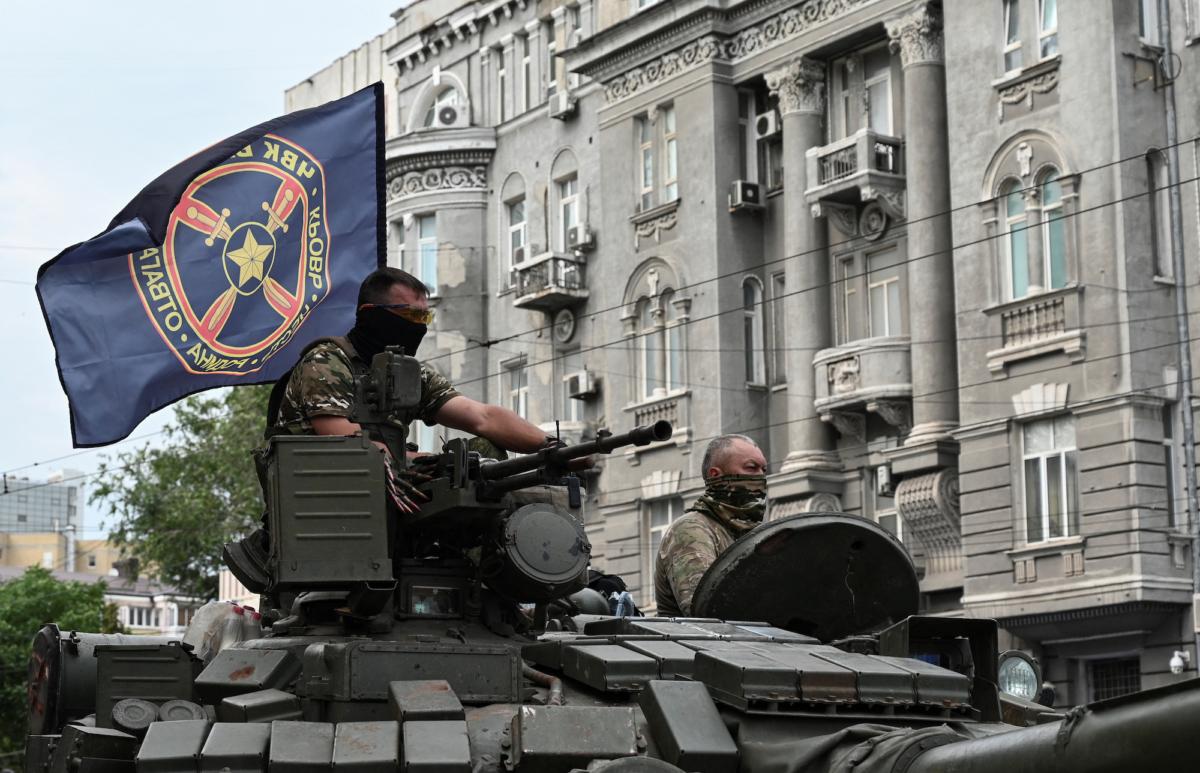
Paul Birch, a British former counter-terrorism police officer, told The Epoch Times by email that the case shows that “the tentacles of the Russian state, of which the Wagner Group is a part, have a very long reach, in that they can recruit people based in targeted countries to carry out their dirty work.”
“It’s worrying that they appeared to know just where sensitive satellite equipment was being housed before being shipped to Ukraine,” Birch said. “The fact that they were stupid enough to drive to the venue in their own car and livestream the attack shouldn’t stop us from remaining vigilant in such dangerous times when some states are actively hostile to us.”
McPhillips was referring to the case of Russian double agent Sergei Skripal and his daughter Yulia being struck down with poison in England in 2018. They subsequently recovered. Russia has denied any involvement in the incident.
“It’s all part of what they call ‘hybrid warfare,“ McPhillips said. ”It’s dangerous though as they are pushing the boundaries somewhat and the UK will have to draw a red line somewhere, and who knows where that will lead?
“It’s evidence of the squeeze the Russian intelligence services are feeling if they have to contract out work like this and use people of different nationalities.”
He said the expulsion of Russian officers from Britain in 2023 had “clearly inhibited their operations and tightened their options.”
“This outsourcing is risky for Moscow on a practical level, as none of these perpetrators have Russian allegiance, so leaks are inevitable, and trust is not.”
He said that FSB and GRU, two of Russia’s most powerful intelligence and security agencies, have their orders and “have tried to make it work.”
“It hasn’t though, and you’re never going to get a good job by non-believers as you would Russian patriots. But needs must as far as the Russians go.”
McPhillips said that the UK is going to see more of these Russian operations as “long as the Ukraine war trundles on.”
“They are likely to get more ambitious and use more obfuscation so as not to risk a wider war with NATO that Russia isn’t ready for,” he said.
“But we are in a new era. Russia’s risk appetite has ballooned but the UK’s will have to increase also if it is to get on top of this state threat, which is now more important than counter-terrorism as far as our security services are concerned.”