US Steps to Resolve Wind Power Dispute with China

December 22, 2010 Updated: October 1, 2015

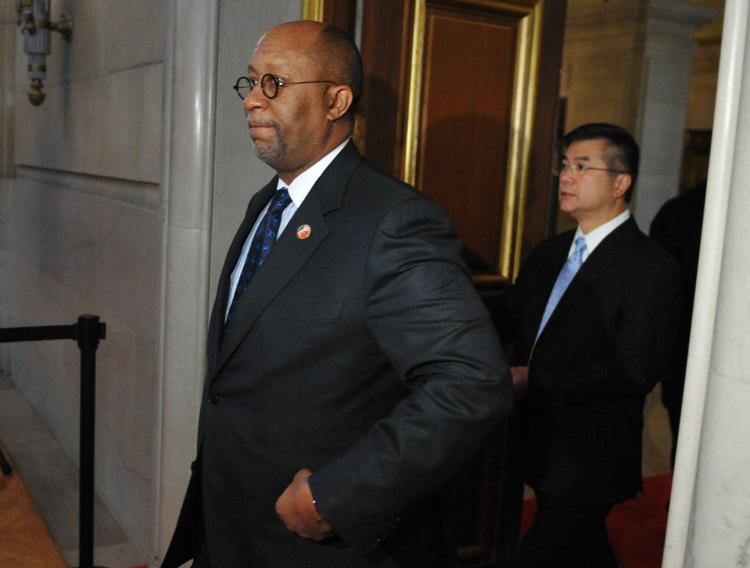
GETTING TOUGH: US Trade Representative Ron Kirk (L) arrives for the opening of the 21st session of the US-China Joint Commission on Commerce and Trade (JCCT) Dec. 15, 2010 at the Andrew W. Mellon Auditorium in Washingto (MANDEL NGAN/AFP/Getty Images)
[xtypo_dropcap]T[/xtypo_dropcap]he U.S. Trade Representative (USTR) today requested consultations with China under WTO rules for its allegedly predatory and protectionist practices in the wind power industry.

Specifically, China is accused of shutting out U.S. companies from benefiting from Chinese grants. The grants were designed to support companies that manufacture wind power equipment using Chinese, rather than foreign parts—U.S. companies are being negatively impacted, they say.

A request for consultations is the first step in a dispute resolution process; if they fail, formal meetings hosted by the WTO will follow.

The violation claimed by the USTR relates to a Chinese governmental program known as the Special Fund for Wind Power Manufacturing. China is accused of providing exclusive subsidies for Chinese wind power equipment manufacturers that use parts made in China, a practice known as import substitution. According to a statement released by the Office of USTR, the policy, which shuns U.S. suppliers, is prohibited by WTO rules.

The request represents a significant component of a comprehensive investigation launched by the USTR on Oct. 15, in response to a 5,800-page petition filed by the United Steelworkers (USW) under section 301 of the Trade Act of 1974. The petition, targeting energy sector violations, addressed trade-distorting domestic subsidies, export restraints, discrimination against imported goods, technology transfer concerns, and restrictions of access to critical materials.

The administration has placed a high priority on creating jobs in green energy manufacturing, viewing the emerging industries as key to reviving U.S. manufacturing.

“We share the President’s goal of expanding the creation of ‘green’ jobs here in the United States,” said USW International President Leo W. Gerard in a statement.

“The promise of green jobs, however, will not become reality if China is allowed to dominate the sector through unfair and illegal actions.” He said the recent announcement is the first step in pushing China to live up to its commitments: “There’s still a long way to go.”

Wind is a vital industry for the U.S., which currently stands as the world leader in wind generating capacity, with China second, Germany third.

But China’s additions of wind energy capacity surpassed the U.S. in 2009 for the first time, with 36 percent of the market share, versus 26 percent for the U.S.

China’s renewable energy market is expected to reach $100 billion by 2020, and wind energy is the fastest growing sector, according to the Department of Commerce.

According to The American Chamber of Commerce in the People's Republic of China (AmCham-China), wind power is a difficult business for foreign-invested companies to get into.

In its 2010 American Business in China White Paper, AmCham-China cites “indigenous innovation” as the culprit, a policy that favors domestic over foreign companies for government contracts. Alongside this, other measures allegedly deployed to obstruct U.S. businesses include rising tariffs on imported wind turbine generators and restricted access to capital.

Earlier this month U.S. Commerce Secretary Gary Locke and USTR Ambassador Ron Kirk met with Chinese Vice-Premier Wang Qishan in Washington for the 21st Joint Commission on Commerce and Trade.

During that meeting, China made concessions on two other complaints listed in the USW petition. The first re-affirmed a previous agreement on the removal of a 70 percent local content requirement in domestic wind manufacturing, the second was an agreement to stop barring bids from foreign enterprises who had not supplied equipment to projects in China before, thus opening the door for new companies to enter the market.

“Today’s announcement by the Obama administration comes as an early note of holiday cheer for those workers in the alternative and renewable energy sector who work hard, play by the rules and simply want a chance to compete, “said USW International President Leo W. Gerard.

“The Obama administration has committed to addressing the remaining vast web of protectionist policies, which will require considerable effort. The goal is not litigation; it’s to end their practices,” said Gerard.

“’Trust but verify’ is an apt phrase to use when evaluating promises made by the Chinese,” Gerard said, according to the statement. He urged the U.S. to stop accepting “empty promises,” and make trade enforcement with China a higher priority.

The action is the third case brought by USTR Ron Kirk since Sept. 15. The two others related to antidumping and countervailing duties on imports of U.S. steel and restrictions on foreign suppliers of electronic payment services.