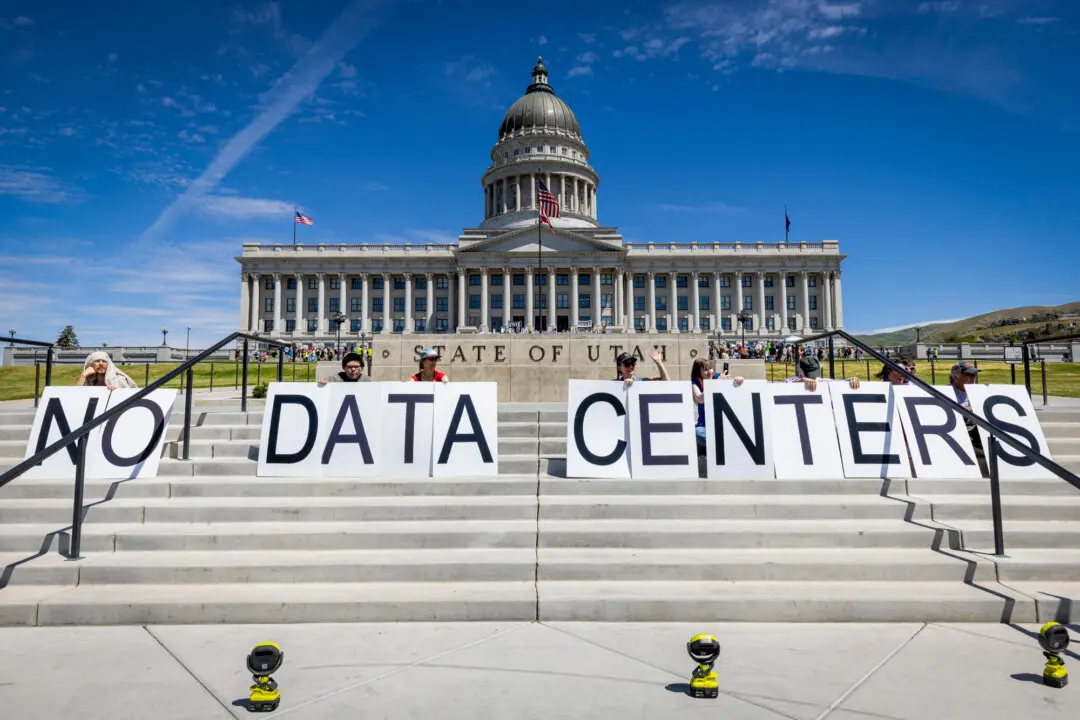
CHICAGO—Twenty-five state legislatures have adopted resolutions urging federal lawmakers to consider a constitutional amendment to “restore” congressional and state authority in regulating election spending by corporations and billionaire donors.
Idaho and Oklahoma lawmakers joined the petitioning states in March 2026, signing onto a multi-pronged effort to legislatively overturn the U.S. Supreme Court’s 2010 Citizens United ruling. The threshold for state-forced congressional action is 34 states; 38 must ratify an amendment to make it law.
The Citizens United decision determined spending caps and restrictions imposed by the Federal Elections Commission (FEC) and states on candidates violate First Amendment rights of private entities and individuals when political expenditures are independent and not directly tied to a campaign.
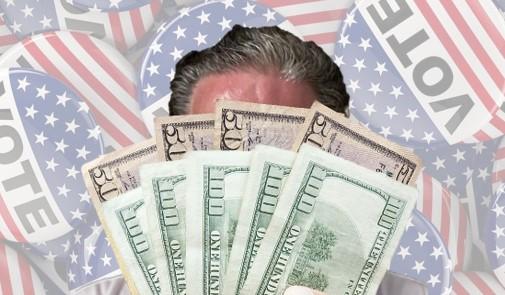
As a result, elections spending by corporations, unions, wealthy donors, and political action committees (PACs) has dramatically increased. According to a June AdImpact analysis, a record $11.6 billion will be spent on 2026 midterm elections, eclipsing the now-record $11.2 billion spent in 2024’s presidential-year elections, which surpassed the then-record $8.9 billion spent in 2022’s midterms.
Most voters may not be fluent in the complexities of campaign finance laws, but rank-and-file Americans of all political affiliations overwhelmingly sense “dark money” is poisoning the nation’s political system, Brennan Center for Justice Elections and Government Counsel Eric Petry said.
“Frankly, people are angry about this,” he said during a July 29 presentation at the National Conference of State Legislatures’ (NCSL) 51st Annual Summit in Chicago’s McCormick Place. “They’re furious.”
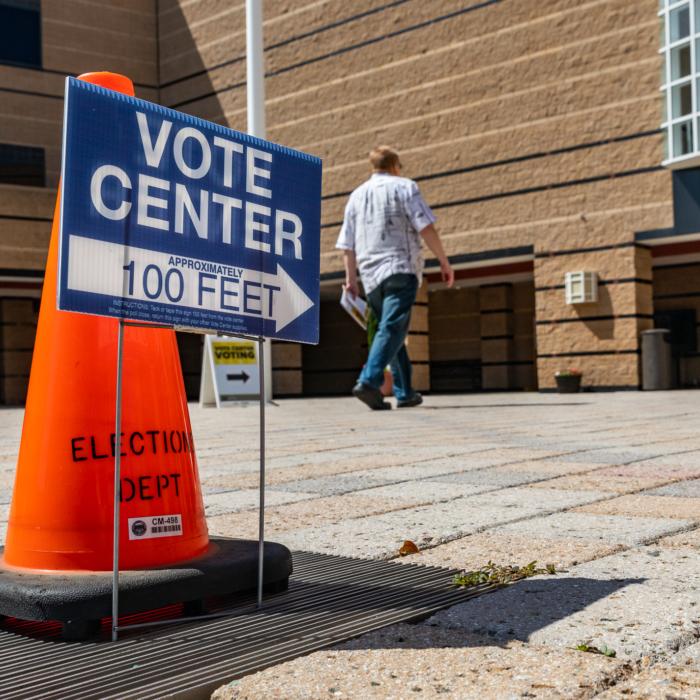
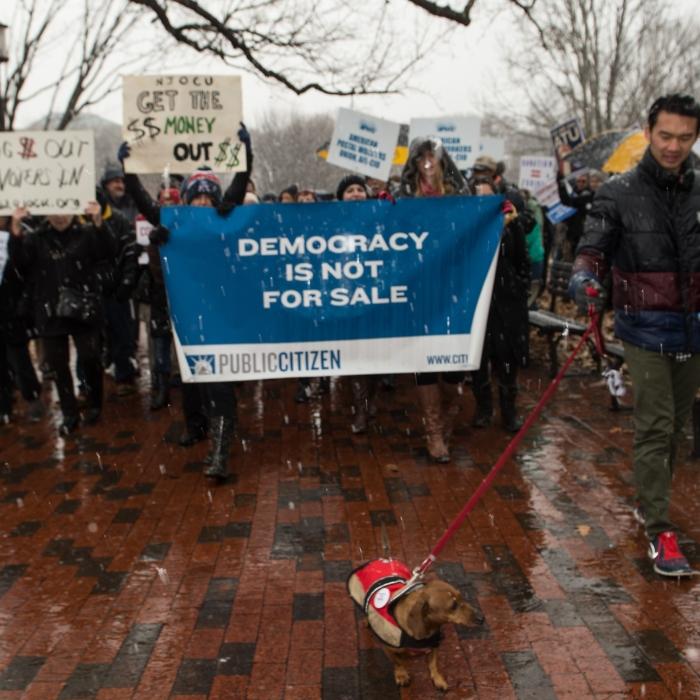
That is starkly apparent in an April 28–May 6 national survey of 2,000 registered voters by the left-leaning Brennan Center in which 92 percent of respondents agreed corruption is a problem in U.S. politics, with 89 percent saying that an example of this corruption is “Billionaires and big corporations having an easier time having their voices heard by the government than the general public.”
“We were floored by the responses,” Petry said, noting that of respondents who included political affiliations, 90 percent of Republicans, 93 percent of Democrats, and 93 percent of Independents concurred that “money is playing too big of a role in our elections.”
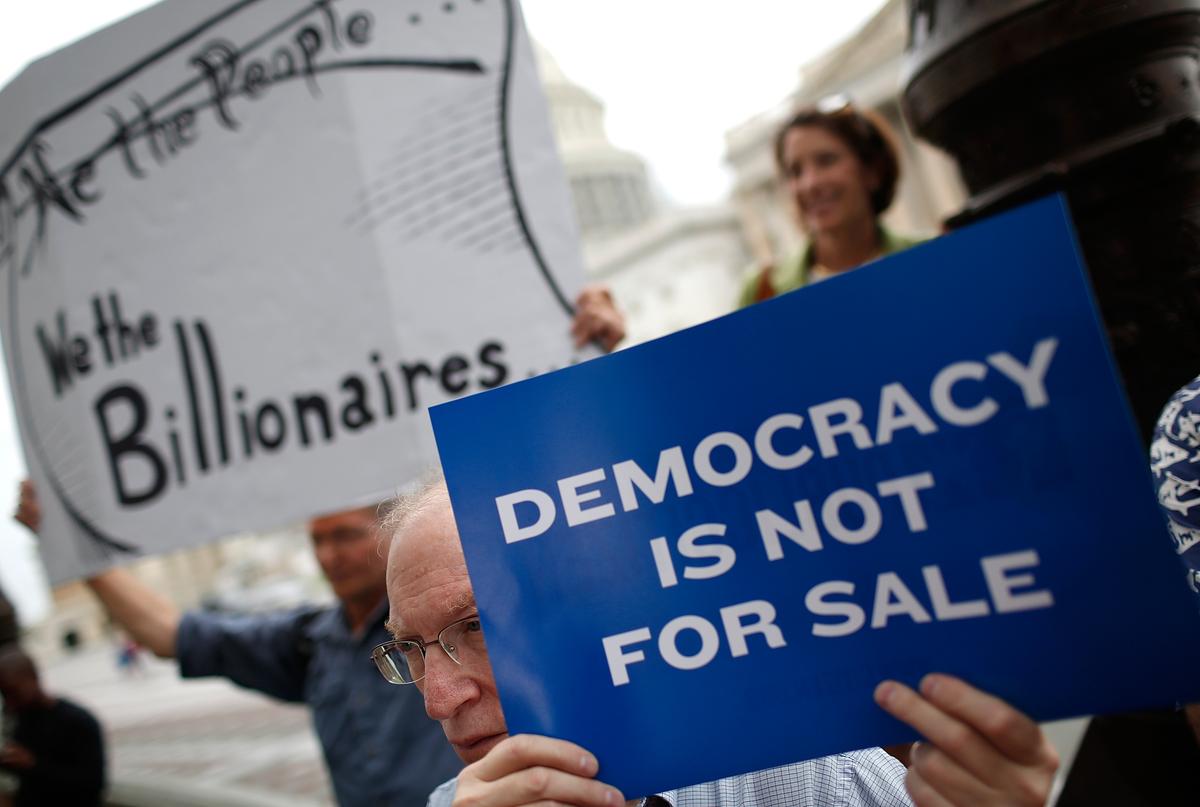
Most “striking”—especially for incumbents—is “94 percent of respondents directly linked corruption to politicians catering to billionaire donors, special interests,” Petry said. “And they’re tying it directly to kitchen table issues, that the role of money in politics is directly responsible for why government is not responsive to the issues that matter to them most.”
Visceral Reality
With November’s midterms less than 100 days away, campaign finance reform and elections administration were hot topics during the July 27–29 summit that drew 7,700 lawmakers, legislative staffers, lobbyists, and non-profit advocates.
“Constitutional amendments are long processes. They’re not impossible. We’ve done it 27 times in our country’s history, but they are hard,” Petry said. “In the interim, there’s demand for more immediate policy changes through ordinary legislation [that] we’re seeing ‘purple up’ through the states right now” in both Republican- and Democrat-led legislatures.
They include “corporate charter resets” that make a “legalistic distinction between corporate rights and corporate powers,” he said. “States dictate the scope of corporate powers through the corporate charter, through corporate code, and … can define corporate power in a way such that corporations cannot spend on elections.”
“You’re seeing a groundswell of excitement and energy around [the ‘Montana Plan’] proposal,” Petry said. “I mean, it makes sense. I think politically, it’s responding to something people feel viscerally.”
“Corporations are not people. There’s a legal fiction that they have the rights of people,” said Rep. Ken Chestek, a retired University of Wyoming law professor and one of six Democrats in Wyoming’s 62-seat House. “They’re human-created entities that we can give power to. We can take that power away because we created them.”
‘Trigger’ Tool
Petry said there are “cautions” with this approach and others, such as “original source” requirements approved by Alaska voters in 2020 that mandate disclaimers identify out-of-state and national groups and how much money they’ve contributed to a candidate or referendum campaign.
Not only do legal challenges have a chance to succeed, he said, but “corporate charter resets” only apply to “artificial people” and corporations, not individual donors, and that there are “potential unintended consequences” if restrictions on corporate elections spending extend into other areas.
BakerHostetler Counsel Allison Tuck, a former U.S. Senate Rules and Administration Committee Republican Chief Counsel, said there are “a lot of issues” with these initiatives.
“There are commerce clause issues, there are unconstitutional conditions, doctrine issues,” she said, noting it must overcome “the theory that a state can’t condition your access to a public benefit on you giving up a constitutional right. You can’t get around the constitutionality question by simply moving it from election law to corporate law.”
Chestek agreed that focusing on corporate law could create “a commerce [law] problem.”
“What if a Wyoming corporation wants to spend money on a Hawaii election? Wyoming has given the Wyoming corporation that power. Isn’t there a commerce clause problem?”
Maybe, Petry said. Certainly, Tuck said. But both agreed even if these test balloons are shot down in court, they signal there’s growing demand for campaign finance reform and portend change is coming.
“It’s basically vehicle-building for a future direct challenge to Citizens United,” Tuck said. “But for legislators, the important thing to remember is … it will take years of time and money to move to that stage.”
Exactly, Petry said, noting state attempts to “sidestep Citizens United” will advance to “direct frontal attacks” with adoption of “trigger laws” that don’t go into effect unless a constitution is amended, similar to what dozens of states did over a half-century in passing laws that could only be enacted if Roe v. Wade was overturned.
“This tool has been effective,” he said, “and there’s no reason we can’t use it to bring a little bit more sanity to our campaign finance system.”