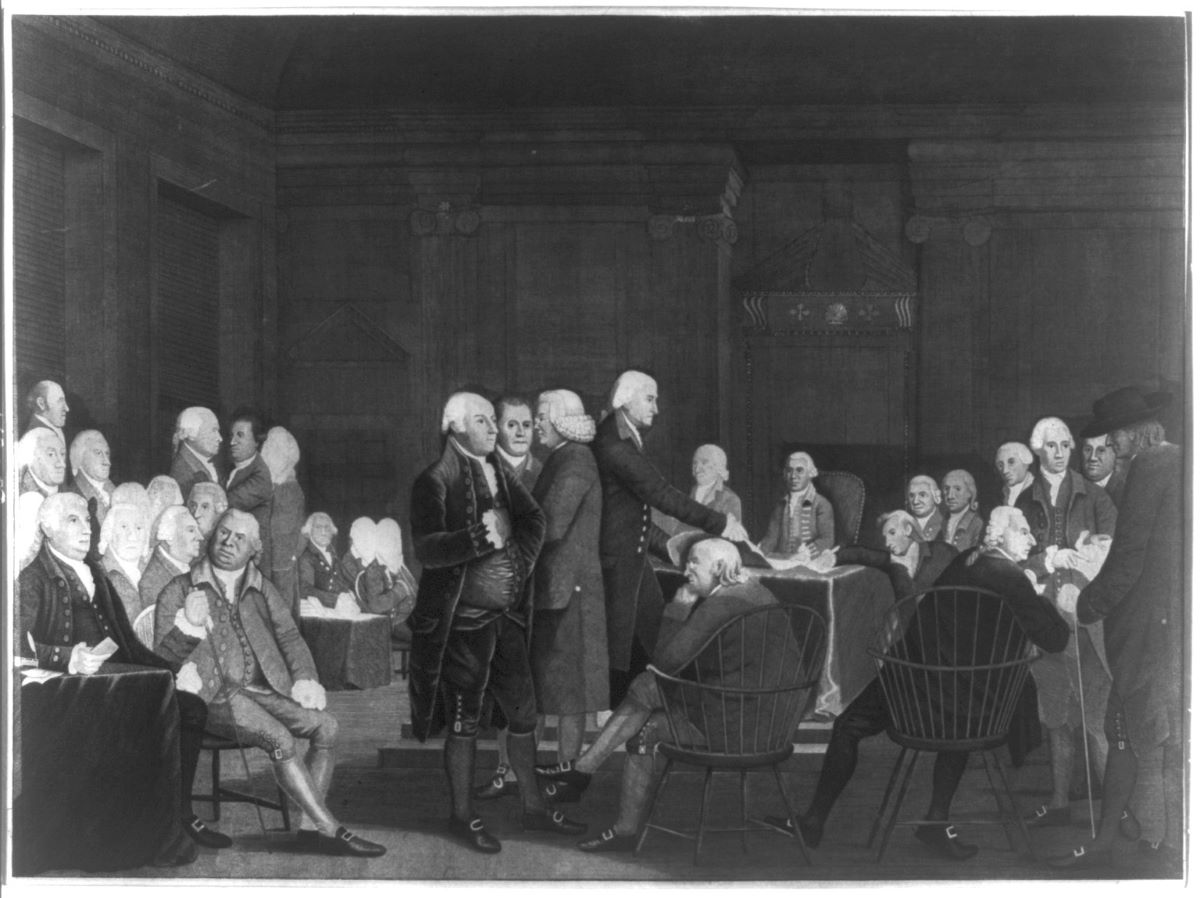

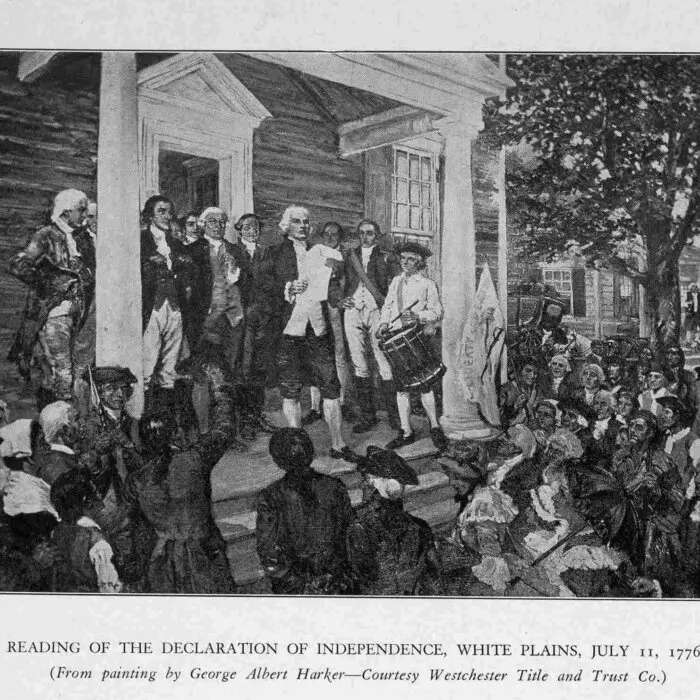
Today the United States celebrates the 250th—or semiquincentennial—anniversary of the adoption of the Declaration of Independence.
While July 4 marks the day Thomas Jefferson’s revised draft of the Declaration of Independence was adopted, it would take months for the document to be signed by all 56 men who would eventually affix their names to it.
Several key figures in American history—George Washington, Alexander Hamilton, and James Madison, among others—don’t appear among the signatories of the Declaration of Independence at all, having been serving in military roles or other capacities at the time.
None of the 56 signers died as a result of their signature, but before the war was over, five would be captured, 12 would have their homes destroyed, and 17 would lose their entire fortunes. None of the 56 signatories ever renounced the cause of independence of their own free will.
‘The Sage of Monticello’: Thomas Jefferson
Easily the most well-known of the Declaration’s signatories—as well as its author—Thomas Jefferson enjoyed several benefits later in life from his role in the document’s drafting.During the war, Jefferson nearly faced capture by the British during his tenure as governor of Virginia, forcing him to flee from his Monticello estate. That led to accusations of “cowardice” that eventually prompted Virginia legislators to launch a formal inquiry, in which Jefferson was acquitted.
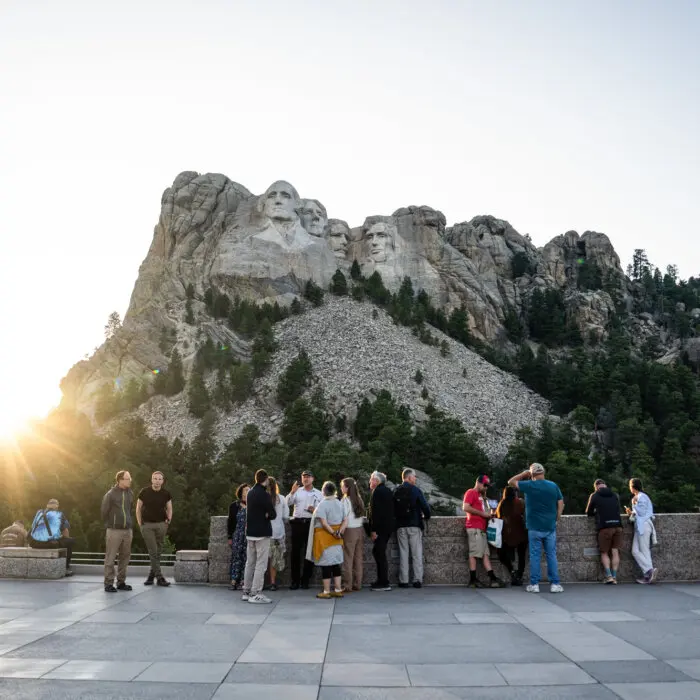
Later, Jefferson served in a series of key posts, first as the U.S. ambassador to France, then as secretary of state under President George Washington and vice president under President John Adams.
‘The First American’: Ben Franklin
While Jefferson often gets the lion’s share of the credit for drafting the Declaration, Ben Franklin is credited with one critical edit to the document.Widely recognized as a multi-disciplinary polymath, Franklin has been dubbed “the First American” by history for his early and long-running calls for American colonial unity.
In the preamble to the Declaration, Jefferson had originally written, “We hold these truths to be sacred and undeniable.”
Franklin—who served on the drafting committee—replaced this with the revision: “We hold these truths to be self-evident.”
Franklin later served as ambassador to France and lead negotiator on the deal to end the war with Great Britain, was the “president”—or governor—of Pennsylvania from 1785 to 1788, and served as a delegate to the Constitutional Convention of 1787.
‘The Atlas of American Independence’: John Adams
John Adams, the future second president, was one of the first delegates to the Continental Congress to call for independence. He was also among the most outspoken in its defense, leading him to be dubbed by some as “the Atlas of American Independence.”In February 1778, Adams was nearly captured by British warships while leaving on a diplomatic mission for Paris with his son. Adams took up a musket to fight the British vessels, but it took a mix of skillful navigation and a fortuitous storm to shake the pursuers. Had he been captured, Adams likely would have faced imprisonment in the Tower of London and execution for treason.
‘The First Founding Father’: Richard Henry Lee
Less well-known than either Jefferson or Adams, the Virginia delegate Richard Henry Lee was no less instrumental in bringing about independence, authoring the part of the Declaration stating the 13 colonies “are, and of Right ought to be, free and independent States.”On July 2, 1776, the Second Continental Congress adopted this “Lee Resolution.” Adams famously predicted incorrectly that July 2, rather than July 4, would be celebrated as the American Independence Day, and would be commemorated with, “pomp and parade ... from one end of this continent to the other.”
During the war, Lee faced military attacks on his property, chronic stress that took a toll on his health, and a severe hit to his finances as the war hit international shipping and the tobacco trade he relied on.
The Midnight Rider: Caesar Rodney
A lesser-known but critical signatory of the Declaration was Caesar Rodney, who rode 80 miles to Philadelphia while suffering from facial cancer to cast a tie-breaking vote for Delaware’s delegation in favor of independence.Unanimous support from all colonies was required to authorize the Lee Resolution—meaning Rodney’s vote was critical to final adoption.
The First Signer: John Hancock
John Hancock’s signature on the Declaration—the first—was so large that his name became an American idiom for one’s signature.The Massachusetts revolutionary leader had been serving as president of the Second Continental Congress since May 24, 1775.
Hancock, aside from being the first signer, is the only person who actually signed the document on July 4, 1776.
Hancock was at the head of a massive commercial empire, deriving his wealth partially from inheritance and partially from smuggling. Had American independence failed, Hancock—as well as his family—would have lost everything.
Despite close calls, he made it through the Revolution without facing capture. However, several of his properties were destroyed or occupied by the British during the conflict, while Hancock expended nearly half of his personal wealth financing the cause of independence.
The Last Signer: Thomas McKean
Like several other delegates to the Second Continental Congress, Thomas McKean of Delaware left to join the Revolution as soon as he cast his ballot in favor of independence.This meant that he was ultimately unable to sign the documents until months—or, by some estimates, years—later. While historians are confident that McKean is the final signatory, the exact date is disputed, with estimates ranging from early 1777 all the way to 1781.
McKean took part in key battles during the conflict, assisting in the defense of New York City and Delaware. By 1781, McKean was serving as president of the Continental Congress, making him the civilian authority directing the Battle of Yorktown, which ended the war.
The One Who Renounced His Signature: Richard Stockton
While none of the 56 signers ever willingly renounced their support for the Declaration, historians think that signer Richard Stockton of New Jersey renounced his signature under coercion and following a long period of captivity by the British.Imprisoned by the British, Stockton signed a parole agreement in which he reneged on his signature and pledged not to take part in the war. Under the agreement, Stockton resigned his seat in the Continental Congress.
The Fighters
Like McKean, several signers went on to take part in the conflict.These included Rodney, Oliver Wolcott of Connecticut, Thomas Nelson Jr. of Virginia, and William Floyd of New York.
Others who left Philadelphia to join the conflict were taken as prisoners of war during the Revolution.
One of these was George Walton, who was wounded and captured during the Battle of Savannah. Despite spending months in British custody, Walton survived and was eventually freed, going on to serve as a governor, chief justice, and U.S. senator for Georgia.
Homes Looted, Occupied, or Destroyed
Many other signers faced consequences related to their properties and estates. Some of the most prominent of these included Lee and Hancock.In New York, meanwhile, signer Francis Lewis had his property destroyed by the British, who captured his wife during the attack. Held in captivity for months without a change of clothes or adequate food, Elizabeth Annesley Lewis was ultimately freed under a prisoner exchange negotiated by Washington, but died shortly thereafter from the stress of the ordeal.
Also in New York, signers William Floyd, Philip Livingston, and Lewis Morris had their vast estates occupied by the British during the war, with the properties being used as barracks or stables.
The Longest-Lived Signer: Charles Carroll
In 1832, Charles Carroll of Maryland knew that he was dying.The only Catholic signer of the Declaration, Carroll had by then been the sole remaining signatory of the document for around six years.
He gained the accolade on July 4, 1826, following the deaths of Adams and Jefferson, who were among the final three living signers. Franklin had passed more than 40 years earlier.
By 1832, Carroll was well-used to the questions he received from young people and reporters, who were set on preserving as much of the early Republic as possible during the twilight years of the 1820s.
Before his death, Carroll played a key role in welcoming the new era of American life, laying the first stone of the B&O railroad, one of the first steps toward the transcontinental railroad that would take decades yet to be completed.
Carroll’s passing was commemorated in the papers and on the streets of the blossoming American republic, whose citizens recognized that with Carroll’s passing, the first generation of the United States was truly over.
Commenting on his status near the end of his life, Carroll wrote, “Grateful to Almighty God for the blessings. ... I do hereby recommend to the present and future generations the principles of that important document ... and pray that the civil and religious liberties they have secured to my country may be perpetuated.”