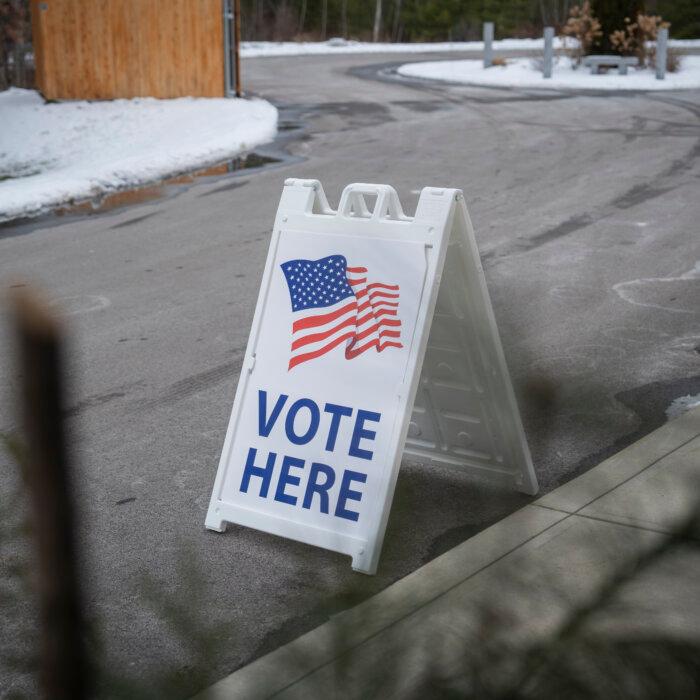
An electoral integrity watchdog asked the U.S. Supreme Court on July 17 to force Hawaii to disclose a complete statewide voter registration list that the state previously declined to produce.
The National Voter Registration Act (NVRA) states that the public should have access to “all records concerning the implementation of programs and activities conducted for the purpose of ensuring the accuracy and currency of official lists of eligible voters.”
Invoking the NVRA, the Public Interest Legal Foundation (PILF) had asked Hawaii’s chief election officer, Scott Nago, to hand over a statewide list of registered voters, and he declined to do so. Nago told the group to seek the information separately from every county in the state.
Hawaii argued that it didn’t have to produce a statewide list because it has a decentralized system in which state law delegates primary responsibility for the upkeep of voter registration records to the clerks of the state’s four counties, not to Nago’s office.
Nago argued that PILF lacked standing to pursue its claim because it had not formally sought the records from the county clerks, and so it had not experienced any final denial that could be appealed. He also argued that state law limits disclosure of detailed voter data and that his office’s responses to PILF were consistent with federal law.
Hawaii takes the position that its laws protect voter privacy while still permitting access to data for legitimate election-related purposes through county channels.
“Congress mandated a statewide list of registered voters and made it a public record to prevent” this kind of evasive behavior, the petition said.
PILF sued under the NVRA in 2023 to obtain the list.
A federal district court dismissed the lawsuit for lack of ripeness without prejudice—meaning it could be filed again—and invited the group to amend its claim.
A claim is not ripe if the issues are not fully developed, the harm is overly speculative or hasn’t happened yet, and further factual development or agency action is required before a court can meaningfully rule in the case.
PILF declined to amend its claim and instead filed an appeal with the Ninth Circuit. The appeals court ruled the claim was ripe and that the group was entitled to sue under the NVRA, but it found that the requested list was not a record “concerning the implementation” of list maintenance activities under Section 20507 of the NVRA.
The petition said the Ninth Circuit deliberately deviated from other circuit court precedents on the scope of records covered under the section. The Ninth Circuit held that the voter lists are just the “object” of list maintenance activities rather than records regarding those activities “and, as such, are not subject to public disclosure.”
This holding conflicts with the First Circuit, which has held that the NVRA requires that the public be allowed to see the voter roll and every document on file that is used to keep the roll accurate, the petition said.
The Ninth Circuit said that the First Circuit “gives too much weight to the words ‘all’ and ‘concerning’” in the act.
The petition said the Ninth Circuit erred and that the Supreme Court should take up this “important” appeal because “it concerns unequal nationwide access to a law designed to protect voting rights.”
“Congress said the public is entitled to all records concerning voter list maintenance,” J. Christian Adams, president and general counsel of PILF, said in a statement.
“‘All’ means ‘all’,” Adams said. “The statewide voter file is exactly what Congress requires be made public.”
The Epoch Times reached out to Hawaii Attorney General Anne Lopez for comment. No reply was received.
It is unclear when the Supreme Court will consider the new petition. The court is in recess for the summer and will resume hearing oral arguments in October.