Restaurant chain Waffle House announced Tuesday that it has removed a surcharge on eggs that was implemented earlier this year amid soaring egg prices.
“While we hope these price fluctuations will be short-lived we cannot predict how long this shortage will last,” it said at the time.
The restaurant chain, with 1,900 locations spread across 25 states, serves around 272 million eggs every year.
Egg prices have been rising following an outbreak of avian flu that has affected millions of birds since 2022, negatively impacting egg production.
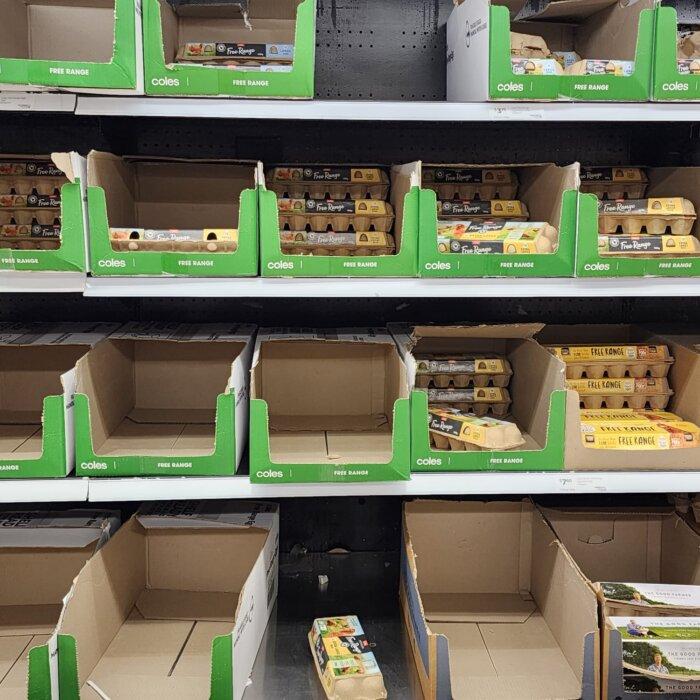
This more than tripled to $6.22 per dozen by March 2025. However, prices have since dipped, with eggs costing $4.54 per dozen in May, down 27 percent from the peak in March.
Egg Prices and Flu
The strategy Rollins introduced in February to fight avian flu and reduce egg prices set aside $500 million for biosecurity measures at egg farms, $400 million in financial relief for farmers, and $100 million for research on vaccines.“When President Trump entered office, the cost of eggs was at a record high, seriously denting consumers’ wallets after years of awful inflation,” Rollins said.
“On my first day as Secretary, we got to work to implement a five-pronged strategy to improve biosecurity on the farm and lower egg prices on grocery store shelves. The plan has worked, and families are seeing relief with egg prices.”
More than 900 biosecurity assessments have been carried out across the United States so far, USDA said, adding that the agency is covering the full cost of assessments, as well as part of the costs involved in improving biosecurity measures at farms.
The agency is offering financial relief and support to farmers to accelerate the repopulation of poultry flocks following any detection of highly pathogenic avian influenza (HPAI).
“Since February 27, 2025, when USDA increased indemnity values available to producers affected by HPAI, over $70 million has been paid out to directly support layer flocks,” the USDA said.
“These increased indemnity rates have provided producers a level of support and stability to help them in moving forward to repopulate their flocks as quickly as possible.”
USDA has also boosted imports to stabilize the domestic egg supply and ease the burden on consumers.
“Since January 2025, more than 26 million dozen shell eggs have been imported from Brazil, Honduras, Mexico, Turkey, and South Korea for breaking and pasteurization, increasing the quantity of eggs available to consumers,” it said.
Flu detections at egg farms have “slowed in recent months,” the association said. In January and February, 22 farms were affected each month. This dropped to three farms in May and one in June.