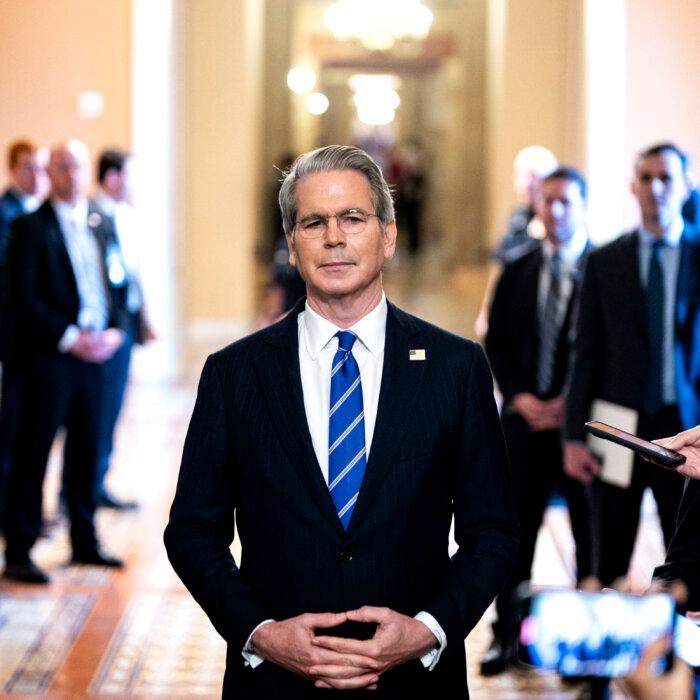
Treasury Secretary Scott Bessent said on July 7 that the United States is set to make several trade announcements in the next 48 hours.
Since the president said that tariff rates would return to their April 2 levels in the absence of a trade deal, many countries have adjusted their trade positions, the Treasury secretary said.
“We’ve had a lot of people change their tune in terms of negotiations. So my mailbox was full last night with a lot of new offers, a lot of new proposals,” he said. “So it’s going to be a busy couple of days.”
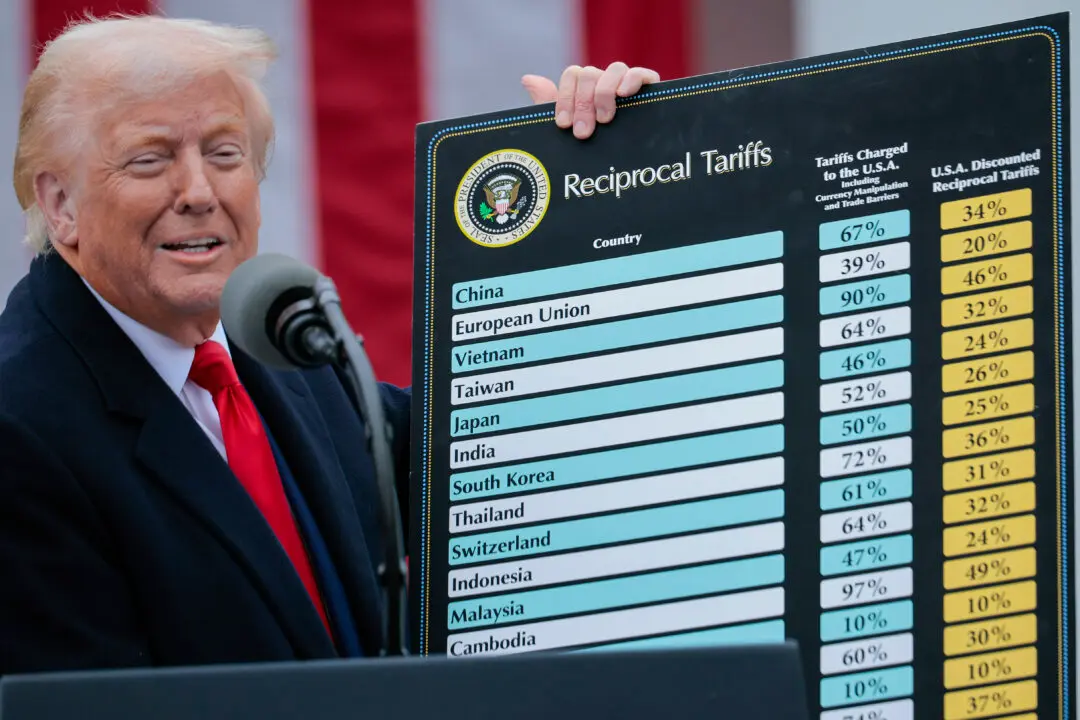
Trump announced a 90-day pause on his reciprocal tariffs in April, a week after unveiling the contours of his trade agenda.
With only days until the pause expires, the president told reporters that higher tariff rates, ranging from 11 percent to 50 percent, would take effect next month.
“They’ll start to pay on Aug. 1. The money will start to come into the United States on Aug. 1, in pretty much all cases,” Trump said on July 4.
In a Truth Social post late on July 6, the president confirmed that the United States would be sending letters to trade partners starting at noon on July 7.
Bessent said they are “pretty standard letters.”
“It’s just: ‘Thank you for wanting to trade with the United States of America. We welcome you as a trading partner, and here is the rate, unless you want to come back and try to negotiate,’” Bessent told CNBC.
He also confirmed that he plans to meet with his Chinese counterpart sometime this month.
Vietnam and China
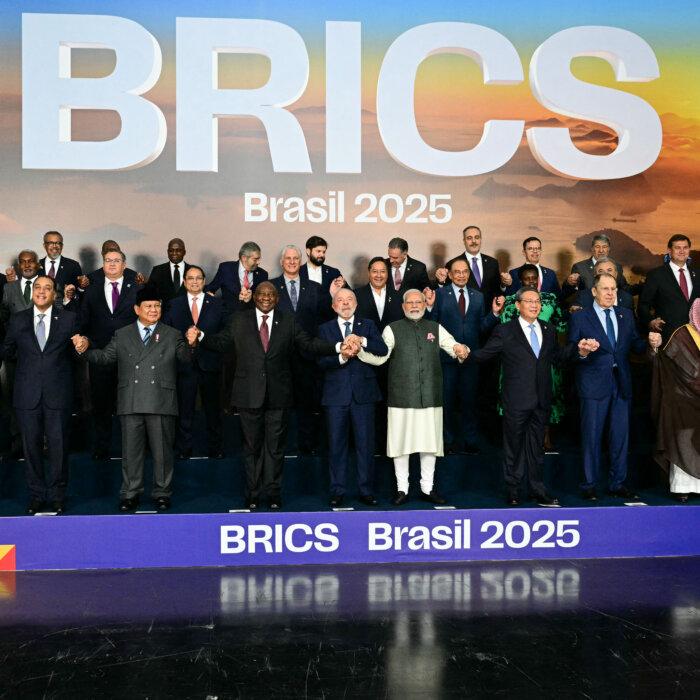
Last month, Trump and senior administration officials announced that they had reached an agreement with China to deescalate trade tensions. Neither side provided further details other than acknowledging a deal had been made.BRICS is an emerging market coalition led by Brazil, Russia, India, China, and South Africa that now includes Egypt, Ethiopia, Indonesia, Iran, and the United Arab Emirates.
The warning came as the organization was meeting in Brazil. Trump has repeatedly stated that he would impose tariffs on BRICS nations that engage in de-dollarization, a global effort to ditch the U.S. dollar in favor of other currencies, such as the Chinese yuan.
Under the pact, the United States will impose a 20 percent levy on imports from Vietnam and a steeper 40 percent tariff on goods that pass through Vietnam, also known as trans-shipping, which has been used by countries such as China to avoid trade restrictions.
U.S. officials estimate that 30 percent of all Vietnamese exports to the United States were manufactured in China but relabeled or repackaged in Vietnam.
“We will be able to sell our product into Vietnam at ZERO Tariff.”
Meanwhile, White House trade adviser Peter Navarro said negotiations have proven how hard it is for nations “to give up the advantage they have over [the United States],” despite his prediction that 90 trade deals could be completed in 90 days during the spring.
However, Navarro, senior counselor for trade and manufacturing, told CNBC’s “Squawk on the Street” on July 7, “I think the negotiations are proceeding well.”
Navarro also referenced tariff revenues that are already filling government coffers.
Market Reaction
U.S. stocks dipped on the morning of July 7 to kick off the trading week, with the leading benchmark averages down by about 0.5 percent.Jay Woods, chief global strategist at Freedom Capital Markets, said he expects Wall Street to pencil in a few more trade deals this week and then confirm extensions of many negotiations “in good faith.”
As long as the Trump administration signals progress, the market’s momentum will continue, he said.
“This week, with tensions escalating over new tariff threats aimed at key trading partners—particularly in Europe and the Americas—traders are asking the same question: Will he actually follow through, or is this another high-stakes bluff that fizzles out just in time to save face and juice the markets?” Woods said in a note emailed to The Epoch Times.
Yields on U.S. Treasury securities were mixed. The benchmark 10-year yield firmed above 4.37 percent.
The U.S. dollar index, a measure of the U.S. dollar against a weighted basket of currencies, rose by about 0.1 percent. The index is down by more than 10 percent this year.