The United States and India signed a key agreement on May 26 to secure critical minerals and rare earth mining, processing, and supplies, further loosening China’s grip on the global market, during Secretary of State Marco Rubio’s four-day visit.
“We are two countries who have a strategic interest in ensuring reliable long-term access to critical minerals and supply chains that are important for our innovation economy,” Rubio said during the signing. “This is a very important step.”
Rubio was in India for a four-day diplomatic visit May 23–26 to shore up the United States’ partnership with what he called “one of our most important strategic partners in the world.”
He said the talks included a scope of issues that the United States works together on with India.
In a similar statement about the agreement, India’s External Affairs Minister S. Jaishankar said the framework will strengthen resilient and diversified supply chains, help both nations collaborate on financing, and also help with the effective management of critical minerals and rare earths.
“I think it’s a very important initiative,” Jaishankar said during the signing. “It’s one more sign of how close our cooperation is and how important it is today in a world where there are so many challenges but also so many opportunities.”
The framework for the agreement first began to take shape in February when India signed onto Pax Silica, a U.S.-led strategic initiative and coalition aimed at securing a global supply chain for artificial intelligence (AI) progress and economic security. India was one of 14 countries to sign the agreement.
India has one of the world’s largest rare earth elements reserves, and existing processing capabilities that can be developed, according to the Center for Strategic and International Studies (CSIS), a bipartisan think tank organization. The country has rich sand deposits containing monazite, which includes thorium and other minerals. Thorium is a nuclear fuel.
China accounts for about 60 percent of global rare earth elements production and about 90 percent of processing.
On May 26, Rubio also announced signing a partnership charter and agreement on critical minerals with Armenia.
Rubio held a ceremony with Armenian Foreign Minister Ararat Mirzoyan signing the bilateral framework agreement on the Trump Route for International Peace and Prosperity. They also signed a Strategic Partnership Charter and agreement on critical minerals.
Armenia mainly mines iron, copper, molybdenum, lead, zinc, gold, silver, antimony, and aluminum. The country also has valuable reserves of rare metals, including gold-polymetallic, copper-molybdenum, and copper pyrite deposits, according to the U.S. International Trade Administration.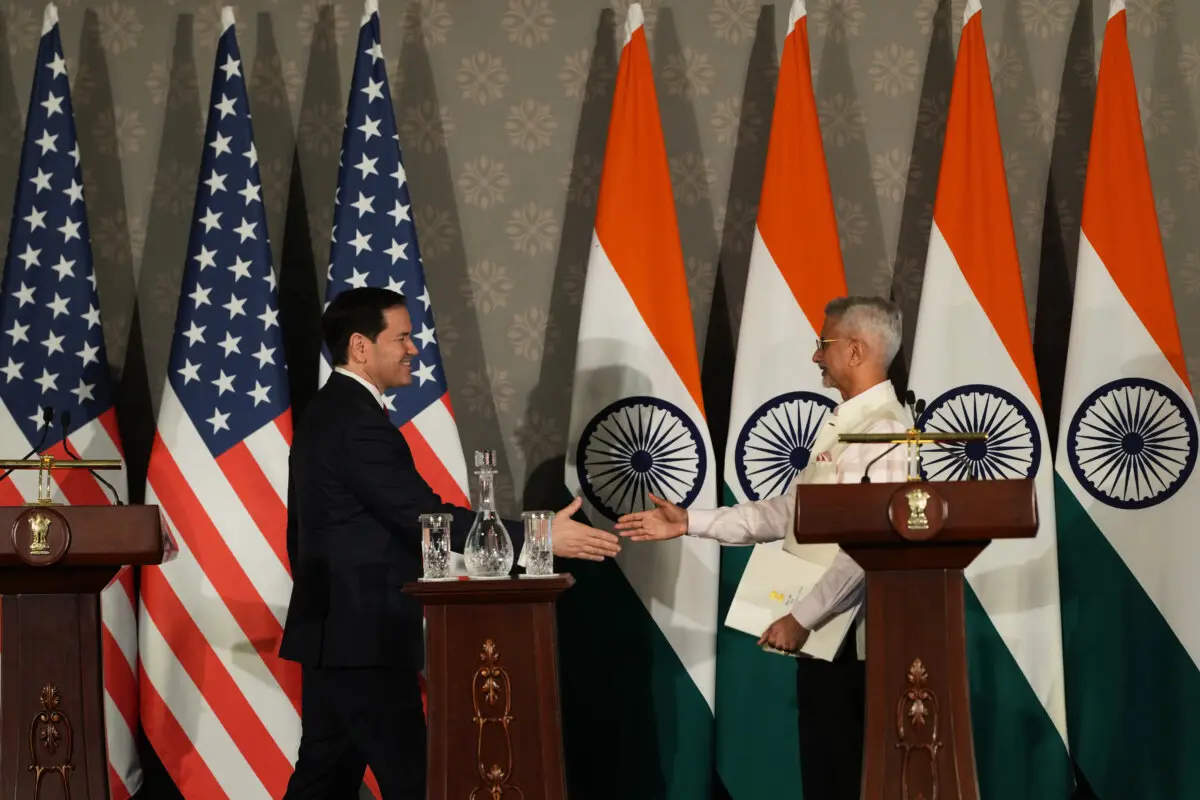
President Donald Trump signed executive orders in March 2025 to immediately increase American mineral production and reduce reliance on foreign sources after China restricted exports to the United States.