WASHINGTON—Breakthroughs in replicating the energy that fires the sun have come fast and furious since 2022, when Department of Energy (DOE) scientists in a Lawrence Livermore National Laboratory experiment produced more energy than expended, spurring interest and investment in fusion.
“The headwinds are tough these days, where it seems like we’re in a cutting mode, not a spending mode,” Trent Bauserman, head of federal affairs at Commonwealth Fusion Systems, said during a presentation before more than 200 attendees in Union Station’s East Hall.
“But one of the recommendations we have ... is the need for a one-time investment of $10 billion to invest in critical research, national labs, and universities, leveraging public-private partnerships.”
Unlike fission, nuclear fusion replicates the reaction produced by firing atoms, which is the power emitted by stars. Fusion has the potential to provide limitless, clean energy and is often referred to as “the holy grail of energy solutions.”
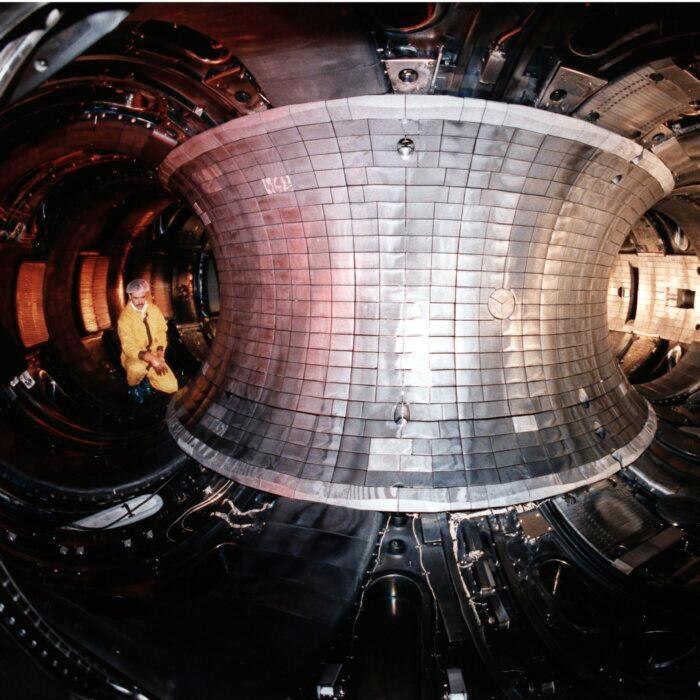
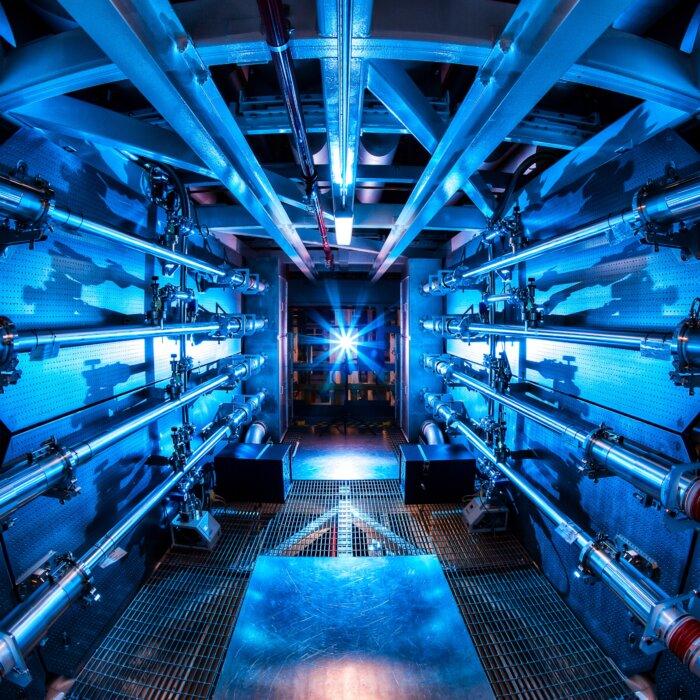
Fusion has been researched by academic institutions and government laboratories since the 1950s, with frustrating results until the 2022 successful experiment at Lawrence Livermore National Laboratory’s National Ignition Facility, heralded as a seminal watershed event that has led to rapidly accelerating advancements.
Fusion Industry Association CEO Andrew Holland said a $10 billion public plug would match private investment and eclipse the $13 billion China has spent on fusion development, including at least $6.5 billion in the past two years, with the aim of generating electricity with fusion by 2030.
The association had 23 members with a collective investment of $2 billion when it was founded in 2021. Now, 43 of 53 companies licensed to bid for federal fusion contracts and grants are association members and are “growing quickly, building fast, raising private capital,” he said.
“So we see the private sector putting in ... the U.S. here, $10.5 [billion] overall,” Holland said. “So there’s a certain momentum to be serious on fusion.”
“It seems like a lot of money,” Type One Energy Group CEO Chris Mowry said, “but in the context of the benefit, and even in the context of the larger federal budget, it really is not [for] what it can mean, what it needs to mean, for a future of prosperity here in the U.S. and around the world.”
House Fusion Caucus Co-chairs Jay Obernolte (R-Calif.) and Donald S. Beyer Jr. (D-Va.), and former Rep. Brandon Williams (R-N.Y.), the recently confirmed undersecretary of Nuclear Security at the Department of Energy, were enthusiastically receptive.
“Investments in fusion, public or private, are tremendously small compared to the tremendous opportunity that we’re facing,” Williams said. “I would say that in the next 10 years, there’s a very, very good chance we’re going to see fusion on the grid.”
Obernolte said: “You look at just basic return on investment dollars, it’s hard to make a case for anything being higher than fusion research over the next 15 years. This is not the time to hit the brakes—now is the time to hit the gas.”
“[It’s] not a very bipartisan world in which we live right now,” Beyer said. “Politics is a little choppy right now, but fusion still seems to be in that layer of the atmosphere where it’s above politics. It’s a very exciting thing.”
Why Now?
No guarantees were made, but the lawmakers and administration officials said a pending fusion “roadmap” announced on Oct. 14 by Energy Secretary Chris Wright will outline “funding pathways” that incentivize public-private investment.Speaking at the Special Competitive Studies Project’s “ai+fusion” summit, Wright announced that the Department of Energy (DOE) will soon release a Fusion Science and Technology Roadmap geared to support private sector first-movers with infrastructure investments and financing required under the 2024 fusion energy strategy.
“China’s serious and moving fast,” Wright said. “[The] government has finite resources, [and] we need to spend less on some things ... and more on other things.”
The CCP is building the world’s largest fusion plant, which will be in Mianyang, China, and has established a state-owned fusion energy company, China Fusion Energy Corp., a $2 billion subsidiary of China National Nuclear Corp., and its state-owned Jiangxi Electronics Group plans to use fusion to power an electricity utility by 2031.
DOE Under Secretary for Science and Innovation Dario Gil and Office of Science Associate Director for Fusion Energy Sciences Jean Paul Allain said elevating fusion to “roadmap” status puts it at the same level as artificial intelligence and quantum computing now, recalling how the process was successful in boosting semiconductor and commercial space development.
More than 600 scientists and engineers contributed to the roadmap and identified “critical gaps and challenge areas that we needed to put a lot of focus on,” according to Allain.
“Every roadmap is a timeline with milestones, with gaps identified, but also with metrics to make sure we’re measuring ourselves,” he said.
Gil, confirmed by the Senate in September, said the roadmap will “deliver the public infrastructure that supports the fusion private sector for scale commercialization” by “prioritizing our investments ... in six core challenge areas ... informed by excellent laboratories and from the private sector.”
The roadmap must be “a living document,” he said.
“When you learn something new, you change it, you update it, and you learn by doing it [to gain] the knowledge to pick the right things, the right targets that are the limit of what’s possible, but not beyond,” Gil said.
“The fusion community ... we’re no strangers to ‘roadmaps,” Holland said, citing similar efforts in 2015 and 1995.
“What’s different now? Why is it that we think that a ‘roadmap’ developed by the DOE would move forward and get implemented? It’s one thing to say, ‘We want to do this.’ It’s another thing to go do it.”
Williams said: “The theory of fusion has been on the drawing boards for 70 or 80 years, right? But we now have materials, computing technologies, power electronics, all kinds of superconducting materials that we didn’t have when these ideas were cooked up, and they’re being combined in different ways and tried in different ways that are truly extraordinary.”
Gil said: “In the last half-decade, this tremendous investment coming from the private sector has really changed the narrative. Now, there’s different actors, and those actors are now engaged in a way that are [asking] questions that are framed under a different context, right? It really is a difference.”
Mowry said: “We don’t have the details yet, but we understand [the pending roadmap] is both comprehensive and ambitious. Doing things that are both comprehensive and ambitious are usually not cheap.”