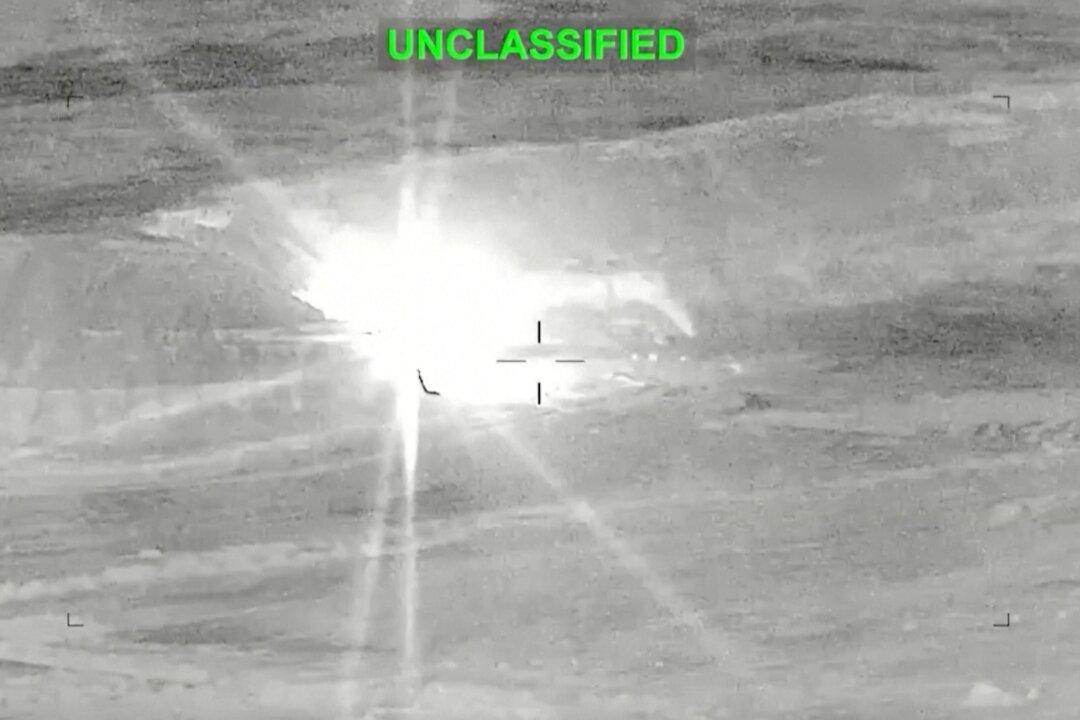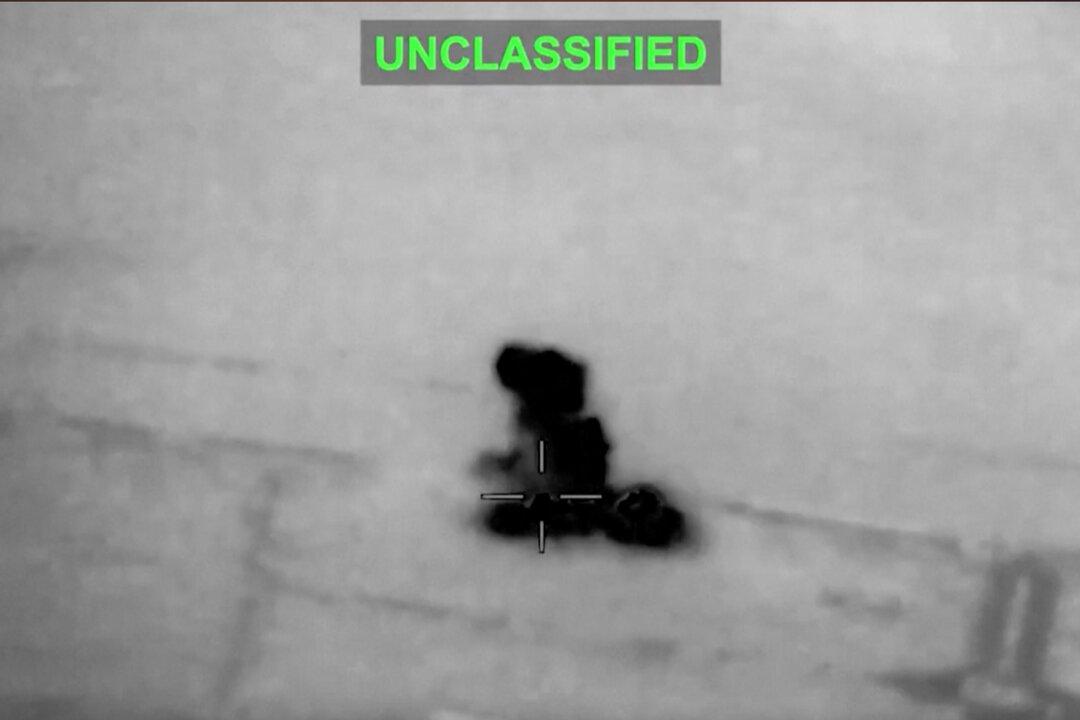
The U.S. Air Force confirmed, for the first time, that a B-2 Spirit stealth bomber successfully launched an AGM-158C Long-Range Anti-Ship Missile (LRASM) against a target vessel during a naval exercise.
Designed as a stealthy anti-ship cruise missile with semi-autonomous targeting capabilities, the LRASM reached early operational capability with U.S. combat aircraft in 2018. The pairing of this missile with the B-2, however, is a newly disclosed capability.
A B-2 demonstrated the LRASM launch capability during Valiant Shield 26, a multinational joint exercise that involved the sinking of the decommissioned amphibious transport dock ship USS Juneau on June 27. The sinking exercise took place in an area of the Philippine Sea north of the Marianas Islands.
“This is the first time we have publicly released the B-2’s demonstrated ability to carry and deploy an AGM-138C LRASM,” an Air Force spokesperson said in an emailed statement to The Epoch Times on June 30.
The pairing of the stealthy anti-ship missile and the stealth bomber could enhance their effectiveness against adversary forces, and is particularly relevant in a potential conflict in the Indo-Pacific region, where China has rapidly expanded its naval forces in recent years.
In 2020, China overtook the United States as the nation with the most warships, and has continued to modernize its naval forces in the years since.

“The B-2’s impressive performance underscores the US military’s commitment to adaptability and flexibility in the face of emerging security challenges,” Gen. Kevin B. Schneider, the commander of the Pacific Air Forces, said in a June 29 statement.
“By prioritizing counter-maritime strike operations, we can maintain a decisive edge over adversaries, protect our national interests and ensure the free and open Pacific that underpins our global security.”
Last year, the U.S. military demonstrated the stealth prowess of the B-2 by using the bombers to breach Iran’s air defense network to deliver a set of strikes targeting Iranian nuclear facilities.
U.S. military analysts have assessed that China is gearing its military development toward what’s known as an Anti-Access/Area Denial (A2AD) strategy, wherein they may quickly lay claim to a sea region and then install defensive measures that make it hard for outside forces to intervene.
The U.S. military has hoped to position the LRASM as a counter to the A2AD strategy by designing it to be less reliant on external guidance systems, which may be limited in a U.S.–China conflict.
Lockheed Martin developed the LRASM for the U.S. Air Force and U.S. Navy. The missile was first integrated with the Air Force’s B-1B Lancer bomber and the Navy’s F/A-18 Super Hornet fighter jet.
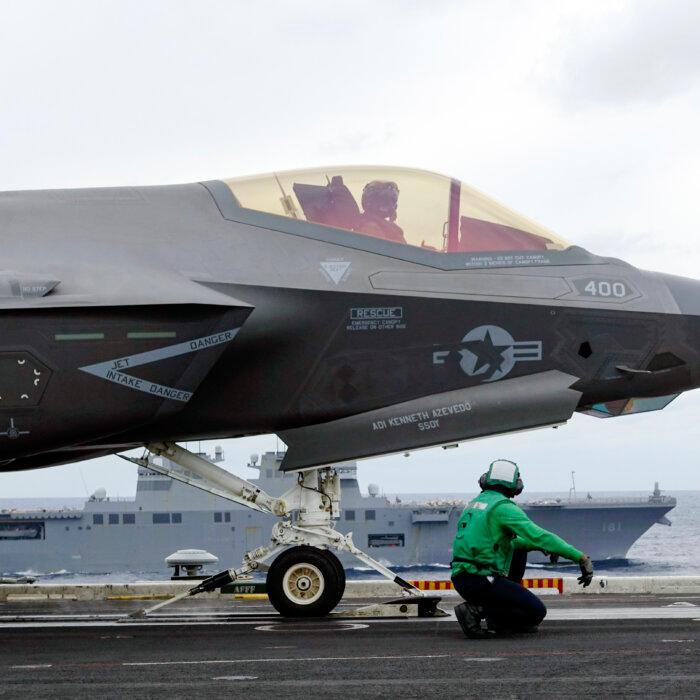
Efforts are underway to integrate the LRASM with other aircraft, including the F-35 Lightning II stealth fighter, the F-15 Strike Eagle fighter jet, and the P-8A Poseidon maritime patrol aircraft.
Since 2020, the U.S. government has also sold LRASMs to Australia to integrate with their F/A-18 fleet.