President Donald Trump will support a bipartisan sanctions bill targeting nations still doing business with Russia moving forward in Congress, Sen. Lindsey Graham (R-S.C.) said on Jan. 7.
The veteran South Carolina senator said the legislation could be put to a vote as early as next week.
“This will be well-timed, as Ukraine is making concessions for peace and Putin is all talk, continuing to kill the innocent.”
He said that the bill would allow Trump to “punish those countries who buy cheap Russian oil fueling Putin’s war machine” and give the president the leverage against nations such as China, India, and Brazil “to incentivize them to stop buying the cheap Russian oil that provides the financing for Putin’s bloodbath against Ukraine.”
Graham has been working on the bill with lawmakers from both parties for months and said that he was looking forward to a “strong bipartisan vote” on the legislation.

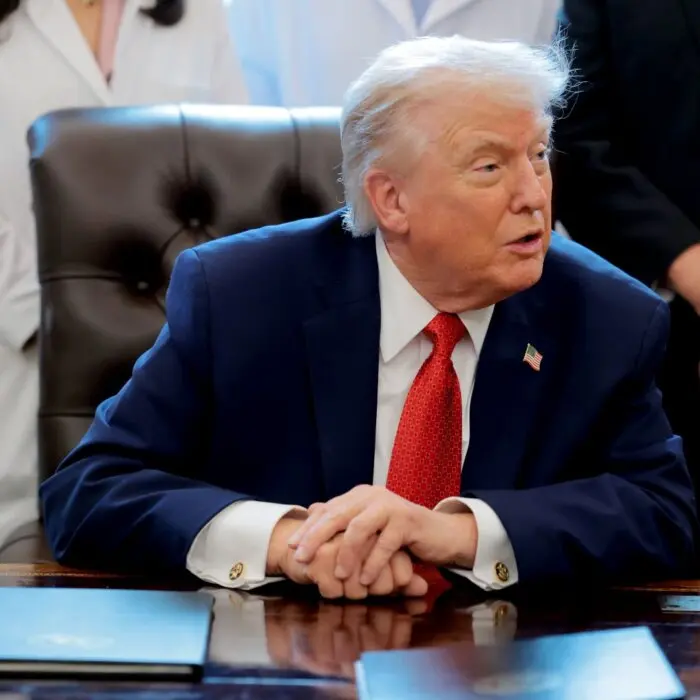
Leaders in the Senate and House have held off bringing the legislation to a vote as Trump has preferred to impose tariffs on goods imported from India, the world’s second-leading buyer of Russian oil after China.
The bill, first submitted by Graham in April, proposes high tariffs on Russia and its trading partners.
Negotiations to bring the war to an end have picked up steam in recent months, with numerous negotiations taking place between the United States and Kyiv and separately with Moscow.
However, Moscow has remained unreceptive to that iteration of the deal.
The pledge came during a meeting with Ukrainian President Volodymyr Zelenskyy and Ukraine’s allies in Paris on Jan. 6 to discuss their contributions to future post-war security guarantees for Kyiv.
Zelenskyy was joined by more than 27 leaders in the French capital, along with Washington’s top negotiators—U.S. special envoy Steve Witkoff and Trump’s son-in-law Jared Kushner—as part of an effort to construct a joint Ukrainian, European, and U.S. position that could be put to Moscow.
Following the summit, Witkoff said that Trump “strongly stands behind security protocols.”
“Those security protocols are meant to ... deter any attacks, any further attacks in Ukraine, and ... if there are any attacks, they’re meant to defend, and they will do both. They are as strong as anyone has ever seen,” Witkoff, who has led talks with Russia, said at a joint press conference with French, German, British, and Ukrainian leaders.