WASHINGTON—President Donald Trump signed a proclamation on Aug. 6 establishing a price floor and a 15 percent tariff on imports of polysilicon and related products to protect U.S. companies from increasing competition from China in artificial intelligence and energy.
Polysilicon (polycrystalline silicon), a highly purified form of silicon, serves as a critical raw material for both semiconductors and solar manufacturing.
“We’re bringing the chips back into the United States in a very big way,” Trump told reporters in the Oval Office following the signing of the executive order.
In July 2025, the U.S. Department of Commerce launched a Section 232 national security investigation into imports of polysilicon and its derivatives. The investigation aimed to determine whether importation of these goods poses a threat to U.S. national security.
The executive order will help boost the U.S. supply chain, Commerce Secretary Howard Lutnick said in the Oval Office.
“We’re setting prices so that the Chinese can’t dump anymore, and we’re setting tariffs to say build it here,” Lutnick said.

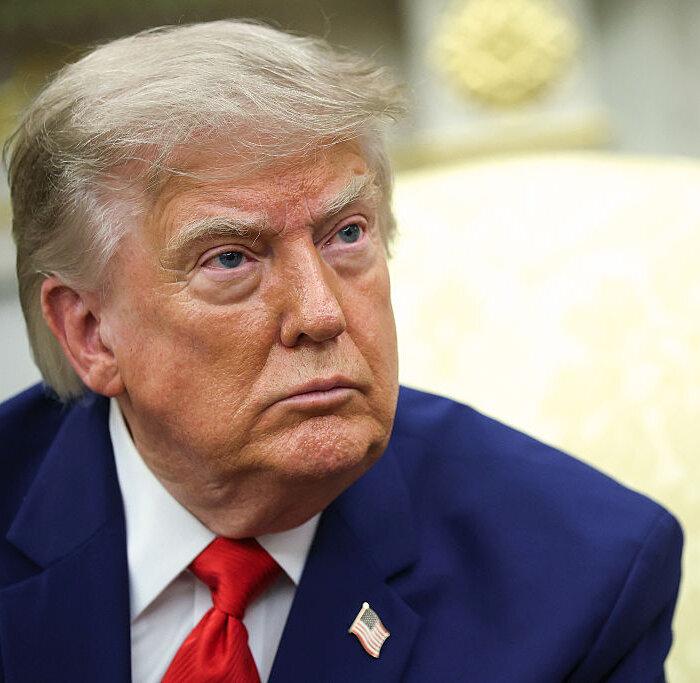
“We’ve got the industry here; it’s too small, and it’s going to explode under your leadership,” he told Trump.
The order applies to polysilicon and its derivatives, including wafers, solar cells, and solar modules. It sets a 15 percent tariff, except for imports from the UK, which are subject to a 10 percent rate.
The order also establishes minimum import prices for these products to protect American firms from “global distortions.” According to the proclamation, the minimum import prices would be $21 per kilogram for polysilicon, $100 per kilogram for polysilicon ingots and wafers, 22 cents per watt for solar cells, and 38 cents per watt for solar modules.
The measures will take effect on Dec. 4.
In addition, the administration would offer an incentive program that encourages companies to build new American polysilicon, ingot, wafer, and cell production facilities.
According to the proclamation, the United States needs to build “a secure and reliable domestic supply of polysilicon” to sufficiently produce semiconductors, which are critical inputs for U.S. defense systems. In addition, solar-grade polysilicon and its derivative products support American defense programs and artificial intelligence innovations.
The administration said foreign governments have boosted polysilicon production for decades, creating a global oversupply that has hurt U.S. manufacturers.
Since 2020, according to the proclamation, “global production of polysilicon has grown by more than 270 percent and inventories reached a record high of 400,000 tons by the end of 2024.”
As a result, America’s share in global polysilicon production capacity fell to less than 2 percent in 2024 from 50 percent in 2005.
Coalition for a Prosperous America commended the administration’s action, describing it as a critical step for national security and the semiconductor supply chain.
“No country can claim chip independence while depending on China for the foundational input,” the group said in a statement.
The order is also expected to help U.S. solar manufacturers avoid spending millions of dollars on legal fees to fight predatory Chinese trade practices, the group said.