Trump Says US–Vietnam Trade Deal Nearly Complete

Without the deal, Vietnamese products entering the United States would have been subject to a 46 percent blanket tariff from Aug. 1.
Trump Says US–Vietnam Trade Deal Nearly Complete
President Donald Trump speaks with members of the media before boarding Marine One on the South Lawn of the White House in Washington on July 15, 2025. Mehmet Eser/Middle East Images via AFP via Getty Images
|Updated:
0:00

U.S. President Donald Trump said on Tuesday that the trade deal between the United States and Vietnam was nearly complete, the same day he announced a new deal with Indonesia.

Speaking to reporters at Joint Base Andrews near Washington, Trump said he could disclose details of the Vietnam deal but did not believe it was necessary.

“I don’t think it matters how much you release of the deal. We have a Vietnam deal, and I would say that that deal is being pretty well set,” the president said.

Trump confirmed on July 2 that he had reached an initial trade deal with Vietnam that would see the Southeast Asian country pay a 20 percent tariff rate on goods sent to the United States and a 40 percent levy on any transshipping.

In exchange, Vietnam would provide the United States with access to its market for trade with zero tariffs.

Without the deal, Vietnamese products entering the United States would have been subject to a 46 percent blanket tariff on Aug. 1, the tariff deadline.

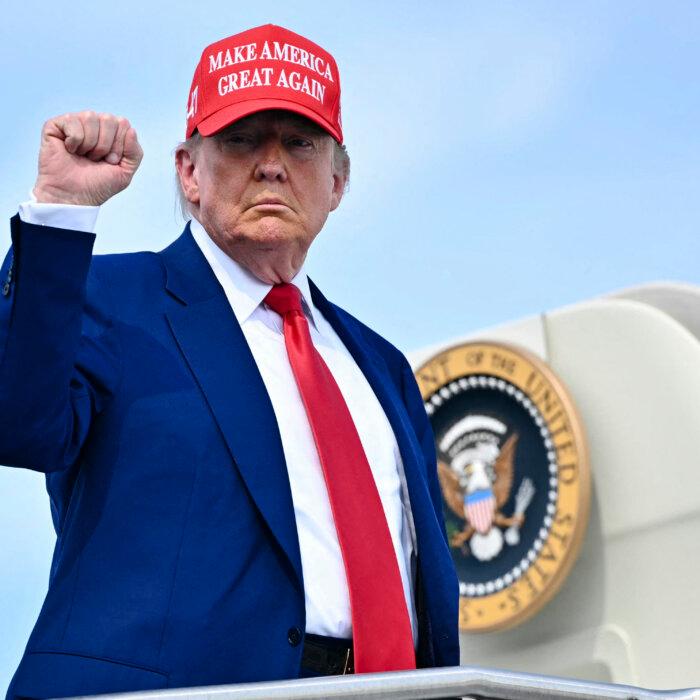
According to the U.S. Trade Representative’s Office, the U.S. trade deficit with Vietnam was $123.5 billion in 2024, up 18.1 percent from the year before.

Reciprocal Tariffs

The Trump administration announced on April 2 that dozens of countries would be subject to reciprocal tariffs to correct what the president has described as unfair trade practices at the expense of the United States.
Those tariffs were meant to come into effect on April 9, but Trump later introduced a 90-day pause, which was then extended to Aug. 1, to allow more time for negotiations.
Part of these discussions has been asking countries to curb transshipments, mostly carried out by China. This is the practice of taking Chinese goods, minimally altering them, and then rerouting them through a third country—like Vietnam—to the United States, which allows Beijing to bypass direct U.S tariffs.
China is Vietnam’s largest source of imports, while the United States is its top export destination.
Taiwanese economist Edward Huang told The Epoch Times on July 3 that other countries were watching the development of the U.S.–Vietnam trade deal, “because everyone knows that Vietnam is China’s most important transit point for its transshipment practices.”
Huang said such two-tiered trade deals could become a norm in international trade, saying: “For example, the trade deals between the United States and the UK will be the model for the European Union. Countries with similar industrial structures to Vietnam will also use Vietnam’s deal as a model to negotiate with the United States, which will become a new rule for international trade.”

Indonesia Deal

On July 15, Trump announced that the United States and Indonesia reached a trade agreement, adding to the list of deals the White House has struck, which includes China, the United Kingdom, and Vietnam.

U.S. officials have said they expect to make more announcements on trade deals by August.

Under the new deal, Indonesia is subject to a 19 percent tariff, while U.S. goods will have full access to the Indonesian market of more than 280 million people without tariffs.

“You have to understand, we had no access into any of these countries,” Trump told reporters. “Our people couldn’t go in. And now we’re getting access because of what we’re doing with the tariffs.”

Indonesia had previously faced a 32 percent levy on goods entering the United States, which would have come into effect next month.

Last week, Trump sent letters to more than 20 U.S. trade partners, including Canada, Japan, and South Korea, outlining tariff rates.

The president posted to his social media platform Truth Social on July 8 that the letters said there will be no change to the date on which tariffs will begin.

“In other words, all money will be due and payable starting AUGUST 1, 2025—No extensions will be granted,” he said.
Reuters and Andrew Moran contributed to this report.
Google LogoMark Us Preferred on Google
Victoria Friedman
Victoria Friedman
Author
Victoria Friedman is a UK-based journalist covering a wide range of international stories, with a particular interest in technology, eastern Europe, and defense.