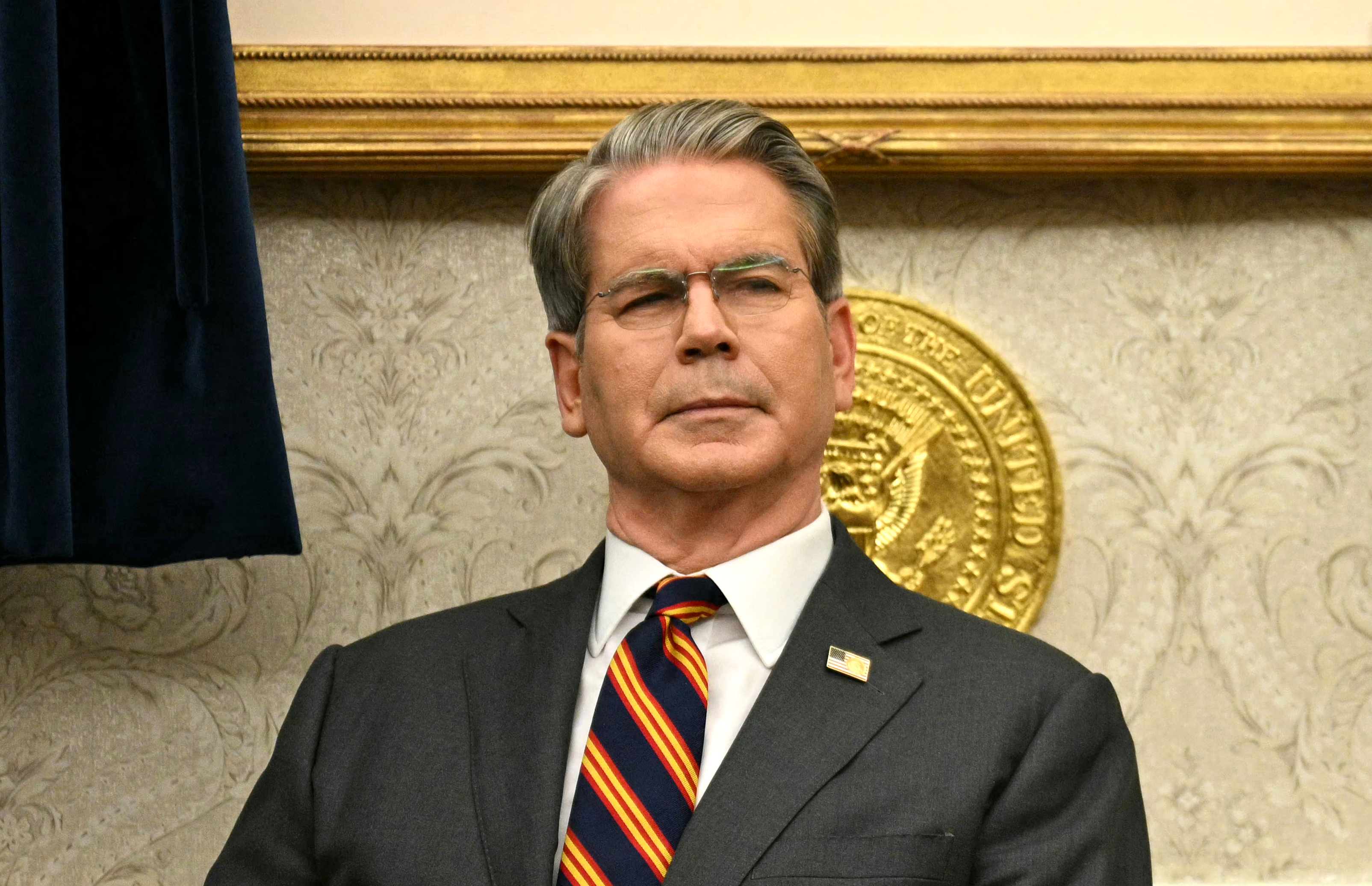

While the previous administration grappled with a “toxic mix” of immigration, interest rates, and inflation, the Trump-led White House is championing “investment, innovation, and income,” Bessent said.
Bessent’s remarks come as Minnesota has been at the center of the national spotlight in recent weeks, led by rampant welfare fraud and a fatal ICE encounter.
Tackling Welfare Fraud
Bessent believes recovering lost dollars to welfare fraud could help pay for the president’s recently proposed $1.5 trillion defense budget.Asked how the president could pay for it, Bessent said that recovering money from fraud could help cover the cost.
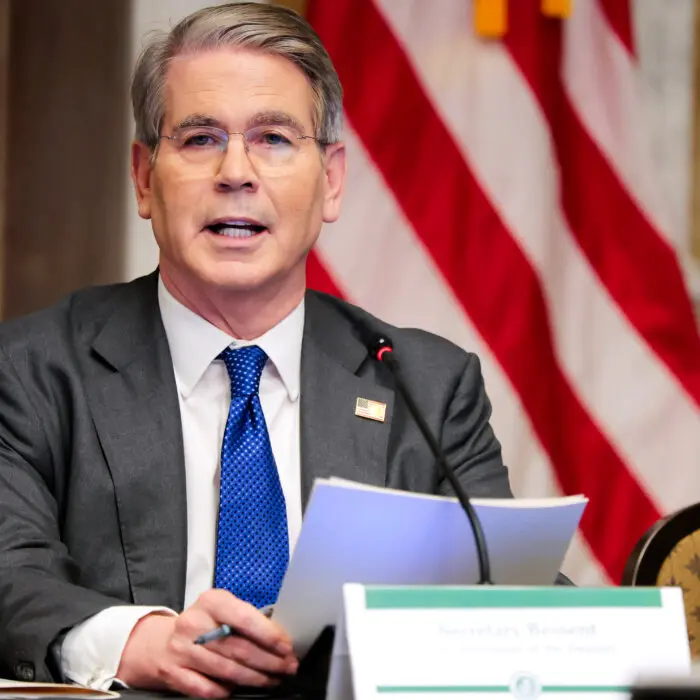
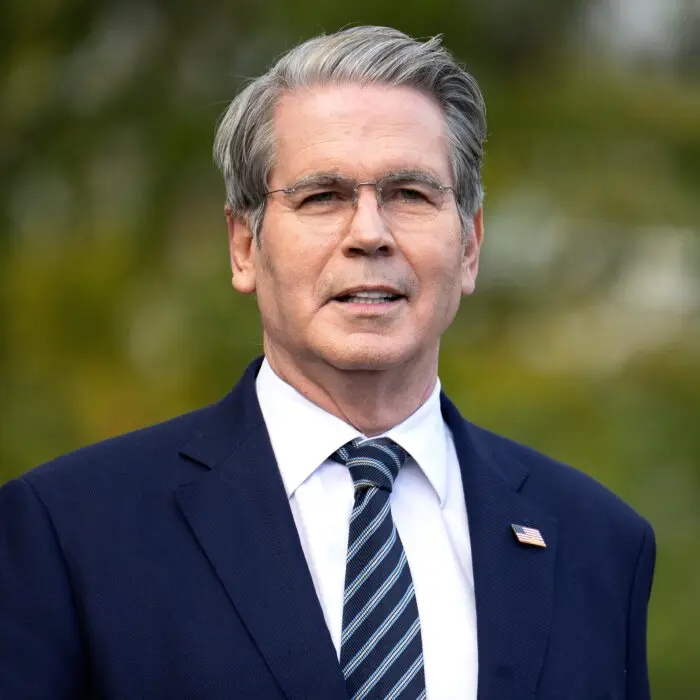
“Minnesota, unfortunately, is ground zero for what may be one of the most egregious welfare scams in our nation’s history to date,” he said. “Under Governor Tim Walz, billions of dollars intended for families in need, housing for disabled seniors, and services for children were diverted to benefit fraudsters.”
Bessent, who is also the acting IRS commissioner, said the White House considers aggressive fraud enforcement a crucial part of its broader efforts to curb government waste—funds that could be used to pay for national security initiatives without raising taxes.
In addition to looking into Minnesota, Bessent signaled that U.S. officials could examine similar issues in other states.
Fed Policy, Powell Successor
Weeks before the Federal Reserve holds its first two-day Federal Open Market Committee meeting of the year, Bessent acknowledged that Fed policy remains above neutral territory.The neutral rate is when policy is neither restrictive nor stimulative.
Since arriving at the Oval Office in January, the administration has been urging the central bank to lower interest rates to further bolster economic conditions.
“It is the only ingredient missing for even stronger economic growth, which is why the Fed should not delay,” Bessent said in his prepared remarks. “I believe the Fed needs to have merely an open mind. The open-mind maestro, former Fed Chairman Alan Greenspan, resisted premature rate hikes during the technology boom of the 1990s—and history proved him right.”
The Treasury secretary thinks interest rates should be lower.
“Most models would show 2.5 [percent] to 3.20 [percent],” he said in a question-and-answer session.
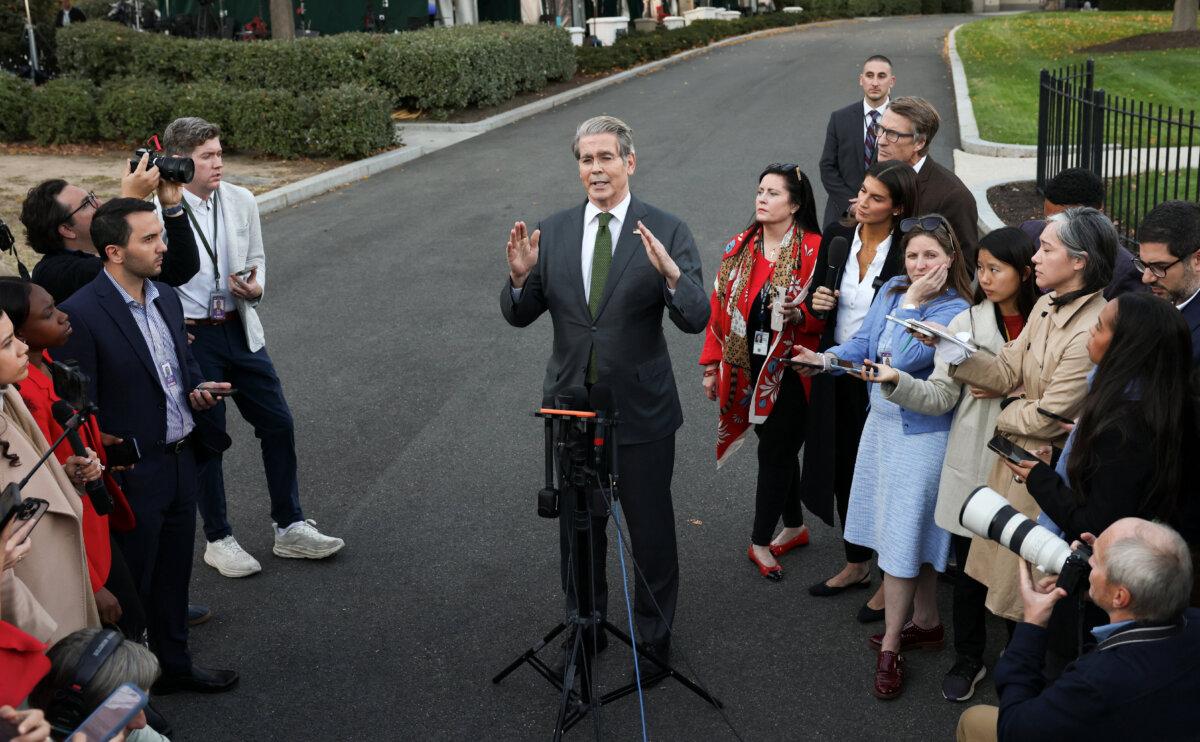
The administration, Bessent notes, is still searching for a successor to Fed Chair Jerome Powell, whose term ends in May.
Trump has pointed to a handful of candidates to be the next head of the U.S. central bank, including National Economic Council Director Kevin Hassett, Fed Gov. Christopher Waller, and former Fed Gov. Kevin Warsh.
Bessent acknowledged that the White House has not yet interviewed BlackRock Chief Investment Officer Rick Rieder.
The president could make his decision sometime this month, he said.
Supreme Court to Rule on Tariff
The Supreme Court is soon expected to rule on whether Trump can use emergency powers to impose his tariff agenda under the International Emergency Economic Powers Act.Justices have expressed skepticism that the executive branch can employ this authority without congressional approval.
Bessent noted that he is not concerned about lost tariff revenue, but rather about the president losing flexibility to impose higher import duties.
“What is not in doubt is our ability to continue collecting tariffs at roughly the same level in terms of overall revenue,” Bessent said. “What is in doubt—and it’s a real change for the American people—is the president losing flexibility to use tariffs, both for national security, for negotiating leverage.”
Smaller Deficit Ahead
The federal government could have a smaller budget deficit this calendar year.Bessent projected that the budget shortfall could be between $300 billion and $500 billion lower—equivalent to 1 percent of the gross domestic product (GDP).
“We have constrained spending, and the economy has grown roughly 6 percent nominal,” he said.
Last year, Washington registered a $1.8 trillion budget deficit.
The action was lauded by the independent policy organization Committee for a Responsible Federal Budget.