Going to the fair is one of the most old-fashioned outings you can imagine. It’s wholesome, simple, and refreshingly real in the ever-virtual world of the 21st century.
It’s a tradition that goes back hundreds of years in America and thousands of years in older cultures. The fair was a place for farmers to sell their crops, craftsmen to exchange their wares, minstrels to present their art, maids to meet young men, and common folks to socialize with their neighbors. Today, American fairs offer a homespun alternative to extravagant theme parks for family fun, a carnival atmosphere, and engagement with the local community.
Many citizens of less populous states eagerly await the yearly state fair. But California is such a sprawling region that its state fair, hosted annually at the Cal Expo in Sacramento, is mainly a draw for people who live near the state capital. In other parts of the state, each region celebrates its agriculture, cuisine, and local history through its own fair.
San Diego County hosts its annual fair at the Del Mar Fairgrounds, which include the Del Mar Racetrack. The 2026 fair runs June 10 through July 5, closing just in time for Del Mar to prepare for the opening of the racing season on July 17. Since 1980, when the fair celebrated its centennial, it has had a different theme each year. This year, it is Once Upon a Fair.
History of the Fair
The SD County fair is remarkably historic for Southern California. Having begun in 1880 as an agricultural fair, it is the longest-running event in San Diego County. In 1936, it moved to its current location of the newly-built Del Mar Fairgrounds, where it’s been a beloved annual regional tradition ever since. The fair has taken brief hiatuses for three major disasters—World War I in 1917-18, World War II in 1942-45, and the COVID-19 pandemic in 2020. Over the years, it has had different names, including the Southern California Exposition and the Del Mar Fair, but in 2002 it returned to its original name of the San Diego County Fair. It’s the largest fair ever held in California and the fourth largest fair in the United States.Today, the fair hasn’t lost its connection to agriculture or the region’s history. The huge Pat O’Brien Hall is dedicated to the Farm 2U Exhibit, including displays on how food is grown, produced, and transported throughout the region. Vendors set up stands offering samples and selling locally grown strawberries, honey, jam, wine, and other foodstuffs, while giant models of fruits and vegetables and a make-believe supermarket provide fun exploratory exhibits for younger fairgoers. Also in that building is the Paul Ecke Jr. Flower Show, where dozens, if not hundreds, of gorgeous flower specimens from dedicated gardeners around the state are displayed for judging beneath a canopy of giant balloon flowers. Outside, guests can enjoy some respite from the bustle of the fair’s busier thoroughfares by strolling around the peaceful confines of the Garden Show.
Showing and judging livestock is an integral part of many state fairs, especially in rural areas. Although not the focal point of the SD County Fair, livestock displays played a bigger role than I expected. Two huge barns were filled with goats, cattle, donkeys, pigs, llamas, and some surprisingly fluffy pigeons! Just outside, 4-H students of various ages proudly showcased their animals for judging.
Fun and Food at the Fair
Gastronomic offerings are a big part of any fair. Midwest fairs are famous, or infamous, for deep-fried variations on junk food, but Southern California does it a little differently. “Fair-tastic” food was interspersed throughout every corner of the fairgrounds, with a wide variety of festive and bizarre food.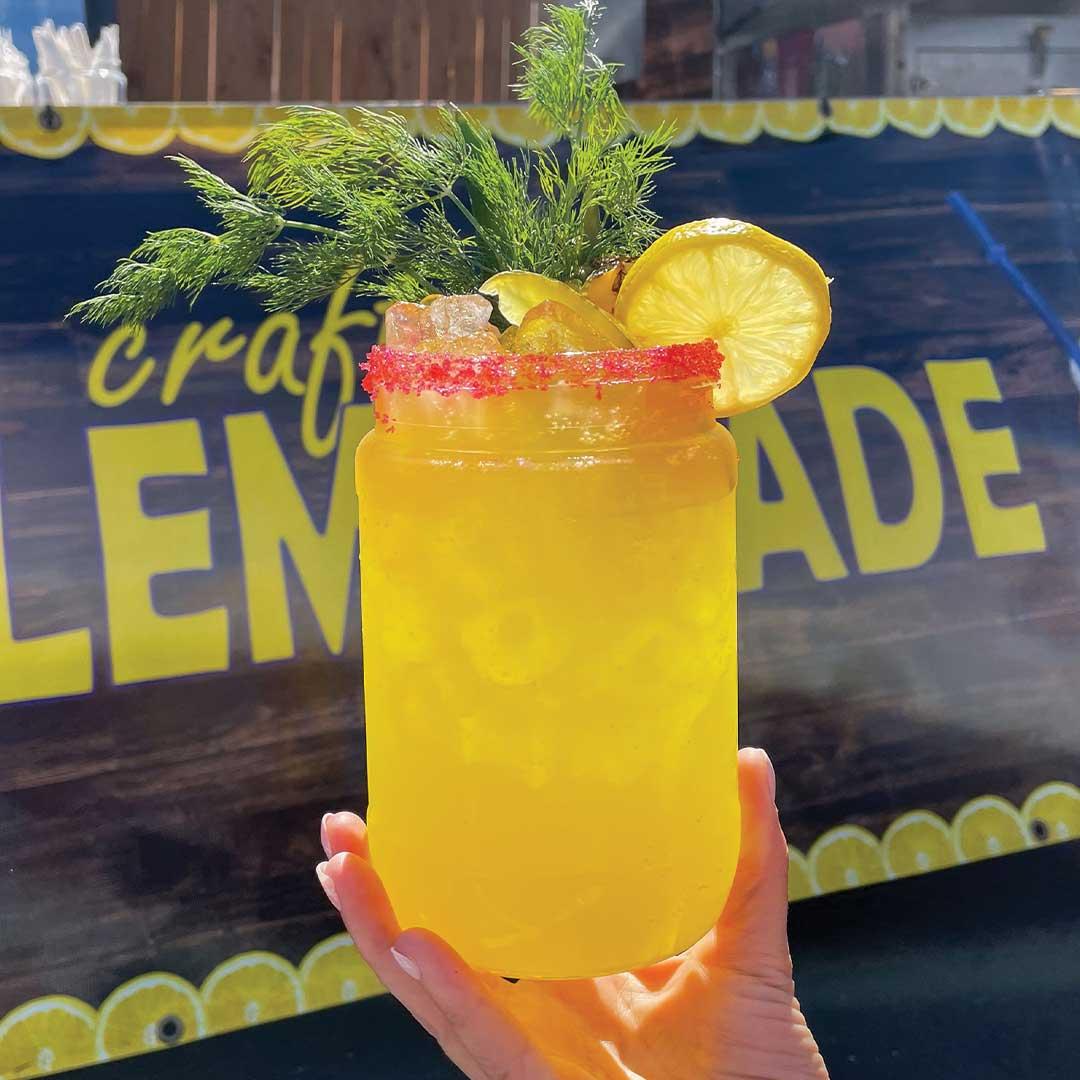
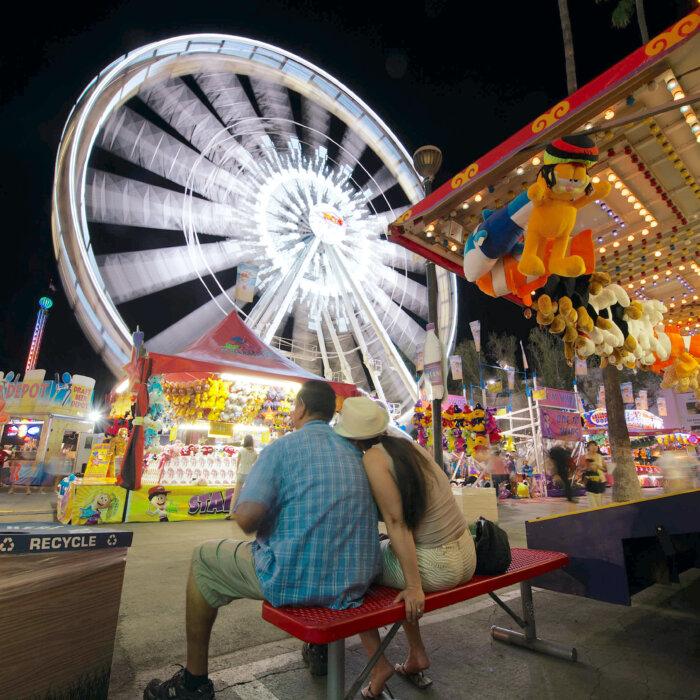
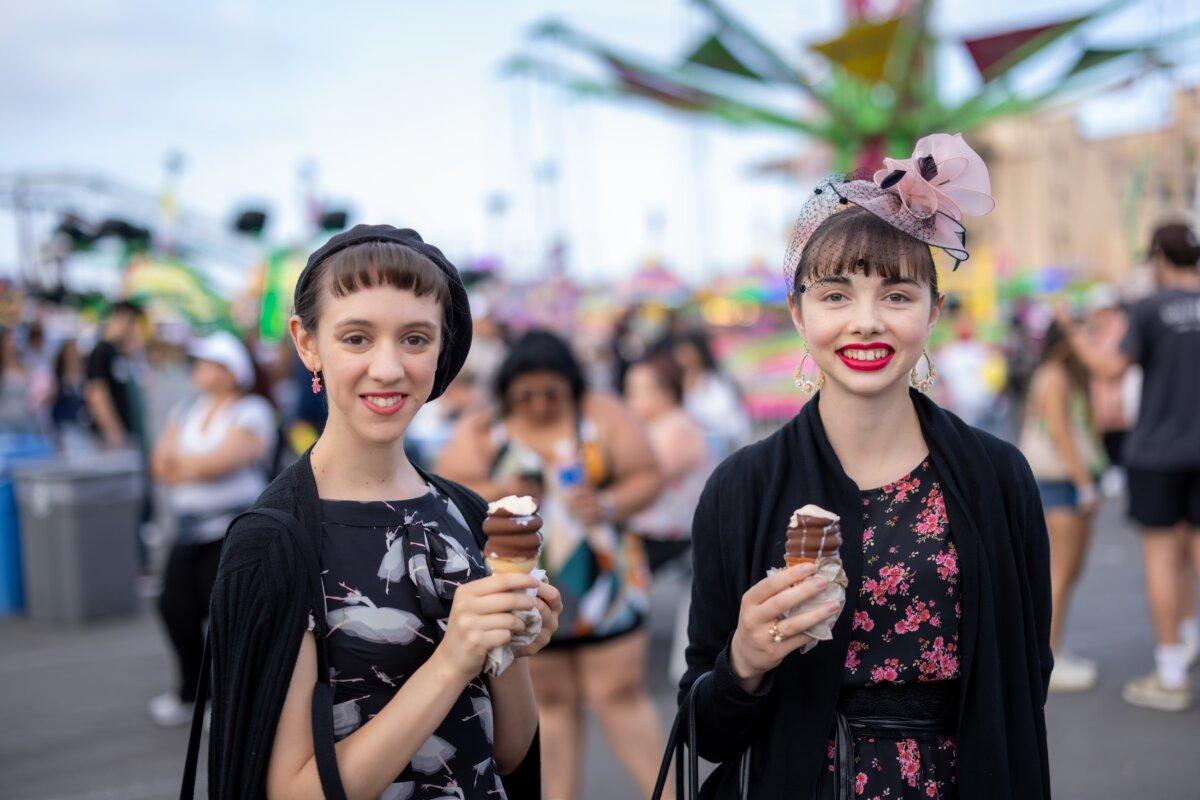
Still, there’s more to the fair than food and livestock. Carnival rides and games are the biggest draw for many of the SD County locals who flood the fairgrounds each year. Before Disneyland, Universal Studios, and Legoland cornered the market on amusement, it was mainly fairs that offered family fun such as rides and games.
Old-Fashioned Community Fun
For wholesome fun, a visit to the fair remains one of the most old-fashioned, simple, and real outings you can imagine. Is it loud and bright? Yes. Is it shamelessly commercial? Of course. Is it ridiculously overpriced? Naturally, but what isn’t these days?What distinguishes the fair from other recreational destinations for me is that it isn’t the same day in and day out. It truly is a community happening, so there are different events and exhibits each day. The Fair offers a place for students to learn about animal husbandry, gardeners to enter their flowers in competitions, crafters to sell their work, performers to take the stage with a built-in audience, and people of all ages to come together to celebrate our community.
The fair will be open Wednesday through Sunday from 11 a.m. to 11 p.m. through July 5. You can buy tickets in advance online, at many participating stores, or at the gate. There’s a plethora of discounts available on specific days and times, so check out the website to find the best deal and to peruse the wide range of activities happening throughout the season. It’s always a good day to go to the fair!