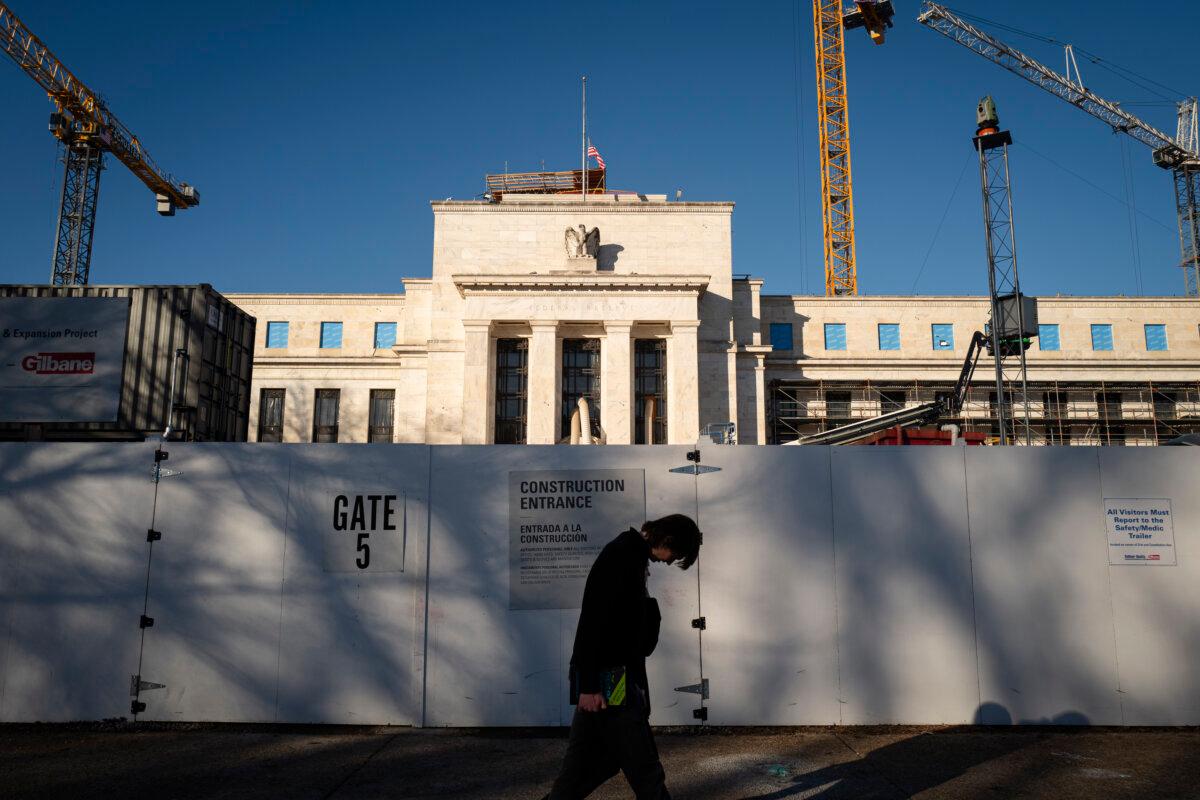
The Federal Reserve has been under fire over comprehensive renovations of the U.S. central bank’s headquarters in Washington.
President Donald Trump, senior administration officials, and scores of Republican lawmakers have criticized the Fed for overspending on the Marriner S. Eccles Building on the National Mall and 1951 Constitution Avenue.
“The President is extremely troubled by your management of the Federal Reserve System,” Vought wrote in a July 10 letter to Fed Chair Jerome Powell.
“Instead of attempting to right the Fed’s fiscal ship, you have plowed ahead with an ostentatious overhaul of your Washington D.C. headquarters.”
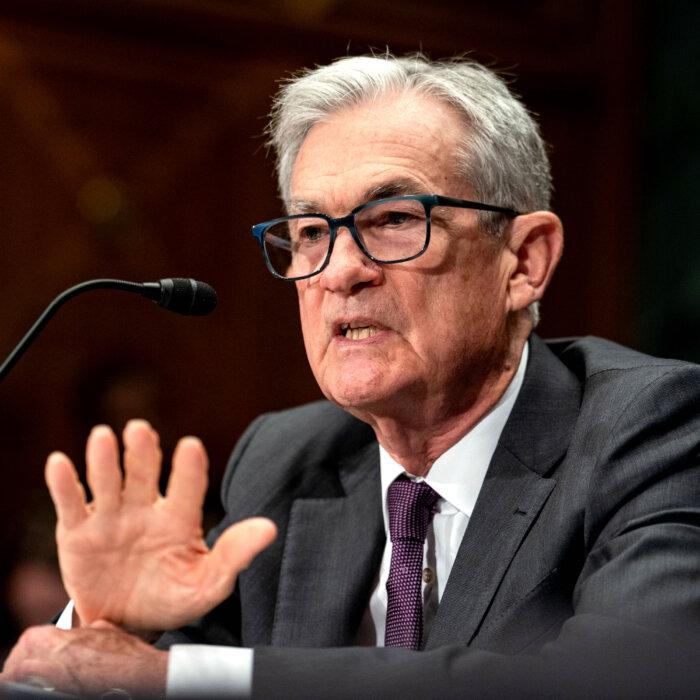

He also defended the size and scope of the renovations.
“The project is large in scope because it involves the renovation of two historic buildings on the National Mall and that were first constructed in the 1930s,” the central bank chief said.
“While periodic work has been done to keep these buildings occupiable, neither building has seen a comprehensive renovation since they were first constructed.”
Marriner S. Eccles Building
The Fed’s headquarters are located at 20th Street and Constitution Avenue in Washington.The building was named after Marriner S. Eccles, who served as chairman of the Federal Reserve from 1934 to 1948 and played a pivotal role in shaping monetary policy during the New Deal era. It was completed in 1937.
Renovations Begin
In 2017, the Federal Reserve Board approved the renovation project, the first comprehensive overhaul in its history.The National Capital Planning Commission (NCPC)—the federal government’s central planning agency for development projects— reviewed the concept and provided feedback in a December 2019 report.
Between October 2020 and September 2021, the NCPC granted final approval for renovation plans.
Since then, the project’s annual budget has been approved by the Federal Reserve Board every year. Additionally, the costs, contracts, schedules, and expenditures of the renovation are subject to examination by the institution’s independent Office of Inspector General. It also receives monthly reports on the construction.
“As explained on the Board’s public website, we take seriously the responsibility to be good stewards of public resources as we fulfill the duties given to us by Congress on behalf of the American people,” Powell wrote in his letter to Vought.
Dollars and Cents
When the project was first approved nearly a decade ago, the original budget was $1.9 billion. That price tag has since increased to $2.5 billion, with officials pointing to rising labor and material costs, extended construction timelines, and asbestos and soil contamination. Following consultations with review agencies, changes were also made to the original building designs.Fed Governor Christopher Waller, speaking to reporters following a July 17 speech, said it is common for these types of projects to experience cost overruns, partially blaming it on inflation.
Meanwhile, the Fed has denied the existence of a new VIP dining room, a VIP elevator, or new water features.
It also defended the creation of a garden terrace and vegetated roofs. The former serves as the roof of the underground parking structure, while the latter is designed to assist with stormwater management and enhance the building’s efficiency.
“Green roofs are found on other federal government buildings, like the Departments of Justice, Interior, and many others, and are encouraged by the General Services Administration,” according to Powell’s letter.
However, appearing on Capitol Hill for his semiannual monetary policy report in June, Powell confirmed that some of these features have been scrapped.
What Trump, Lawmakers Say
The president told reporters this week that the hefty price tag is “really disgraceful,” suggesting that the Fed chair’s actions might warrant dismissal.Still, despite reports that Trump was considering terminating Powell ahead of his term ending in May 2026, the president reaffirmed on July 16 that it was “highly unlikely.”
“Unless he has to leave for fraud,” Trump noted.
GOP lawmakers have weighed in.
“If anybody thinks it would be a good idea for the Fed to become another agency in the government subject to the president, they’re making a huge mistake,” Tillis said.