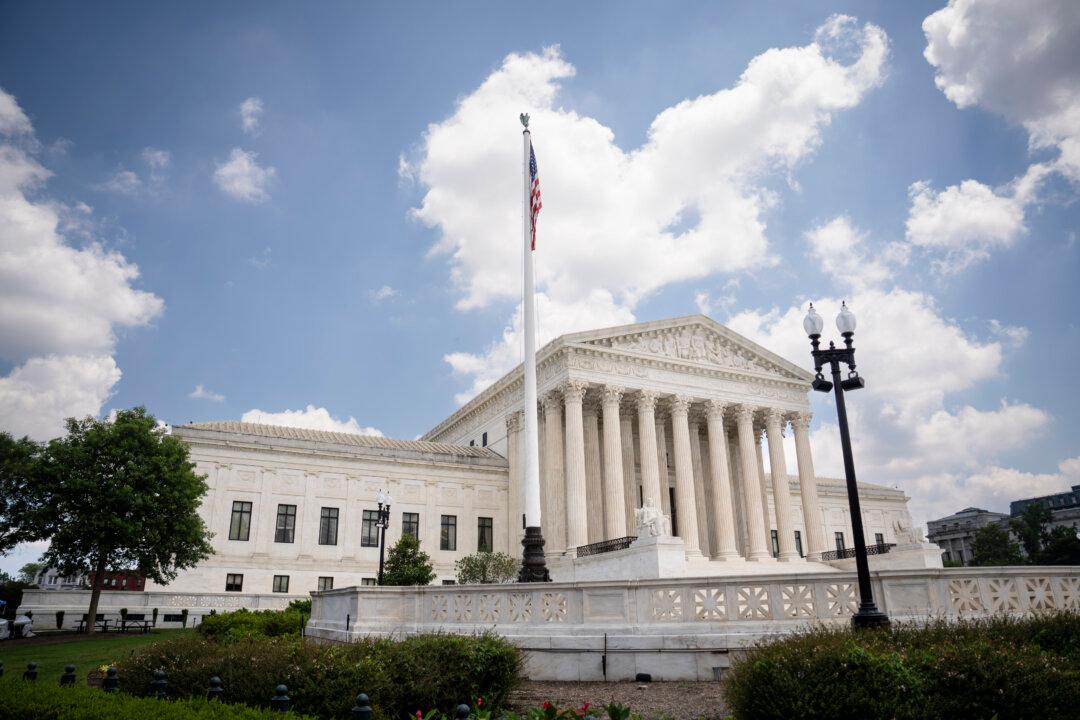
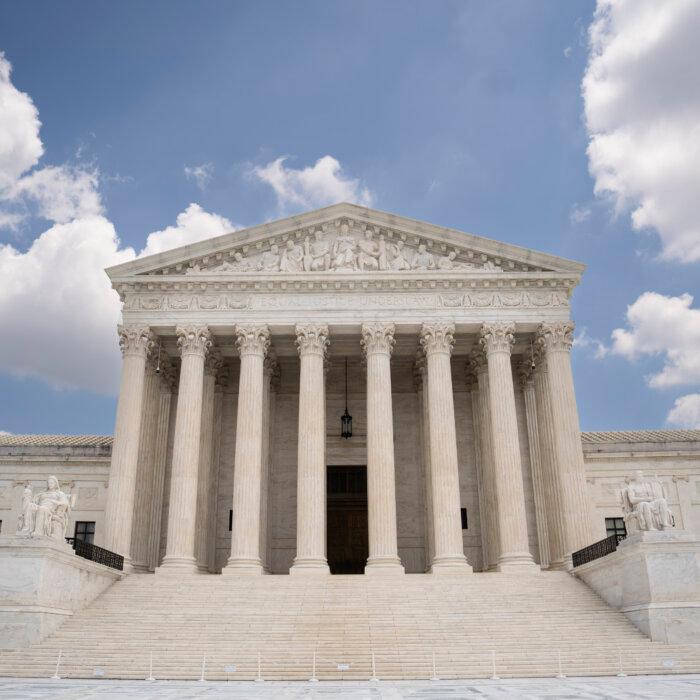
The U.S. Supreme Court on June 30 struck down federal limits restricting political parties from coordinating spending with candidates.
Justice Brett Kavanaugh wrote the court’s majority opinion in National Republican Senatorial Committee (NRSC) v. Federal Election Commission (FEC), which was the NRSC’s challenge to provisions of the Federal Election Campaign Act.
Kavanaugh wrote, “the Federal Election Campaign Act, known as FECA, limits a political party’s campaign spending. Those spending limits necessarily abridge political parties’ freedom of speech.”
Justices Elena Kagan, Sonia Sotomayor, and Ketanji Brown Jackson dissented.
Congress passed the Federal Election Campaign Act in 1971 to limit campaign spending and fundraising for federal political office, and amended it in 1974 to limit how much political party committees may accept and spend to influence a federal election.
Limits on spending coordinated between party committees and candidates were created based on the theory that a lack of restrictions encourages corruption and allows wealthy donors to exert outsized influence.
The case was the NRSC’s challenge to provisions of the Federal Election Campaign Act.
The petitioners were the NRSC, the National Republican Congressional Committee, Vice President JD Vance, and former Rep. Steve Chabot (R-Ohio). The respondent was the FEC.
A divided U.S. Court of Appeals for the Sixth Circuit ruled against the petitioners in September 2024, finding that because the Supreme Court never reversed a landmark 2001 decision known as FEC v. Colorado Republican Federal Campaign Committee, the limits remained constitutional.
Although the appeals court determined that coordinated party expenditure limits were inconsistent with recent Supreme Court rulings on the First Amendment, it upheld them, finding that the issue was controlled by the still-binding 2001 precedent.
In the 2001 ruling, the high court held that party-coordinated expenditures, unlike party expenditures given independently of any candidate or campaign, may be limited by law to “minimize circumvention of [individual] contribution limits.”
Supporters of the coordination limits argued that because federal law allows larger donations to political parties, as opposed to candidates, curtailing the limits would have allowed donors to accomplish a quid pro quo with candidates by giving to their party. A quid pro quo is something given or received in exchange for something else.
The case was the NRSC’s challenge to provisions of the Federal Election Campaign Act.
The petitioners were the NRSC, the National Republican Congressional Committee, Vice President JD Vance, and former Rep. Steve Chabot (R-Ohio). The respondent was the FEC.
A divided U.S. Court of Appeals for the Sixth Circuit ruled against the petitioners in September 2024, finding that because the Supreme Court never reversed a landmark 2001 decision known as FEC v. Colorado Republican Federal Campaign Committee, the limits remained constitutional.
Although the appeals court determined that coordinated party expenditure limits were inconsistent with recent Supreme Court rulings on the First Amendment, it upheld them, finding that the issue was controlled by the still-binding 2001 precedent.
In the 2001 ruling, the high court held that party-coordinated expenditures, unlike party expenditures given independently of any candidate or campaign, may be limited by law to “minimize circumvention of [individual] contribution limits.”
Supporters of the coordination limits argued that because federal law allows larger donations to political parties, as opposed to candidates, curtailing the limits would have allowed donors to accomplish a quid pro quo with candidates by giving to their party. A quid pro quo is something given or received in exchange for something else.
This is a developing story and will be updated.