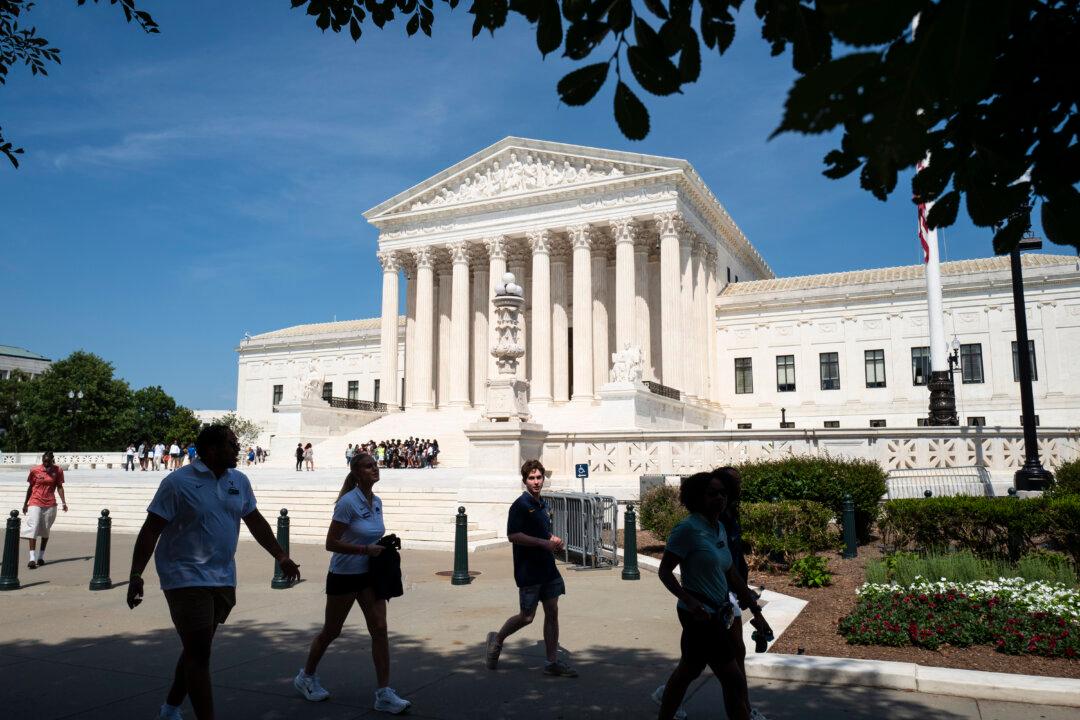
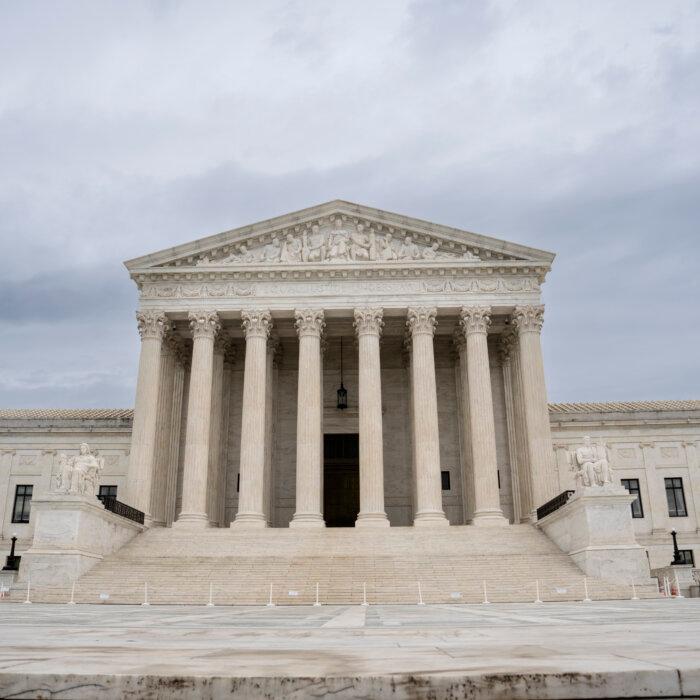
The U.S. Supreme Court late on May 15 rejected an appeal by Virginia officials who sought to challenge the Virginia Supreme Court’s recent decision to block a congressional map approved by voters that favored Democrats.
Democratic officials had asked the nation’s highest court to block the state supreme court’s ruling.
The referendum was approved by voters, 52 percent to 48 percent, on April 21. The change in electoral district boundaries was expected to give Democrats a 10-to-one advantage over Republicans in the state’s U.S. House delegation. The delegation currently has six Democrats versus five Republicans.
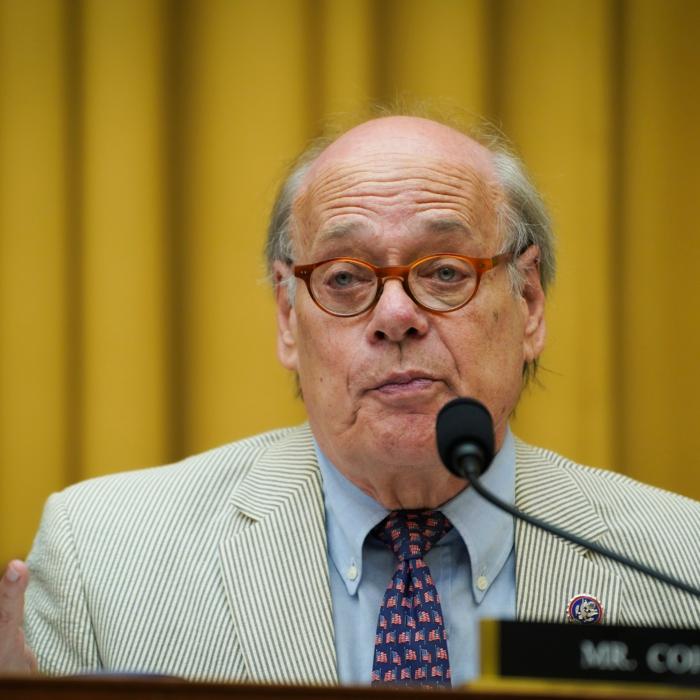
“The decision below violates federal law in two separate ways,“ Scott wrote. ”First, it predicated its interpretation of the Virginia Constitution on a grave misreading of federal law, which expressly fixes a single day for the ‘election’ of Representatives and Delegates to Congress.”
The application is “extraordinary” because it asks the high court to halt a state supreme court’s ruling “on a state constitutional issue governing the state constitutional amendment process, all so that they can redraw congressional districts weeks before early voting begins in the primary.”
Even more extraordinary is what the application omits—“any mention of a deadline for relief, any discussion of the injunction in a separate case that renders the application meaningless, and any federal question providing this Court a basis for review,” the brief states.
In a 4–3 decision, the Virginia Supreme Court blocked the results of the Democrat-backed ballot measure, finding that Democratic lawmakers had not followed proper procedure last year when they rushed to approve the referendum in time to reach the ballot ahead of the November 2026 election.
Normally, state legislatures redraw congressional maps after the U.S. census takes place every 10 years.
Last year, the redistricting battle started when Texas, with President Donald Trump’s backing, launched its redistricting effort to protect the Republican Party’s narrow majority in the U.S. House. Other state legislatures, including Republican-controlled Florida and Democratic-dominated California and Virginia, responded with redistricting efforts of their own. State lawmakers in several other states are currently in the process of redrawing their congressional maps.
Those redrawing efforts accelerated after the U.S. Supreme Court ruled 6–3 on April 29 that race may not be the predominant, overriding reason for how congressional district lines are drawn.
McDougle hailed the new ruling.
Virginia Gov. Abigail Spanberger, a Democrat, criticized the decision, which she said had the effect of nullifying “the votes of more than three million Virginians.”