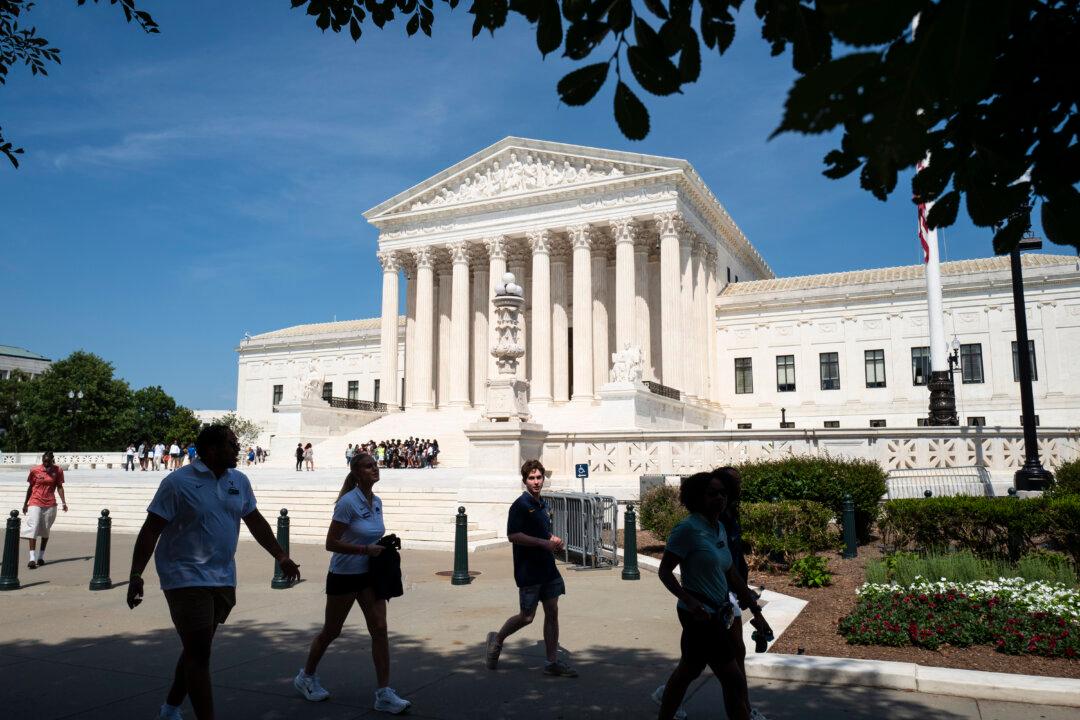
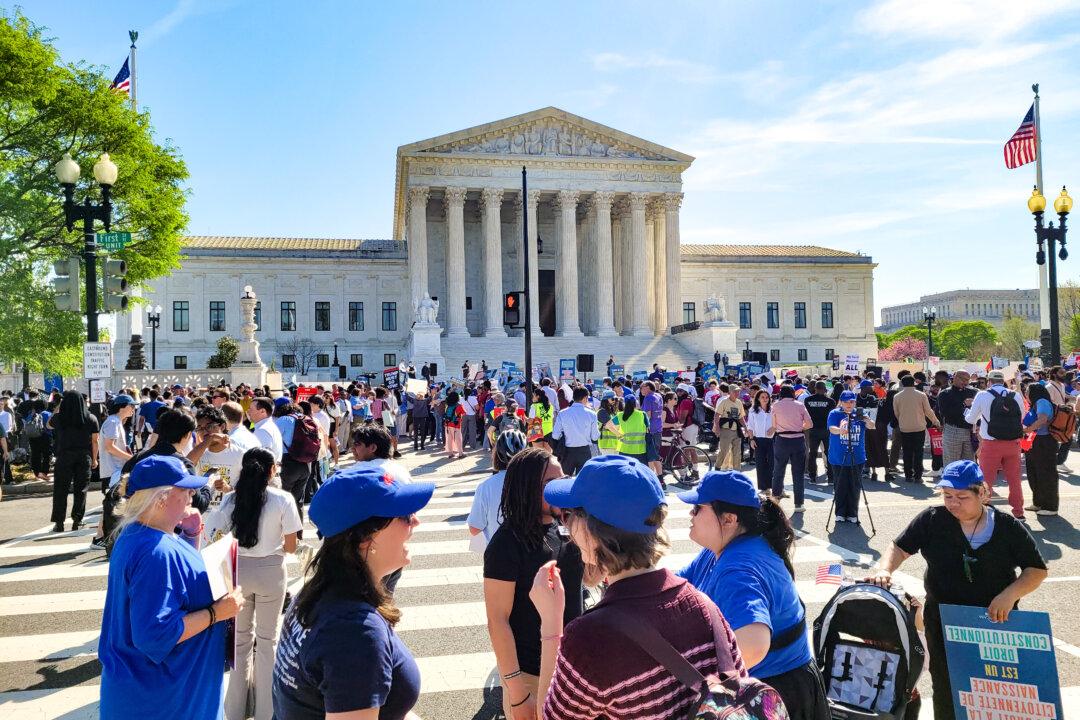
The U.S. Supreme Court on Nov. 10 rejected a challenge to its landmark 2015 ruling that requires all states to grant licenses for same-sex marriages.
Davis declined to sign the licenses after the Supreme Court ruled 5–4 in June 2015 in a case called Obergefell v. Hodges that the 14th Amendment to the Constitution requires all states to grant licenses for same-sex marriages and recognize same-sex marriages carried out in other states.
Days after the Obergefell decision, David Moore and David Ermold sought a marriage license from Davis. She declined, saying she was acting “under God’s authority” and advised the couple to seek a marriage license in another county.
The men sued for civil rights violations, seeking damages. A federal district court issued an order in a separate case directing Davis to issue marriage licenses.
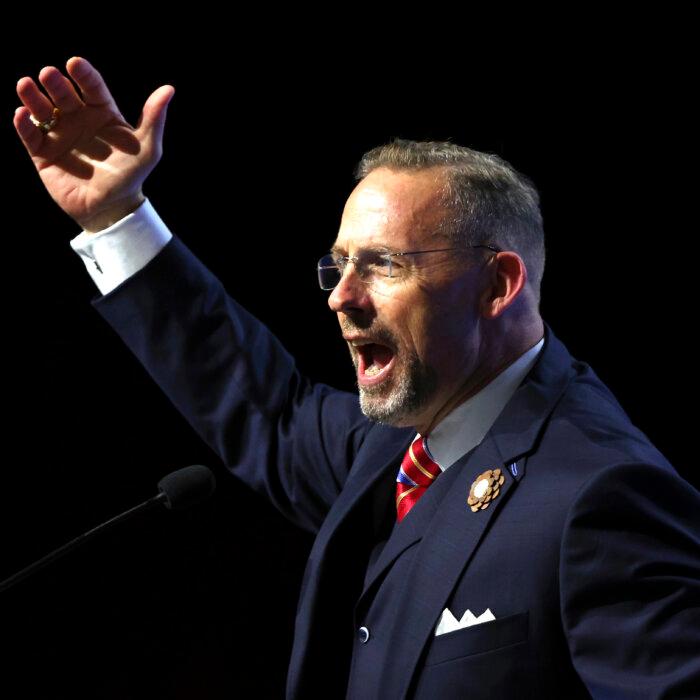
Davis took the position at the time that her office would not issue any marriage licenses “until the state passed legislation to grant her an accommodation,” the ruling said.
While Davis’s appeal of the court order was pending, Kentucky enacted a law allowing clerks’ names to be left off marriage licenses. Davis accepted this and asked for her appeal to be dismissed.
The Sixth Circuit declined to dismiss the appeal because the plaintiffs were seeking damages.
The legal proceeding went on for years before a federal jury awarded $100,000 in total compensatory damages to Moore and Ermold.
The Sixth Circuit did not disturb the jury verdict and held that Davis was not entitled to immunity from suit as a government official, the ruling said.
In her petition, Davis specifically asked the Supreme Court to overturn the Obergefell ruling.
Opponents of the Obergefell decision thought the court might be willing to undo the precedent because three Supreme Court justices who dissented in the case—Chief Justice John Roberts, Justice Clarence Thomas, and Justice Samuel Alito—still serve on the high court. Four justices are needed to get the court to grant a petition and agree to hear the case.
That same year, Thomas wrote that the Supreme Court should “reconsider” major “substantive due process precedents,” including Obergefell.
Substantive due process protects those personal and relational rights, as distinguished from economic rights, that are not explicitly mentioned in the Constitution’s Bill of Rights and that are deeply rooted in U.S. history and tradition, as seen in the context of evolving social norms.
Dobbs, which overturned Roe v. Wade (1973), held that the Constitution does not guarantee a right to abortion and returned the regulation of the procedure to the states.
The Human Rights Campaign, a pro-LGBT group, hailed the new ruling.
“When public officials take an oath to serve their communities, that promise extends to everyone—including LGBTQ+ people. The Supreme Court made clear today that refusing to respect the constitutional rights of others does not come without consequences.”
Davis’s attorney, Mat Staver, chairman of Liberty Counsel, a public interest law firm, said he was disappointed that the Supreme Court did not take the case this time but predicted that it would do so in the future.
The Supreme Court is allowing a lower court decision that strips Davis of her immunity as a government official and of her First Amendment-based religious expression defense, he said.
“This cannot be right because government officials do not shed their constitutional rights upon election,” Staver said.
Like Roe v. Wade, which the Supreme Court overturned in 2022, the Obergefell ruling was “egregiously wrong from the start,” he said.
“It is not a matter of if, but when the Supreme Court will overturn Obergefell,” Staver said.