Supreme Court Justice Elena Kagan said at a conference that she was concerned about the possibility of government officials failing to follow court orders.
The Trump administration has been accused of not honoring orders issued by lower courts.
The justice said: “This idea that litigants, and most especially here I’m talking about government officials ... needn’t obey court orders ... [is] not the way rule of law in this country works.

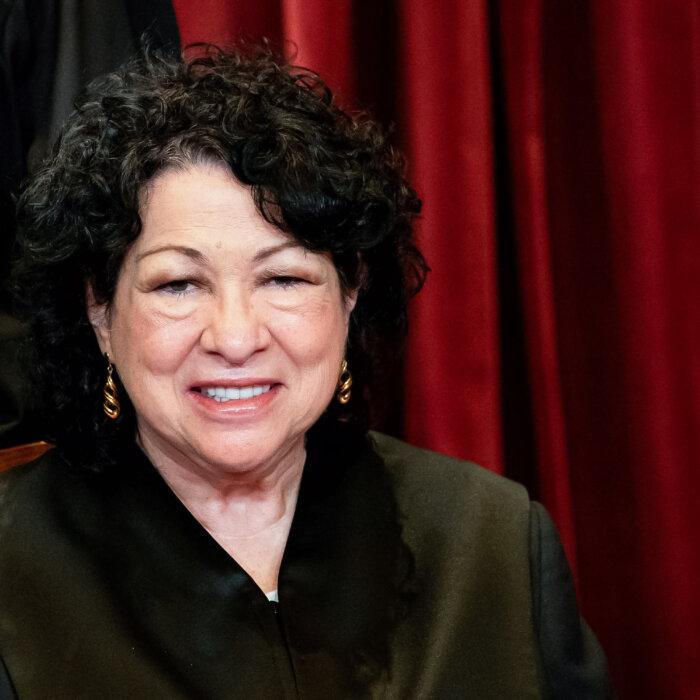
“And that’s true for the Supreme Court, and it’s also true for every district court, unless and until an appellate court or the Supreme Court says otherwise—that judicial orders are judicial orders and need to be respected.”
When judges face “these sorts of threats to an independent judiciary,” they need to “make independent, reasoned judgments based on precedent, based on other law, to not be inhibited by any of these threats,” she said.
Kagan also discussed the court’s emergency docket, which some call the shadow docket.
On the emergency docket, the Supreme Court rules on urgent applications, usually with minimal briefing and no oral argument. Often, the rulings the court issues come with little or no reasoning explaining the decisions.
Kagan said she was concerned about the court’s increasing reliance on the emergency docket to conduct judicial business.
The justices “don’t usually meet about shadow docket matters and discuss them in the way we do with merits cases,” she said.
The orders “don’t tell anybody anything about why we’ve done what we’ve done.” There are “some things you can pretty well guess, but there are lots of other things where you can’t,” she said.
The Supreme Court “should be hesitant about” making a decision that “does disrupt what’s going on in the lower courts unless we really have to,” she said.
It is important when using the emergency docket “to explain things,” she said.
In her dissenting opinion, Kagan said the Supreme Court was eroding the power of Congress.
The court “once again ... uses its emergency docket to destroy the independence of an independent agency, as established by Congress,” she said.
“In doing so, the majority has also all but overturned Humphrey’s Executor v. United States (1935), a near-century-old precedent of this Court,” she wrote.
That precedent held that Congress may enact laws limiting the president’s ability to fire executive officials at independent agencies. The court held that President Franklin Roosevelt could not fire a member of the Federal Trade Commission except for “inefficiency, neglect of duty, or malfeasance in office.”
Kagan said in the dissent that the court is facilitating “the permanent transfer of authority, piece by piece by piece, from one branch of Government to another.”