The Supreme Court recently concluded its 2025–2026 term with a series of rulings on President Donald Trump’s actions, creating major precedents with wide-reaching impacts on executive power.
Although Trump lost on key issues such as tariffs and birthright citizenship, he won in ways that altered the balance of power between his branch and Congress.
Firing Power
In an opinion delivered on June 29, the Supreme Court upheld Trump’s removal of Federal Trade Commission (FTC) Chair Rebecca Slaughter, overturning a 91-year-old precedent that judges had used to insulate the commissioner and other agency heads from removal.Slaughter was one of several top administration officials Trump had tried to remove during his second term. When officials sued Trump, they cited the FTC Act and other federal laws outlining the reasons for which presidents could remove officials.
The FTC Act specified that Trump could remove commissioners like Slaughter only for “inefficiency, neglect of duty, or malfeasance.” In blocking Slaughter’s termination, a federal judge cited that law and the Supreme Court’s landmark decision in Humphrey’s Executor v. United States.
In that landmark 1935 case, the Supreme Court ruled against the firing of another commissioner and upheld Congress’s ability to limit the president’s removal powers.
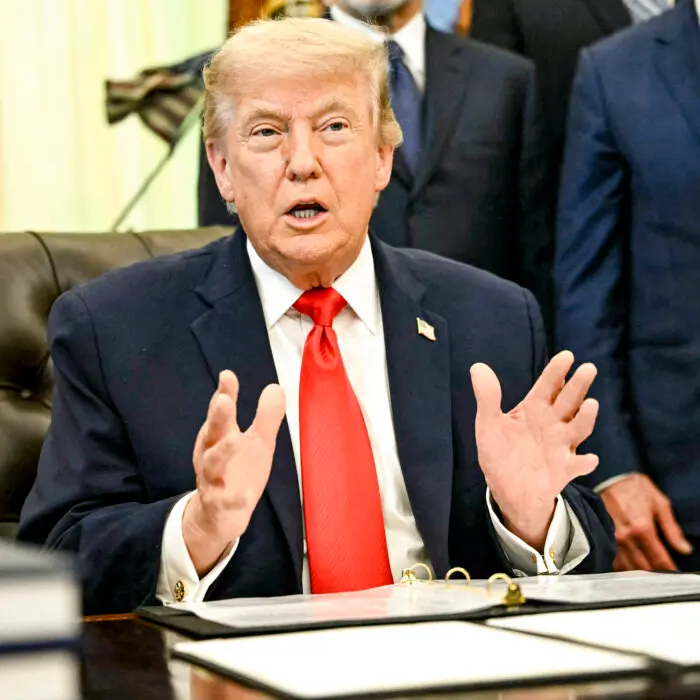
In Trump v. Slaughter, a 6–3 majority on the court overruled that decision, saying instead that Congress was intruding on the president’s power with the FTC Act.
Critics of the decision expressed concern that the ruling would give presidents too much power and undercut the independence of agencies such as the FTC.
Others speculated that the decision wouldn’t end at the FTC, despite Roberts stating that the decision applied only to that agency.
John Shu, a constitutional law expert who served in the administrations of both President George H.W. Bush and President George W. Bush, told The Epoch Times that the decision leaves many other executive agencies open to leadership changes.
“[The Federal Elections Commission, the Federal Communication Commission], the Railroad Commission, [National Labor Relations Board], whatever you can think of,” Shu said. “If it’s an executive agency, I’m pretty sure that the Slaughter case will apply, except for the Fed, obviously.”
In related emergency docket rulings, the Supreme Court indicated that it was willing to remove protections for other agencies.
Cook pointed to the Federal Reserve Act, which required some kind of “cause” for the president to remove members like her. In his majority opinion, Roberts emphasized the level of independence afforded to the Federal Reserve.
Temporary Protected Status
In a key ruling issued on June 25 in the case Mullin v. Doe, the Supreme Court allowed the administration to end temporary protected status (TPS), or temporary deportation protections, for Haitians and Syrians.In a 6–3 decision, the court said that lower courts had overstepped their authority in blocking Trump’s decisions to end those statuses.
That decision focused on a portion of the Immigration and Nationality Act that says, “There is no judicial review of any determination of the [DHS Secretary] with respect to the designation, or termination or extension of a designation, of a foreign state under this subsection.”
Lower courts had blocked the department’s decisions, holding that the administration didn’t follow the proper procedures for revoking protected status. In his majority opinion, Justice Samuel Alito said judicial review of TPS designations was limited to constitutional challenges.
One judge in Washington suggested that the department’s revocation of Haitians’ protected status was motivated by racial discrimination and likely violated the Constitution. The Supreme Court rejected this argument, citing the administration’s broader opposition to the program as it applied to other nationalities.
Justice Elena Kagan penned a dissent that was joined by Justices Ketanji Brown Jackson and Sonia Sotomayor.
Tariffs
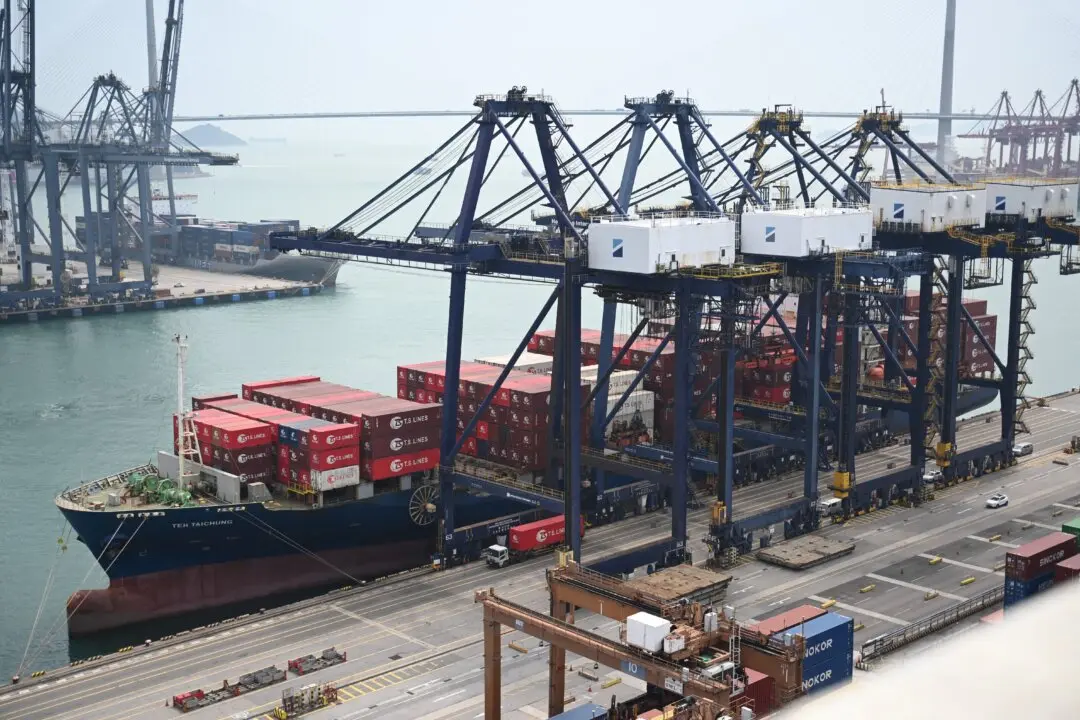
In one of its most critical decisions of this term, the Supreme Court addressed, and set limits on, Trump’s imposition of sweeping global tariffs.In the Feb. 20 ruling, the Supreme Court struck down several tariffs imposed by Trump on foreign nations using an emergency powers law, saying that the president had exceeded his authority in his use of the statute.
Trump had previously declared a national emergency under the International Emergency Economic Powers Act, saying the tariffs were needed to stem the flow of illegal drugs and to combat “large and persistent” trade deficits with foreign nations.
The act generally gives the president the power to regulate imports to address emergencies, but debate ensued over what that meant in practice.
Writing for the 6–3 majority, Roberts rejected Trump’s arguments, saying that the law’s phrasing did not clearly authorize tariffs.
The majority opinion tied the ruling to the major questions doctrine, a legal doctrine that said federal agencies couldn’t make massive policy changes without explicit congressional approval.
Roberts wrote that even if Trump had the authority to impose tariffs under the statute, his international tariffs had far exceeded the scope of that authority under the major questions doctrine.