The Supreme Court on July 8 lifted a lower court order that prevented the Trump administration from carrying out job cuts en masse and restructuring federal agencies.
The new ruling lifts U.S. District Judge Susan Illston’s May 22 order that temporarily stopped large-scale layoffs known as reductions in force from moving forward while the litigation continues in the lower courts.
The case is Trump v. American Federation of Government Employees.
“Because the Government is likely to succeed on its argument that the Executive Order and Memorandum are lawful—and because the other factors bearing on whether to grant a stay are satisfied—we grant the application,” the high court stated.
The court added that it expressed “no view on the legality of any Agency [reduction in force] and Reorganization Plan produced or approved pursuant to the Executive Order and Memorandum.”
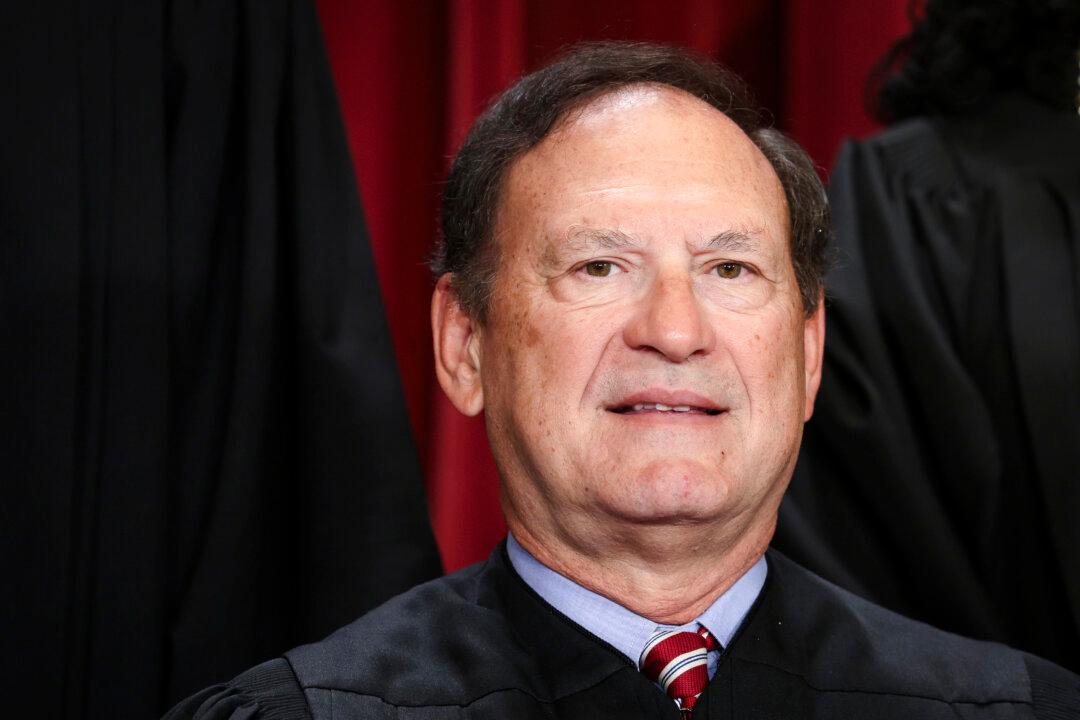
Jackson said there was no basis to conclude that the district court erred in its “finding that the President is attempting to fundamentally restructure the Federal Government.”
“Lower court judges have their fingers on the pulse of what is happening on the ground and are indisputably best positioned to determine the relevant facts—including those that underlie fair assessments of the merits, harms, and equities,” Jackson said.
Although the president “cannot restructure federal agencies in a manner inconsistent with congressional mandates,” Executive Order 14210 requires agencies “to plan reorganizations and reductions in force ‘consistent with applicable law,’” and the memorandum “reiterates as much.”
Those plans are not before the Supreme Court so it is not in a position to assess whether they will be carried out in a lawful manner, Sotomayor said.
“I join the Court’s stay because it leaves the District Court free to consider those questions in the first instance.”
The injunction is based on the “indefensible premise” that the president must secure “explicit statutory authorization from Congress to exercise his core Article II [of the Constitution] authority to superintend the internal personnel decisions of the Executive Branch,” Sauer said.
The district court’s order “violates these bedrock principles and other well-established doctrines,” he added.
The government union gave examples of how many employees will be fired at certain agencies as a result of the reduction-in-force efforts.
The Department of Veterans Affairs plans to end 80,000 positions, which “would severely hinder veterans’ access to health care and other benefits,” it said. The Department of Energy and the General Services Administration both intend to fire about half of their workforce. The Department of Health and Human Services plans to cut at least 10,000 positions, the brief said.
The Department of the Treasury plans to eliminate 40 percent of positions at the Internal Revenue Service, while the Small Business Administration is on track to reduce its workforce by 43 percent, according to the brief.
If the Supreme Court grants the Trump administration’s application and the courts later find the president “overstepped his authority ... there will be no way to go back in time to restore those agencies, functions, and services,” the brief said.