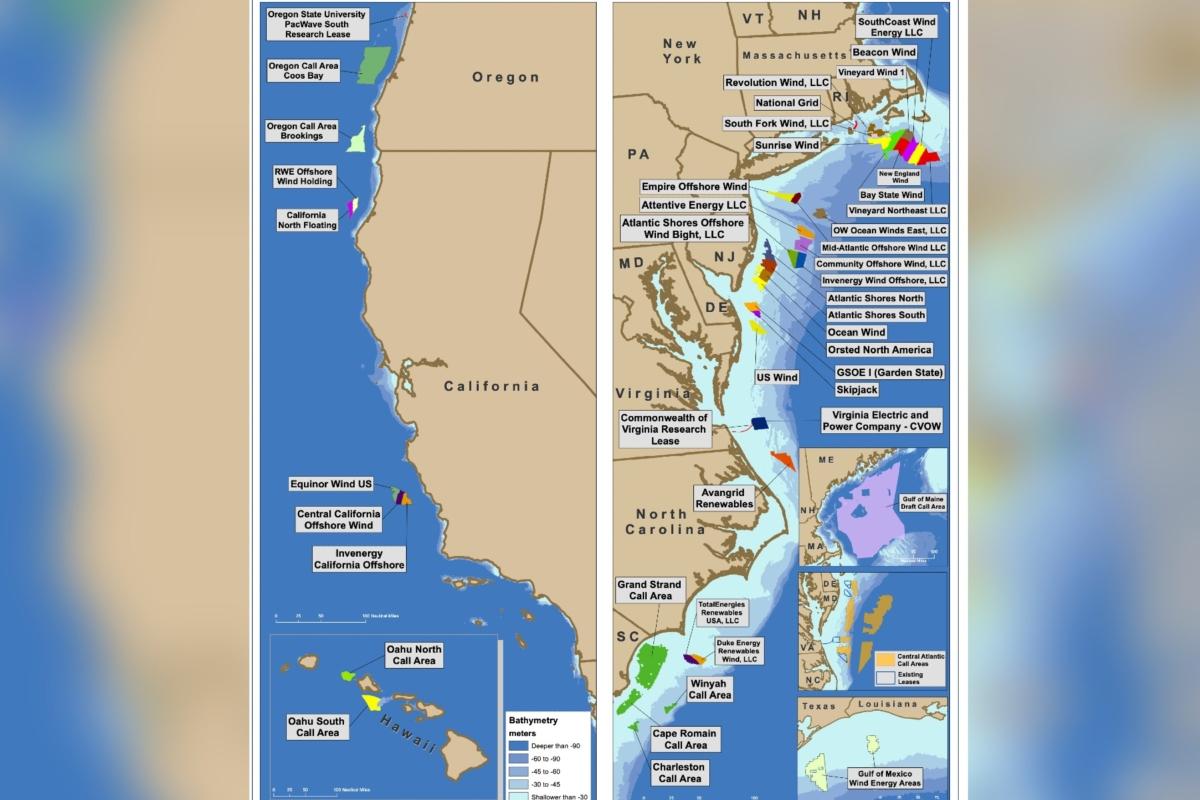
Two of the five projects, Sunrise Wind and Empire Wind, are in New York state waters. The others are off Massachusetts, Rhode Island, Connecticut, and Virginia. All are in various stages of construction, with one—Vineyard Wind—partially operating.
“Unclassified reports from the U.S. Government have long found that the movement of massive turbine blades and the highly reflective towers create radar interference called ‘clutter,’” it said in a statement.
The statement cited a 2024 Department of Energy report that determined that “a radar’s threshold for false alarm detection can be increased to reduce some ‘clutter,’ but an increased detection threshold could cause the radar to ‘miss actual targets.’”

The department said the pause will allow federal agencies “time to work with leaseholders and state partners to assess the possibility of mitigating the national security risks posed by these projects.” The Pentagon earlier this year raised concerns about offshore wind platforms being vulnerable to drone attacks.
Massachusetts Gov. Maura Healey and Connecticut Gov. Ned Lamont joined fellow Democrat Hochul in claiming that the pause has nothing to do with national security or clutter but is merely a result of federal agencies catering to President Donald Trump’s oft-stated dislike for windmills.
Judge Patti Saris of the U.S. District Court for the District of Massachusetts on Dec. 19 suspended Trump’s executive order in response to a lawsuit filed by 17 state attorneys general, declaring the action an unconstitutional violation of state permitting authority.
Hochul pledged to fight the pause “every step of the way to protect union jobs, affordable energy, and New York’s economic future.”
In the spring, the governor met with the president in Washington and secured what appeared to be a compromise when, at Trump’s request, the state issued a permit for a natural gas pipeline in exchange for allowing already approved offshore wind projects to proceed.
Costly Delays
“Energy costs are already too high,” Healey said in a statement. “It makes absolutely no sense for the Trump administration to halt construction on a project that is bringing more affordable energy to our region. This puts people out of work during the holidays.”“Donald Trump should be embracing an all-of-the-above approach to American energy, not shutting down critical sources like wind,“ she said. ”It is dangerous to halt construction in the middle of a project, and I will stand up against this unlawful action by the Trump administration to protect Massachusetts’s ratepayers and workers.
“We are working closely with impacted states and developers to ensure the projects are completed and continue to provide affordable power to our communities.”
“This is yet another erratic, anti-business move by the Trump administration that will drive up the price of electricity in Connecticut and throughout the region,” he said in the statement.
The project was shut down in August by the Bureau of Ocean Energy Management (BOEM), part of the Interior Department, before a U.S. district court ruling suspended the stop-work order.
“This project is nearing completion and providing good-paying clean energy jobs,“ Lamont said. ”Businesses and residents deserve economic predictability, yet with the administration’s constant starts and stops, they’re left with the opposite. The one thing the people of Connecticut can count on is that we will stand up to the Trump administration and ensure this project continues to move forward.”
The Washington-based National Ocean Industries Association, which represents offshore wind developers, called for a swift end to the pause, noting that the Pentagon has already reviewed the projects under the Trump administration and past administrations.
The association cited retired Army Gen. James “Spider” Marks, who said offshore wind development is among the keys to generating the energy needed to overcome the Chinese Communist Party in artificial intelligence development, noting that while there are only four offshore wind operations in the United States, there are 129 in China.
Dominion Energy, which is developing the Coastal Virginia Offshore Wind project off Virginia, also questioned the concerns about national security, noting that some of “America’s most important war-fighting installations” are among its biggest consumers.
Rep. Chris Smith (R-N.J.), a longtime opponent of offshore wind industrialization, issued a statement in support of the freeze.
Paused Project Details
The five projects would collectively generate enough electricity for 2.5 million homes with billions of dollars already invested by some of the world’s largest energy developers, including oil companies.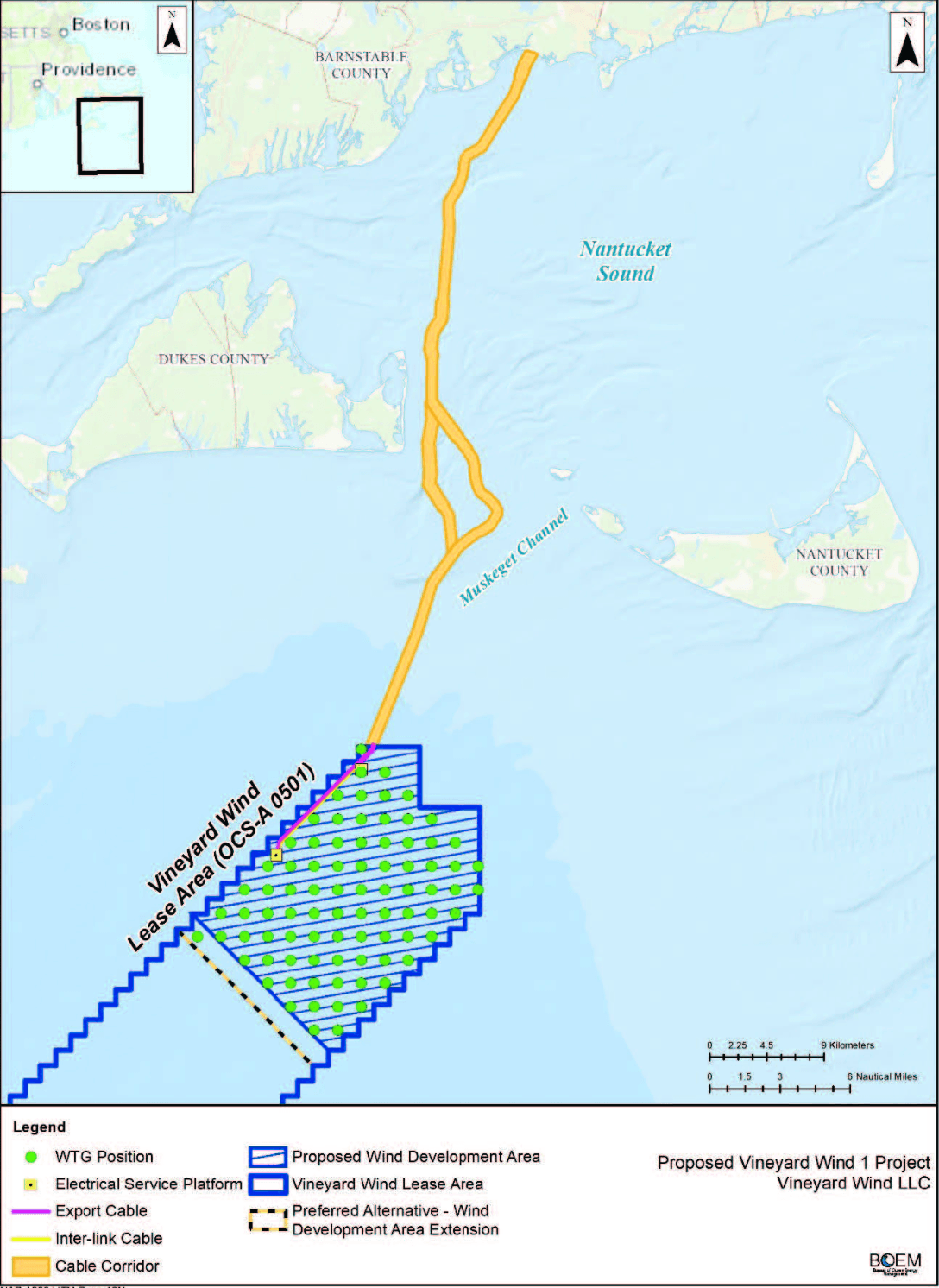
Vineyard Wind 1
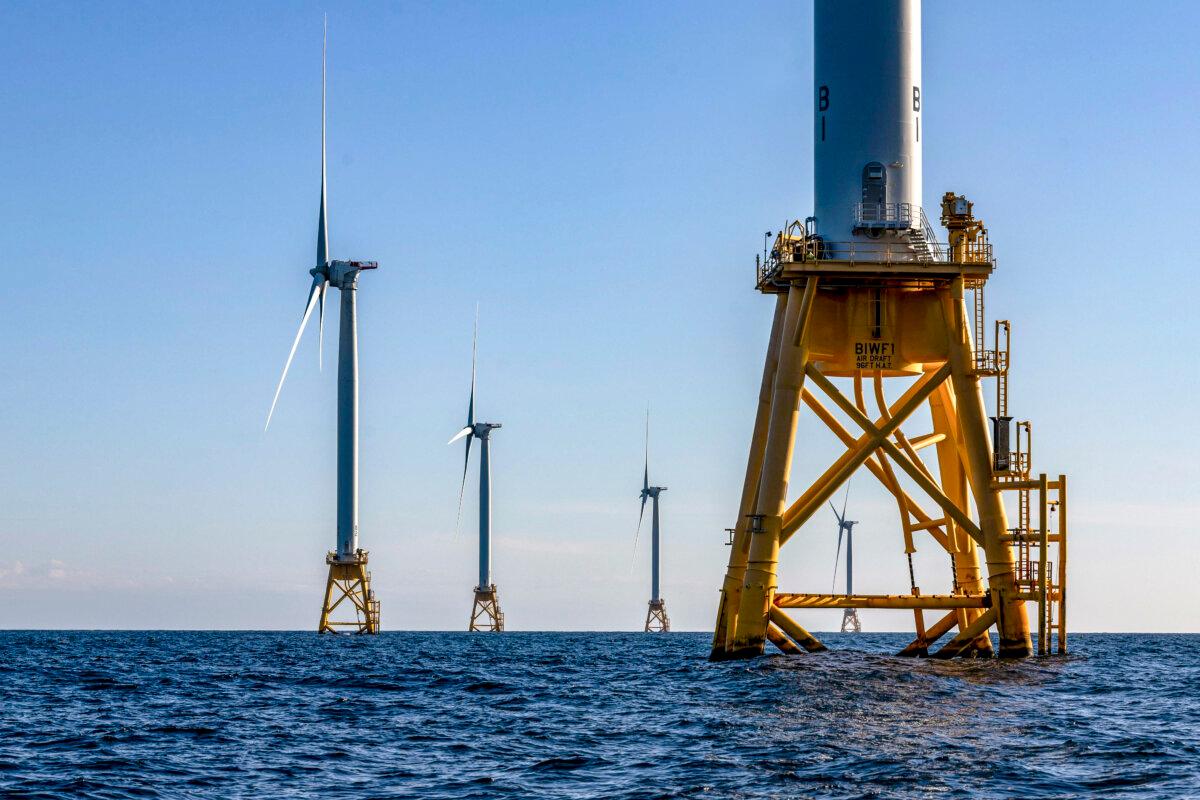
Touted as the nation’s “first commercial- and utility-scale offshore wind energy project,” the 62 wind turbines of Vineyard Wind 1 would generate enough electricity to power 400,000 homes in Massachusetts.Its General Electric Haliade-X turbines, each capable of generating 13 megawatts (MWs), are spaced one nautical mile apart in an east-west arch 15 miles south of Martha’s Vineyard and Nantucket and 35 miles from mainland Massachusetts. Electricity is to be transmitted through submarine cables buried six feet below the seafloor to an offshore substation, then to a substation at Covell’s Beach in Barnstable, Massachusetts.
Vineyard Wind LLC is jointly owned by Denmark-based Copenhagen Infrastructure Partners and Avangrid Renewables, a German company.
In July 2024, a wind turbine manufactured and installed by GE Vernova at Vineyard Wind 1 failed, spewing debris into the sea. The Bureau of Safety and Environmental Enforcement suspended further blade installation and power production. GE Vernova determined that the failure was caused by “a manufacturing deviation.”
The BOEM requested a revised plan, which Vineyard Wind submitted in December 2024. It agreed to remove and replace 22 wind turbines. On Jan. 17, 2025, three days before Trump was inaugurated, the bureau approved the revised plan, and the suspension was lifted.
Revolution Wind
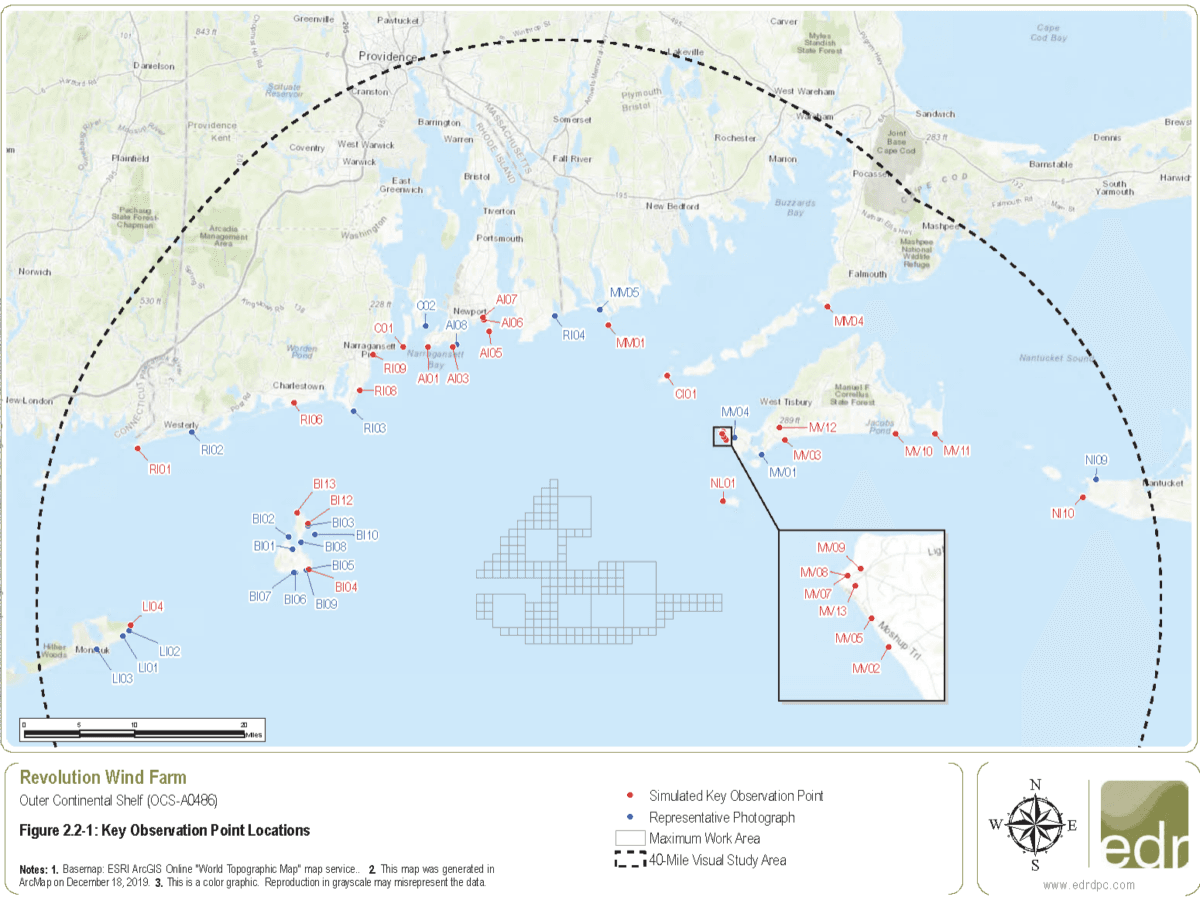
A 704-MW capacity project off Rhode Island and Connecticut and 12 nautical miles southwest of Martha’s Vineyard, Revolution Wind is nearly 85 percent complete and would be the first multi-state offshore wind farm in the United States.Its 65 Siemens Gamesa turbines would transmit power via submarine cables to Quonset Business Park in North Kingstown, Rhode Island, and be capable of powering approximately 350,000 homes and creating 1,200 jobs.
The project is a joint venture between Orsted, a Danish company that is among the world’s largest renewable energy developers, and Germany-based Skyborne Renewables, and is scheduled to be fully operational by 2026.
In August, BOEM issued a stop-work order citing national security concerns with the project. Orsted, Skyborne, Connecticut, and Rhode Island challenged the order, with Orsted saying that it cost the company $2 million per day. In September, Judge Royce Lamberth of the U.S. District Court for the District of Columbia issued an injunction allowing work on the project to continue.
Connecticut Attorney General William Tong called the administration’s Dec. 22 order a “brazen attempt to circumvent” the injunction.
Coastal Virginia Offshore Wind
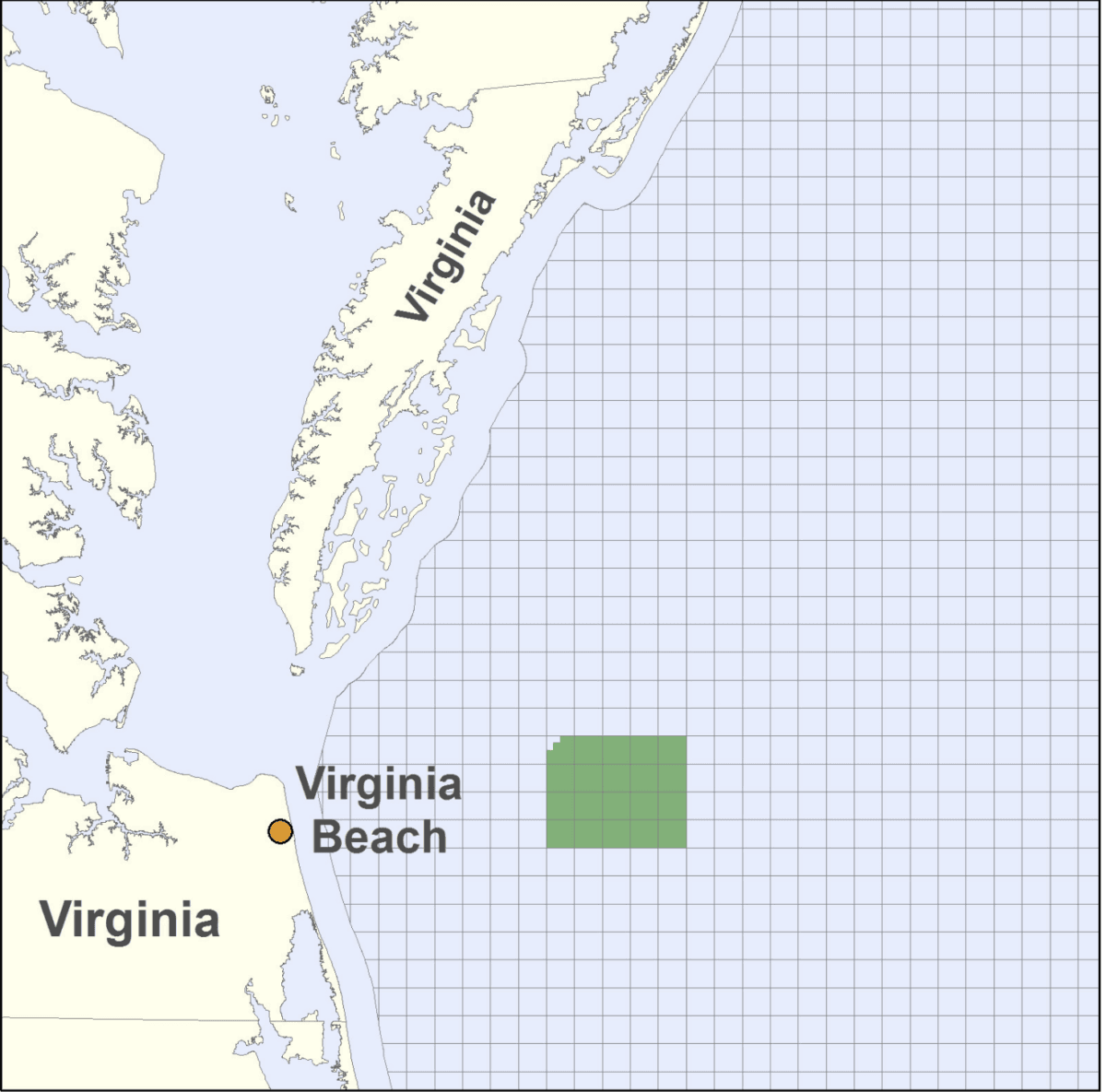
Dominion Energy’s Coastal Virginia Offshore Wind project is approximately 23 1/2 miles off Virginia Beach, Virginia, spans nearly 113,000 acres, and has begun operation with its wind turbines being the first installed in U.S. federal waters.When fully operational in 2026, according to Dominion, the project will deliver up to 9.5 million megawatt-hours per year, powering up to 660,000 Virginia homes.
The Interior Department approved the project in October 2023, and BOEM issued its final approval in January 2024.
Sunrise Wind
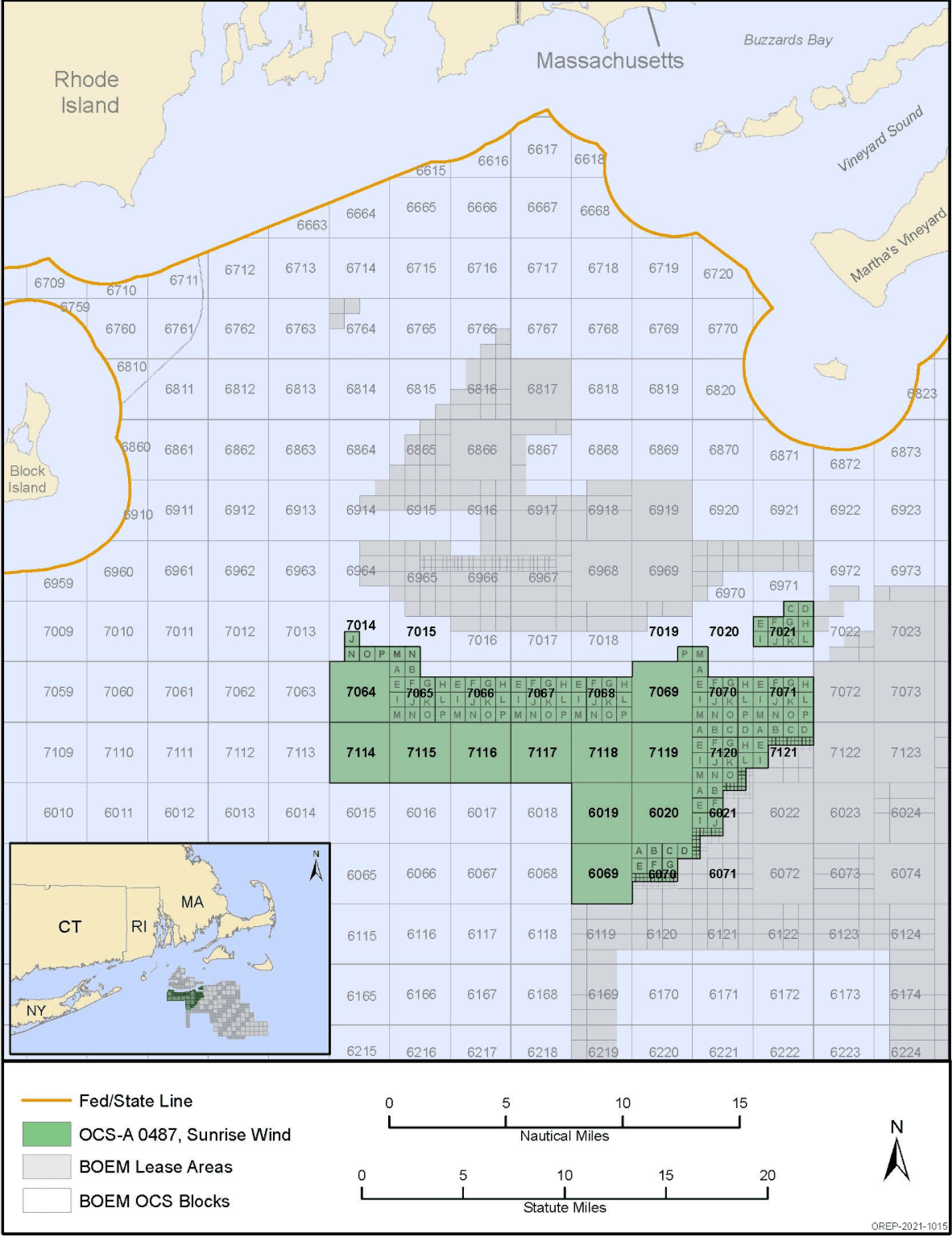
Orsted is building a 924-MW offshore wind farm, Sunrise Wind, 14 miles from Block Island, Rhode Island, 16 miles south of Martha’s Vineyard, Massachusetts, and 26 miles east of Montauk Point, New York, that will generate enough electricity to power more than 300,000 homes by 2027.BOEM approved the Sunrise Wind Project in June 2024.
Empire Wind 1
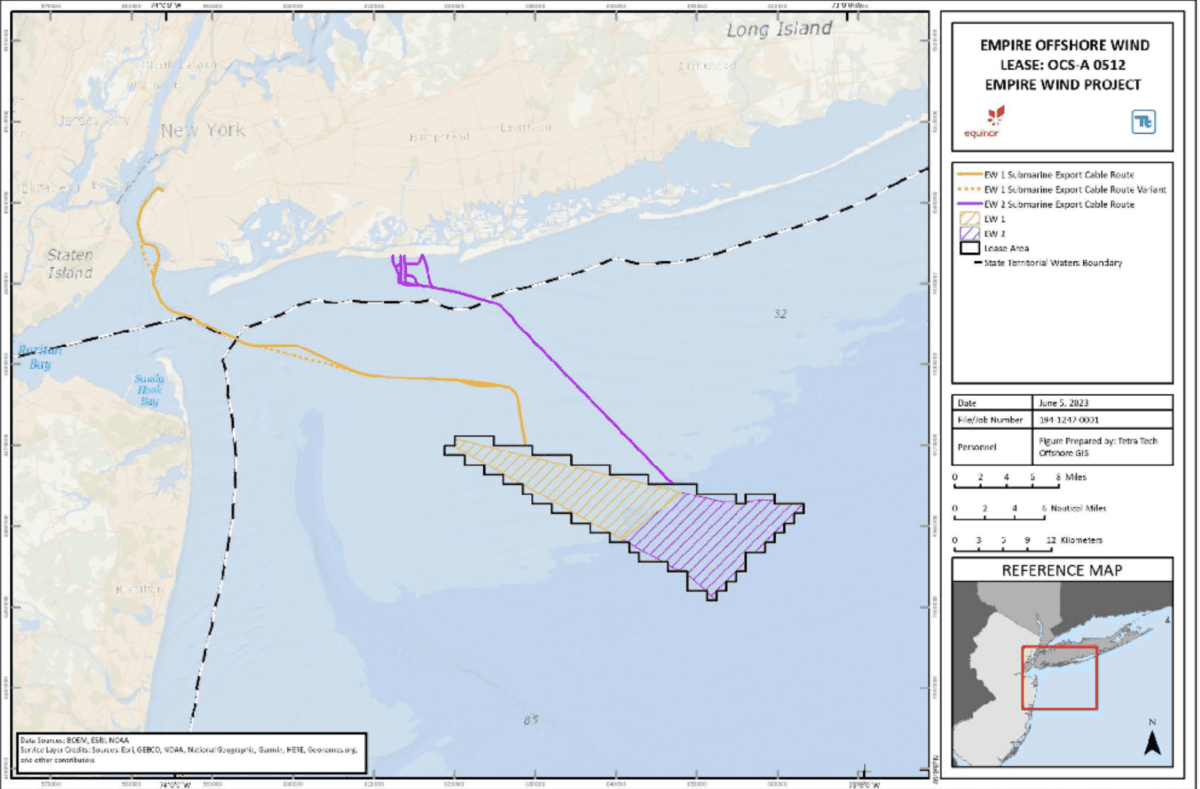
Norway-based oil company Equinor’s 816-MW project in the New York Bight, Empire Wind 1, is approximately 30 miles south of Long Island off New Jersey and would directly funnel electricity into New York City from a hub in the South Brooklyn Marine Terminal.It is the first phase of a 1,250-MW project that will collectively power more than 1 million homes by the end of the decade. BP was a partner before swapping all interests in Empire Wind for another planned project off New England.
Empire Wind’s 80 Vestas turbines were originally scheduled to be operational by 2026, but are now slated to begin commercial operation in late 2027.
Empire Wind 1 began construction in February 2024. At least 54 foundations have been built in the bight.