The largest active measles outbreak in the United States has expanded, South Carolina officials reported on Jan. 20.
Among the 538 people in quarantine due to exposure to someone with the disease, 34 are students at Clemson University, and 50 are students at Anderson University, according to the department.
The school said contact tracing was underway and people who may have been exposed were entering quarantine or isolation.
Quarantine involves staying home for 21 days after being knowingly exposed in order to monitor if symptoms develop, the state Department of Health told The Epoch Times previously. Isolation refers to people who have the measles, are infectious, and are avoiding others.

A spokesman for Anderson University, a Christian college in Greenville, told local outlets that a student has been confirmed to have measles and that all known contacts were being notified.
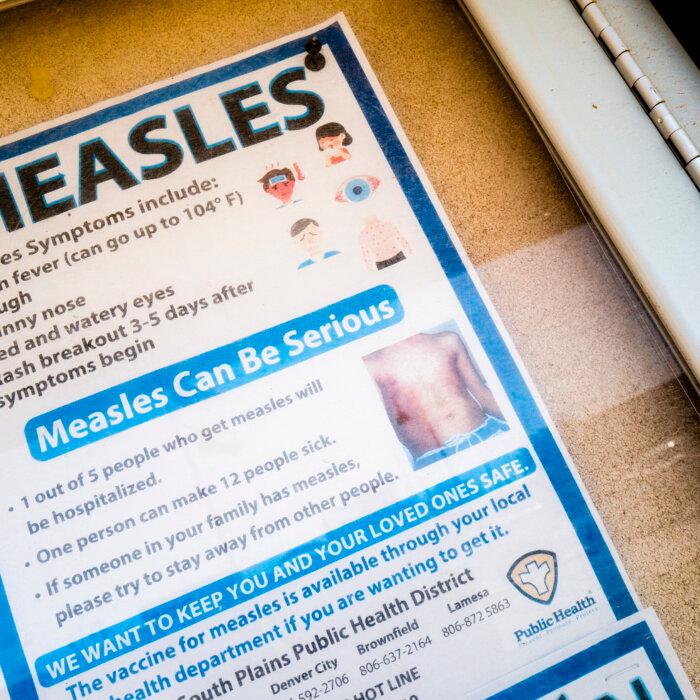
Measles is a contagious disease that typically spreads from droplets from infected people. Symptoms include rash and fever.
The measles outbreak in northern South Carolina started in 2025. Cases linked to the outbreak have been recorded in at least three other states, including North Carolina.
The total number of cases related to the outbreak has risen to 646, after jumping 48 percent in one week.
Another outbreak is active in the Southwest, while a third in Texas ended over the summer.
South Carolina officials said that students at multiple primary schools have also been exposed to measles and are in quarantine, including Starr Elementary School in Anderson County and Holly-Springs Motlow Elementary School in Spartanburg County. Officials are encouraging people to receive a measles vaccine.
Of the confirmed cases, 563 of the patients were unvaccinated, 25 were vaccinated, and 58 have an unknown vaccination status, according to state authorities.
The CDC and U.S. Department of Health and Human Services recommend measles vaccination.
“Vaccination remains the most effective way to prevent measles,” a spokesperson for the department told The Epoch Times in a recent email. The spokesperson said that Health Secretary Robert F. Kennedy Jr. “has been clear and consistent on this point” and that “individuals should consult with their health care provider about what is best for them and their family.”
The measles vaccine can cause side effects, Kennedy has noted. He and the department have also said that doctors should be familiar with measles treatments, including vitamin A.