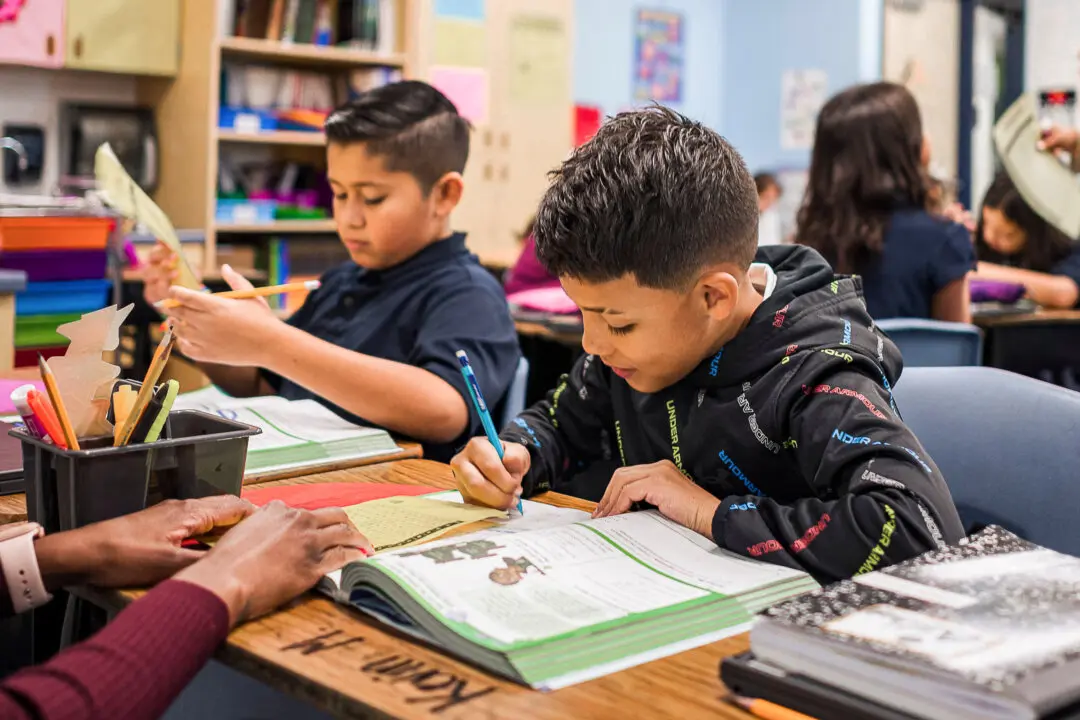
Despite federal effectiveness at curbing illegal immigration, most states still allocate extra money for students learning English, regardless of whether they are here legally.
All states apply a per-pupil funding formula for local districts. Above that base rate, 47 states and the District of Columbia provide additional money for English language learners.
The expanded rates range from $904 to $16,161 per student if that pupil is also low-income, according to the Learning Policy Institute, which estimates there are more than 5 million English learners across K–12 public education.
That includes nearly half the student population in the Dallas Independent School District.
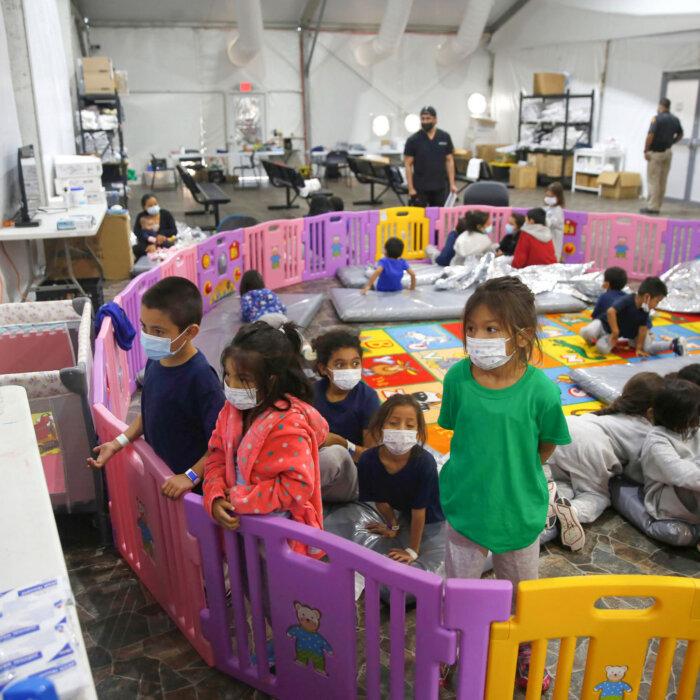
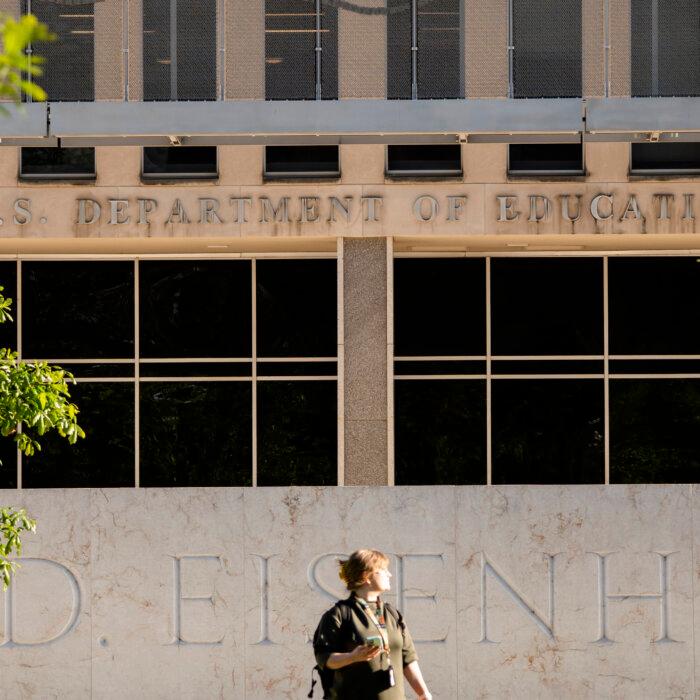
Those special services for children who speak a different language at home remain a sacred cow in the approaching school year, despite budget deficits, a review of several district spending plans indicates.
Last year, the district was forced to cut staffing and programs by $197 million, but English language instruction remained unscathed, according to budget documents on its website.
The Chicago district’s Office of Multilingual and Multicultural Education serves about 88,000 students, or 27 percent of the total enrollment.
Services for recent arrivals to the United States, plus dual and world-language instructions, are also part of that office.
Its allocations increased from $54.5 million in 2023 to $77.09 million this past school year as staffing was bolstered from 415 positions to 541, budget documents showed.
The Los Angeles Unified School District, where 20 percent of the student population is still learning English, ended this academic year with a $1 billion deficit.
It received $34 million in federal Title III and migrant education grants in 2025. Budget documents did not indicate financial shortfalls ahead of the coming academic year.
That district’s per-pupil spending rate exceeds $32,000.
The largest state grant for English-learning students last year, $4.28 million, went to Brooklyn Geographic District 20, while schools in a different Brooklyn neighborhood received $2.75 million.
Under the same program, New York State provided Newburgh Enlarged City School District, a low-income district in the Hudson Valley region, with nearly $300,000.
More than half of the district’s 11,557 students are Hispanic, and 14 percent of them are still learning English, according to the district website.
Newburgh eliminated 97 positions in the 2024-2025 budget, but its 23-member English language teaching staff remained intact.
“This is a man-made crisis,” she said, noting that illegal immigrants contribute about $31 billion in taxes but cost about $150 billion for food, shelter, medical care, education, and other services.
Ira Mehlman, the federation’s spokesman, said even if the border is secure under the Trump administration, school districts are still wrestling with a massive financial obligation brought on by the prior administration’s mistakes.
“The real cost is on state and local governments,” Mehlman told The Epoch Times. “It should be in the interest of these states to discourage illegal immigration.”
When schools cut positions in core subject areas to pay for more English language teachers while also overcrowding classrooms with an influx of new students who require more attention, it’s the low-income students who fall further behind, Mehlman said.
This is especially challenging in districts that must accommodate 100 different languages, including certain dialects or tribal languages that aren’t well-known.
In a 1982 Supreme Court decision, Plyler v. Doe, justices voted 5–4 that public schools cannot turn away any students, regardless of documentation or citizenship status.
Migrant children are also protected under the 1964 Civil Rights Act and the Equal Educational Opportunities Act of 1974.
Many states have additional laws or policies, including a push for dual-immersion programs across all subject areas, where half of the instruction is in English and the other half in another language.
The 1982 Supreme Court decision was based on circumstances in a small Texas school where the expense and inconvenience of serving a migrant student were minimal.
Given the events of the past four years, Mehlman said, challenges to that decision and other laws governing education for non-English speaking students are likely to come as public schools struggle financially.
“It’s not a single burden anymore,” he said. “It’s a big burden in a lot of communities.”