Over the past six months, Democrats have done something strategists say their own voters had been demanding: They picked a fight and refused to back down.
Democrats have framed the shutdowns as a refusal to fund agencies they say are overstepping their authority. Republicans have cast the same actions as obstruction that is preventing the government from functioning.
But strategists and political scientists across party lines say Democrats face a problem that no amount of legislative brinkmanship can solve on its own: Voters still want to know how any of it will make their lives more affordable.
2 Shutdowns
The September 2025 shutdown began after Senate Democrats blocked a Republican continuing resolution, demanding an extension of Affordable Care Act subsidies and protections against Medicaid cuts included in the One Big Beautiful Bill Act. The standoff lasted 43 days before a group of eight Democrats voted to advance a funding deal that extended government operations through January.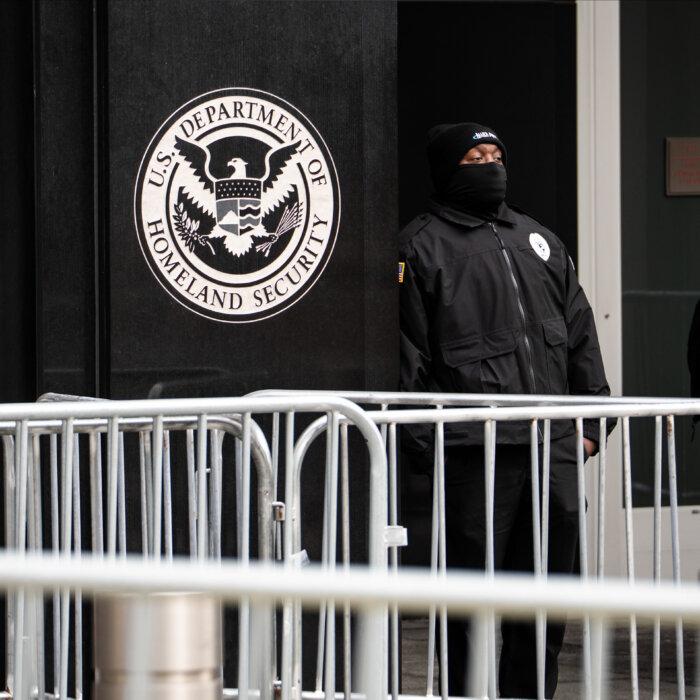

The standoff has had tangible effects. The Transportation Security Administration’s acting administrator told lawmakers in late March that more than 460 officers had quit during the shutdown and that some airports were seeing 40 percent to 50 percent of their workforce calling out on certain days, leading to high wait times nationwide.
What Democrats Say
Avis Jones-DeWeever, a political scientist and principal of Nouveaux Strategies, a progressive strategic communications firm based in National Harbor, Maryland, said in an email that the approach is deliberate.“Democrats understand that the American people—inclusive of their base, but also far beyond that—are looking for a level of fight in the Democratic Party that heretofore has been completely insufficient, if it ever existed at all,” Jones-DeWeever said.
Liam Buckley, a spokesperson for the Democratic Congressional Campaign Committee, which oversees House races for the party, said Democrats are focused on affordability while also demanding ICE reforms.
“House Democrats’ number one priority is lowering the cost of living and making it easier for families to afford everyday essentials like health care,” Buckley said in an emailed statement.
What Strategists Say
James Christopher, founder and managing director of James Christopher Communications, said in an email that Democrats are not trying to win the shutdown in the traditional sense.“[They are] trying to send a different signal: that they are finally willing to impose a cost on executive overreach instead of simply denouncing it and moving on,” he said.
However, he said, voters are not paying close attention to procedural battles in Washington. He pointed to a Reuters/Ipsos poll conducted in February that found that 78 percent of Americans say inflation is a very big concern for them personally.
“The most effective version of this strategy is not ‘we shut it down and held firm,’” Christopher said. “It is ‘we were willing to fight because Republicans were making your life more expensive, less secure, or less fair.’
“Shutdown brinkmanship can be proof of seriousness. It cannot be the product Democrats are selling in November.
“It can also backfire fast if the public mostly experiences the fight as airport delays, missed paychecks, and Washington dysfunction.”
Jones-DeWeever said the party has not paired its actions with messaging that explains the fights in terms voters can relate to.
She called the strategy “a high-stakes high-wire act” in which Democrats find themselves “attempting to respond to calls to resist while understanding that this type of resistance leads to uncomfortable economic impacts on some in the short term, with the hope that this pain will lead to better outcomes for more Americans in [the long run].”
She added that the approach will likely work because shutdowns are only one of multiple factors squeezing voters’ wallets, and Democrats can “lay the blame squarely on the choices of those in the White House.”
Allen J. Wiener, an author, historian, and political scientist, said the DHS standoff is especially challenging because immigration is not an issue on which Democrats hold a natural advantage with voters.
“By standing firm on DHS funding and being vocal about it, the party can win back some of its own voters, especially if Democrats in Congress frame the funding fight around more specific issues, particularly Trump’s heavy-handed approach to immigration,” Wiener said in an email to The Epoch Times.
But he said the fights carry a shelf life.
Dual Risks
Wiener also warned that the approach carries political risk if Republicans seize the framing. Democrats’ stand on DHS funding “could backfire if Republicans gain control of the message and frame Democratic refusal to fund DHS as a weakness on national security or a threat to emergency response,” he said.Jeff Burton, a Republican strategist and cofounding partner at Maven Advocacy, said the fights are not producing clear winners for either party.
“For Republicans, this is a draw at best,” Burton said in an email. “In shutdown fights, the party in power usually gets blamed.
“In the end, voters will judge Republicans on whether they feel better off, and right now, on the economy, cost of living, and safety, the answer is no.”
The Democratic National Committee and the Democratic Senatorial Campaign Committee did not respond to requests for comment.