The Senate rejected another resolution on July 30 that called for President Donald Trump to end the U.S. military operation in Iran.
The Senate voted 49–50 on a war powers resolution on Thursday. Introduced by Sen. Kirsten Gillibrand (D-N.Y.), the resolution was intended to direct the president to end military action against Iran unless authorized by Congress. Thursday’s vote marked the 13th time the Senate has voted on a resolution to end the war in Iran.
Republican Sens. Lisa Murkowski (Alaska), Susan Collins (Maine), and Rand Paul (Ky.) were the only senators to break with Republicans and join the majority of Democratic senators in voting to advance the resolution on July 30. Meanwhile, Sen. John Fetterman (D-Pa.) was the only Democrat to join the majority of Republican senators in opposing it.
Speaking from the Senate floor Thursday, Senate Minority Leader Chuck Schumer (D-N.Y.) called for Republicans to join Democrats in voting for the war powers resolution.
“This aimless war has been one of the greatest foreign policy catastrophes in American history and Trump’s mess only gets worse with every passing hour. Trump said this war would last a week, but American [servicemembers] are still getting killed five months later, and the war seems to be expanding with Iran’s latest attacks in Egyptian territory,” he said.

“Senate Republicans cannot sit on the sidelines as Trump’s war escalates out of control.”
In a Truth Social post on June 4, Trump rebuked Republican representatives after the House voted to pass a similar war powers resolution.
On July 23, the House voted 214–208 to pass another resolution directing Trump to remove U.S. forces from hostilities with Iran. However, the Senate voted 47–49 against a similar resolution just hours after the House’s vote.
If the Senate had approved the war powers resolution on July 30, it would have only represented a symbolic rebuke of the U.S. military campaign against Iran. The War Powers Resolution of 1973, commonly known as the War Powers Act, is a federal law that purports to limit a president’s authority to authorize military actions without the approval of Congress.
However, war powers resolutions passed under that law have been disputed by the Trump administration and other administrations. The Trump administration has said the War Powers Act is unconstitutional and not binding.
Trump ordered additional military strikes against Tehran in July following the breakdown of a memorandum of understanding between the United States and Iran. The agreement had temporarily paused the conflict, which started when Trump ordered strikes against Iran on Feb. 28.
Trump again directed a pause on military strikes against the regime last weekend following 13 consecutive days of strikes. U.S. Ambassador to the United Nations Mike Waltz told NBC News on July 26 that the president ordered the pause to provide space for negotiations.
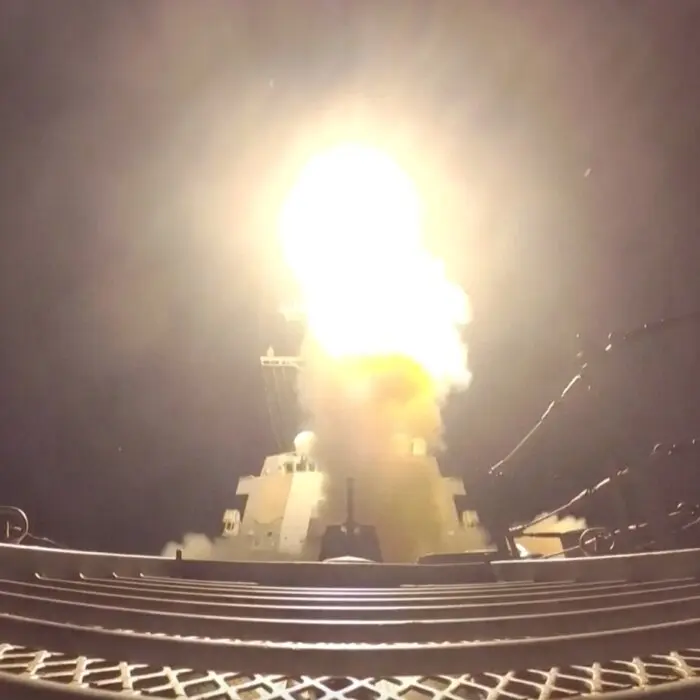
U.S. Central Command (CENTCOM) said on Wednesday that U.S. forces launched a heavy wave of strikes against Iran in retaliation for the attempted surprise attack on Tuesday. CENTCOM said the strikes were carried out against dozens of Iranian military targets, including missile and drone facilities, command centers, coastal surveillance and defense sites, and maritime capabilities.
“We’re going to be hitting them very hard, ’cause it’s our turn to hit them. They know it’s coming, they’re asking us not to do it,” Trump said prior to the strikes on Wednesday, adding, “We had five rockets shot going 8,500 mph, and all five rockets were knocked down to the ground—but they nevertheless took a shot, so it’s our turn.”
White House spokesperson Anna Kelly told The Epoch Times on July 30 that while politicians talked about the danger of a nuclear Iran for decades, only Trump addressed the threat “head-on.”
“The administration has been fully transparent with Congress over the course of this conflict and throughout negotiations, and senior officials have provided over 30 bipartisan briefings to the Hill since late February,” she said.
Kelly added, “The Iranian regime—which for 47 years has chanted ‘Death to America’ and killed our troops overseas—can never be allowed to possess a nuclear weapon, and the President’s team will continue to communicate with Congress as we work toward this shared goal.”