ENGLEWOOD, Ohio—Now and then, customers who bring home their Advent Christmas Tree Farm evergreen discover an unexpected surprise.
“A spider here, an abandoned bird nest there,” co-owner Kyle Anderson said with a smile.
Anderson said they rarely get complaints, however. Advent grows trees with regenerative farming methods and does not use pesticides.
“You put a Christmas tree in your home, and it stays there for a while around your family and your pets, so it’s beneficial that the tree doesn’t have glyphosate and other chemicals,” Anderson told The Epoch Times. “Knowing that, people don’t tend to mind if they have to remove something not meant to stay.”
Christmas trees are a booming business in the United States.
In 2022, for the most recent year that USDA data was available, U.S. farms cut 14.5 million Christmas trees. More than 300 million grow on about 15,000 farms spanning 350,000 acres across the country, according to the National Christmas Tree Association.


The group estimates that 25 million to 30 million real Christmas trees are sold in the United States every year.
Located in western Ohio, north of Dayton, Advent sells 1,200 trees by appointment over four days in November and December.
This year, according to the American Christmas Tree Association, approximately 80 percent of Americans who decorated their home with a Christmas tree are using a fake one.
Most artificial trees are made from polyvinyl chloride (PVC) plastic, which is not biodegradable. The Environmental Protection Agency noted that artificial trees, when produced or burned, release dioxins that could cause liver cancer and other health issues.
Kevin Mullenix, who co-owns and operates Advent, pointed out what differentiates regenerative Christmas tree farms from conventional agriculture and artificial trees.
Regenerative Christmas tree farms emphasize soil health and biodiversity, incorporating practices such as avoiding harsh chemicals, planting cover crops, and sometimes even regrowing trees from stumps for endless harvests.
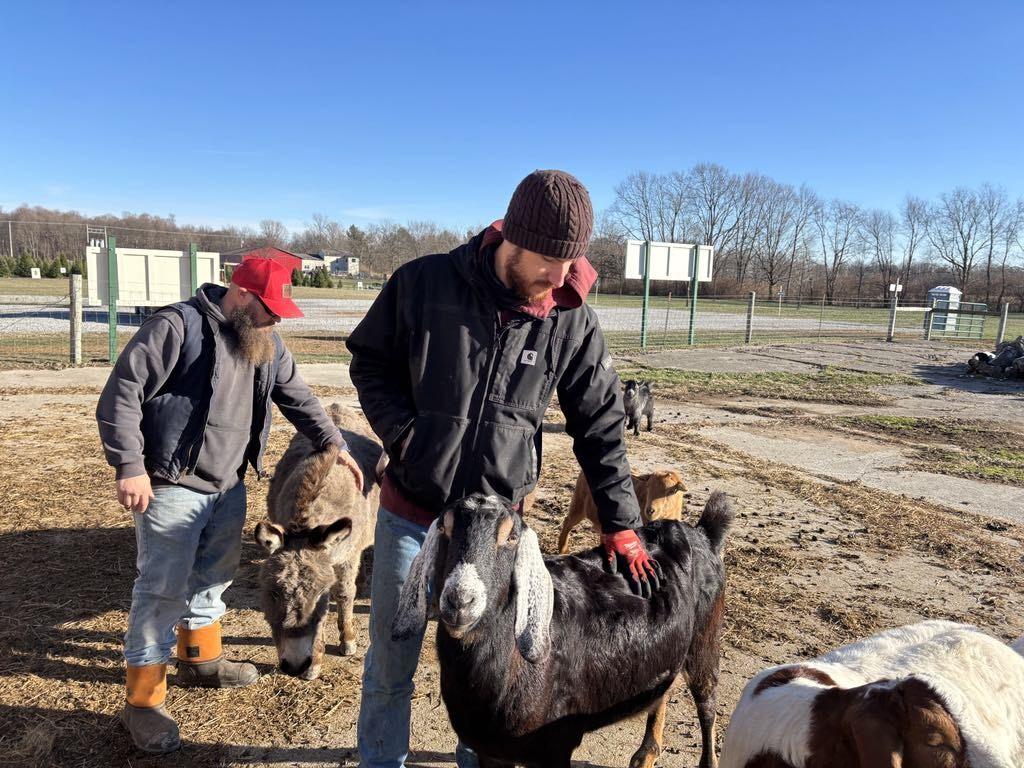
Conventional methods use pesticides and chemicals. Like food crops, Christmas trees are planted in monocultures: one large area of land solely dedicated to one product.
Typically, land is not cleared to farm Christmas trees. Many are planted on properties that were cleared years ago for crops or for use as pastures for livestock.
Kyle Anderson’s parents, Scott and Trudy Anderson, started Advent in 2006 on land that was once used to grow corn and soybeans with conventional techniques.
After retiring from the U.S. Air Force, the elder Anderson—with no agricultural experience—moved forward with his longtime dream to have a Christmas tree farm.
Today, the Andersons estimate that they have grown 15,000 Christmas trees.
Kyle Anderson and Mullenix, who are in their mid-30s, also served in the Air Force. They have been friends since they were boys and their fathers were stationed together at a base in California.
When Scott Anderson approached them with a succession plan for the farm and asked if they wanted to join him in the operation, they readily accepted.
The trio decided to make the transition to regenerative methods after Kyle Anderson read “Restoration Agriculture” by Mark Shepard.
Kyle Anderson points out that more than 15,000 trees in different stages dot the land, including 8-year-old trees ready to be selected and evergreens planted this spring that won’t be sold until 2033.
On a windswept December afternoon, he and Mullenix roamed a 17-acre field at the back side of the farm that, for years, had been used to grow corn and soybeans.
“The soil was depleted after decades of conventional farming and all the chemicals. It will take time, but one day this field will be filled with chestnut, apple, and cherry trees; cover crops; and livestock,” Kyle Anderson said.
They have already planted chestnut trees and eventually plan to sell their harvest, which will diversify their income stream.
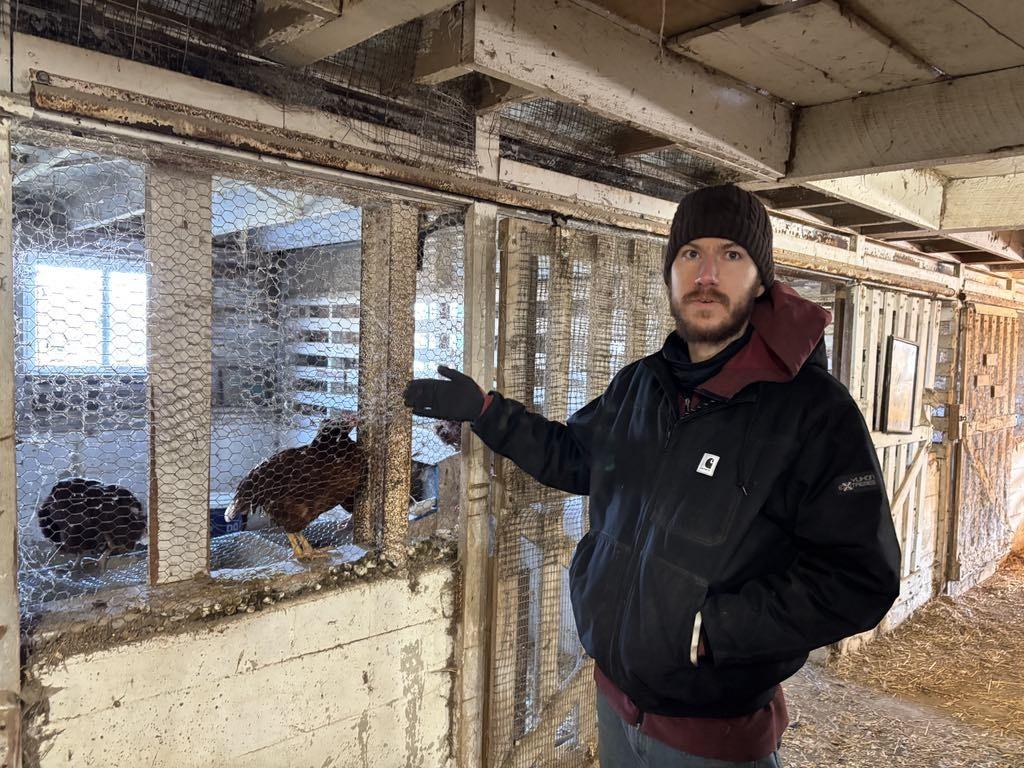
Advent has also integrated chickens into the farm. The birds roam the grounds in warmer months in a mobile chicken coop.
Instead of pesticides, the chickens are used to control pests, Mullenix explained.
“They also do a great job of preventing weeds from growing underneath the trees,” he said.
Kyle Anderson and Mullenix plan to add cover crops in the lanes of growing Christmas trees.
“There is no rule book on Christmas trees. We want to keep expanding what we grow and offer, so we are looking into adding asparagus, lavender, and flowers for a you-pick experience,” Anderson said.
Advent operates on a debt-free basis, which translates to slow growth.
“The field across the street was for sale a couple years ago, and we tried going after it, but it was too expensive. We’re trying to only use the income that we generate in order to put it back into the business and then buy any new equipment that we need, as opposed to taking out loans,” Kyle Anderson said.
Allen Williams, co-founder of the Soil Health Academy and Understanding Ag, said regenerative farming methods can be more profitable than conventional methods because they require fewer subsidies, incur less debt, and generate crops that are not as susceptible to damage from fungal diseases and pests.
Williams holds a doctorate in livestock genetics from Louisiana State University and pioneered many early regenerative grazing protocols. He now teaches farmers, ranchers, and growers how to implement regenerative principles and practices.
“Most farmers and ranchers learned how to produce conventionally. We taught them how to farm and ranch conventionally, not regeneratively, so they’re doing what they know,” Williams told The Epoch Times.
In southern Georgia, White Oak Pastures was farmed the conventional way for three generations, relying heavily on chemicals, pesticides, and antibiotics. After earning a degree from the University of Georgia in 1976, Will Harris returned to the farm and ran it like an “industrial, conventional, monocultural cattle guy, just as my father was.”
“We were heavily invested in all the tools, pesticides, chemical fertilizers, and antibiotics. We didn’t make a lot of money, but we were profitable,” Harris said.
In the mid-1990s, he started the transition to regenerative methods, which prioritize building and preserving healthy soils, avoiding synthetic fertilizers and pesticides, and minimal or no tilling.
“All of those ways have negative unintended consequences—such as degradation of the soil and water and poor animal welfare. It’s hard on the land, the water, the environment, and all of the animal species,” Harris said.
He is also the founder of the Center for Agricultural Resilience, an organization centered on education about the benefits of regenerative farming.
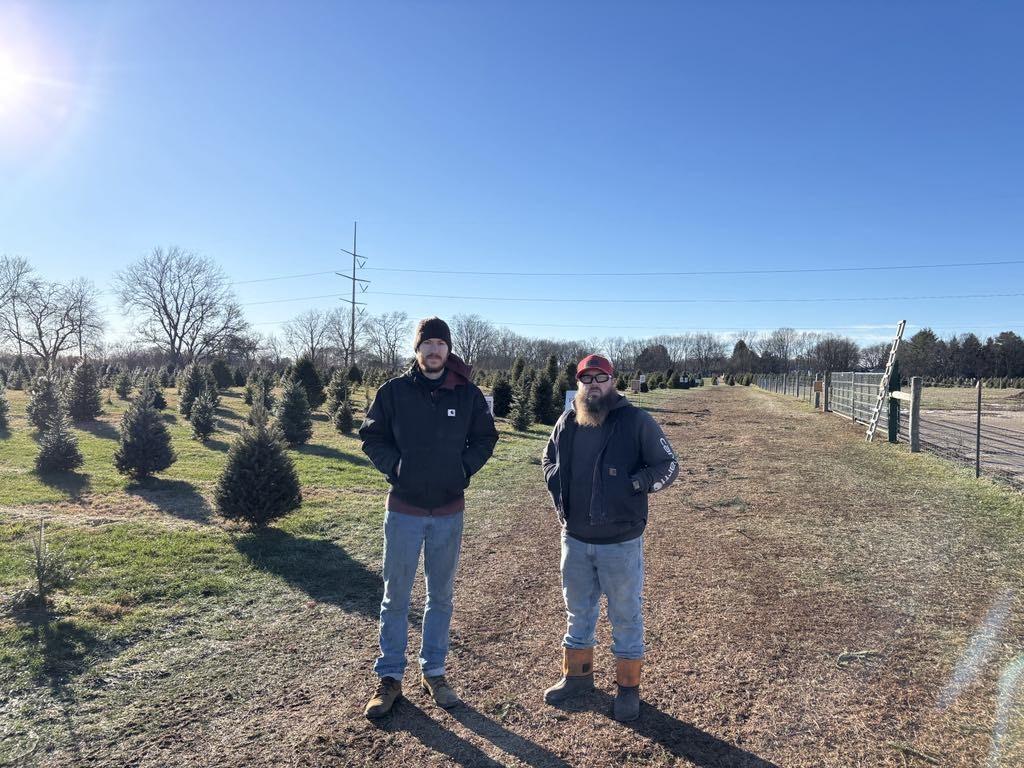
Harris applauded entrepreneur-minded farmers from younger generations who recognize the benefits of regenerative agriculture.
“I think a lot of that change will be made as the older conventional farmers retire and new farmers with a different perspective take over those pieces of land and recognize that regenerative methods are [respectful of] the environment and are more profitable and resilient,” he said.
Kyle Anderson created a YouTube channel titled “Uncompromised” to chronicle Advent’s transition from conventional to regenerative methods.
“There is no guidebook on how Christmas tree farmers, in particular, can begin the process of restoring the land regeneratively. We’re trying to build that for other farmers who may be interested, and part of that is sharing our experiences about what works and what doesn’t work,” he said.
Williams, who taught agriculture at Mississippi State University, said it’s important for those who are experienced in the techniques to share their knowledge.
“[Regenerative farming is] a learned experience,” Williams said.
Kyle Anderson agrees. Along with selling farm-fresh eggs, Advent also has a mobile coffee hut that it takes to special events.
“It’s essentially a marketing vehicle for the farm, and regenerative farming in general,” said Kyle Anderson, noting that, for every item on the menu, they use ingredients from regenerative farmers or organic sources.
“Many people still don’t know what ‘regenerative’ means, and what we do on our farm. We’re able to educate while serving lattes.”