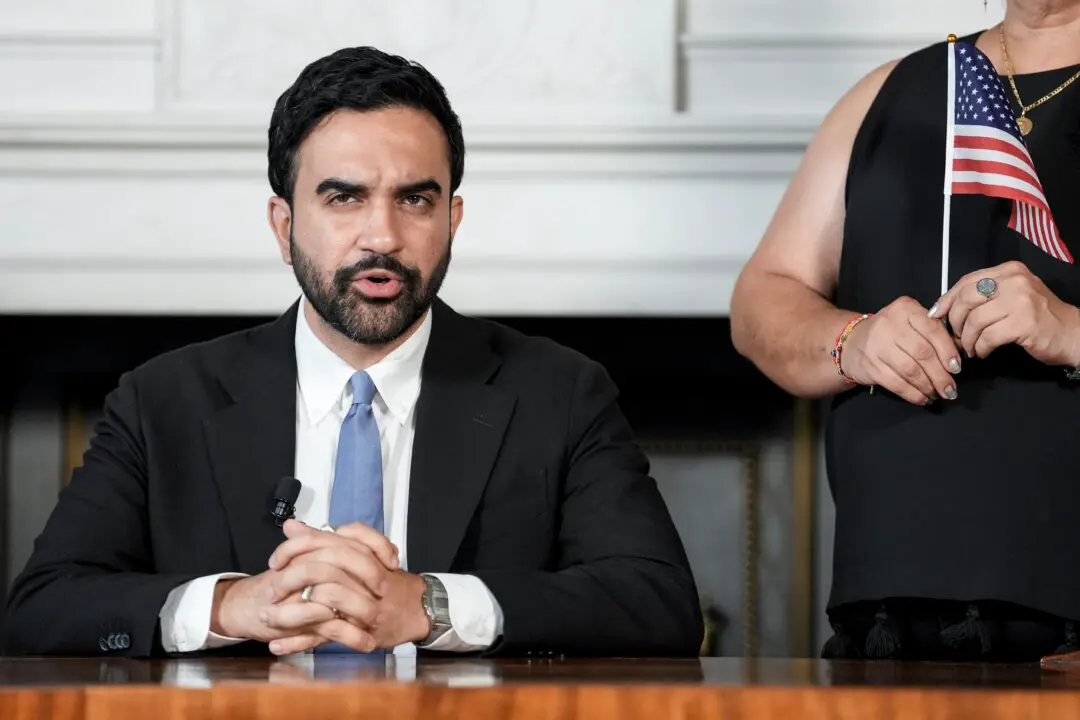
New York City Mayor Zohran Mamdani on Jan. 2 defended his decision to rescind a dozen executive orders issued by his predecessor, Eric Adams, made after a 2024 federal indictment for illegal campaign contributions.
Other revoked actions, which Adams said tackled anti-Semitism, prohibited city institutions from divesting themselves of holdings linked to Israel and adopted a definition of anti-Semitism aligned with that of the International Holocaust Remembrance Alliance (IHRA), an intergovernmental group promoting Holocaust education.
Adams’s directives for the city’s police to regulate protests near houses of worship to safeguard free speech were also revoked.
On Jan. 2, Mamdani told reporters he would instead be funding measures to prevent hate crimes and prioritize protecting Jewish New Yorkers.
The democratic socialist said he intends to retain the Mayor’s Office to Combat Anti-Semitism, created by Adams in May 2025, stating, “That is an issue that we take seriously, and it’s part of the commitment that we’ve made to Jewish New Yorkers to not only protect them, but to celebrate and cherish them.”
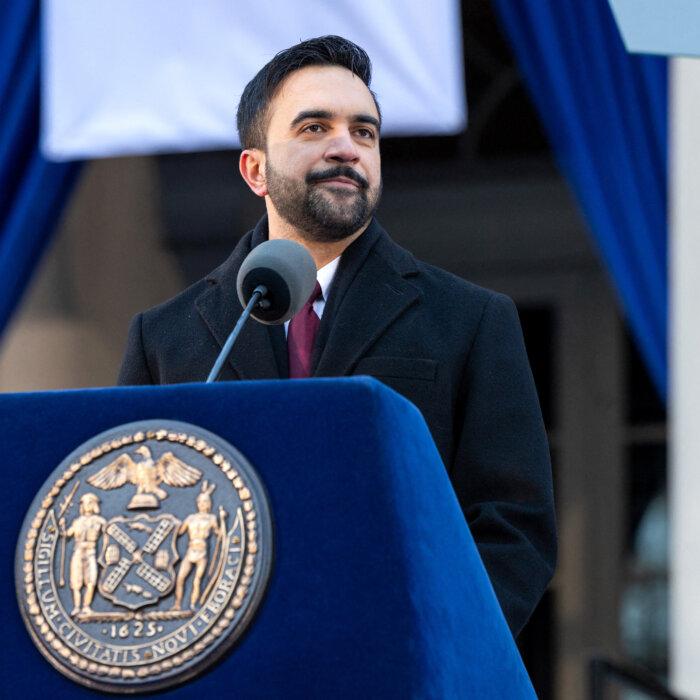
Mamdani described Adams’s being charged with bribery as “a moment when many New Yorkers lost even more faith in New York City politics and the ability of city government to actually prioritize the needs of the public, as opposed to the needs of the person.”
Adams, a Democrat, denied wrongdoing and pleaded not guilty. A U.S. district judge later dismissed the charges in April 2025 at the request of the Department of Justice.
The Council on American-Islamic Relations and other Islamic organizations celebrated Mamdani’s action, saying the definition of anti-Semitism as aligned with the IHRA has been used to silence Palestinian rights advocates.
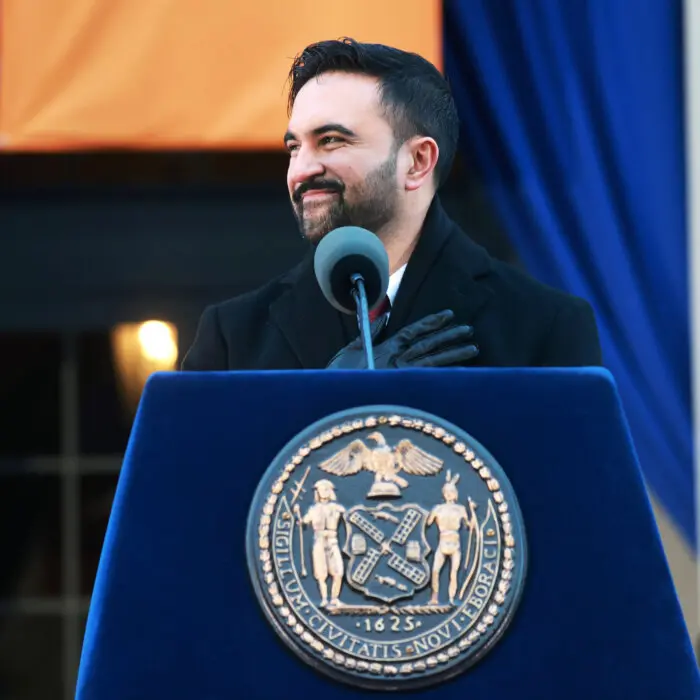
Mamdani, who is Muslim and a vocal supporter of Palestinians in Gaza, won the Nov. 4, 2025, mayoral contest over independent candidate former New York Gov. Andrew Cuomo and Republican Curtis Sliwa. Following his inauguration, Mamdani quickly advanced his democratic socialist agenda on Jan. 1, using his inauguration speech to promote collectivism.