The North American Aerospace Defense Command (NORAD) on Feb. 19 said it detected and tracked Russian military aircraft operating in the Alaskan Air Defense Identification Zone (ADIZ).
NORAD said in a statement that two Tu-95 strategic bombers, two Su-35 fighter jets, and one Beriev A-50 surveillance aircraft were flying through the zone in international airspace.
In response, the command said it launched “two F-16s, two F-35s, one E-3, and four KC-135s to intercept, positively identify, and escort the aircraft until they departed the Alaskan ADIZ.”
According to NORAD, an ADIZ begins where a country’s sovereign airspace ends and is defined as a zone of international airspace where a country needs to be able to identify and observe aircraft moving through it, in the interest of national security.
The command, a U.S.–Canadian air defense organization, said that the Russian military aircraft remained in international airspace and did not enter U.S. or Canadian airspace.
NORAD highlighted that this activity from the Russian air force in the Alaskan ADIZ “occurs regularly and is not seen as a threat.”

Arctic Sentry
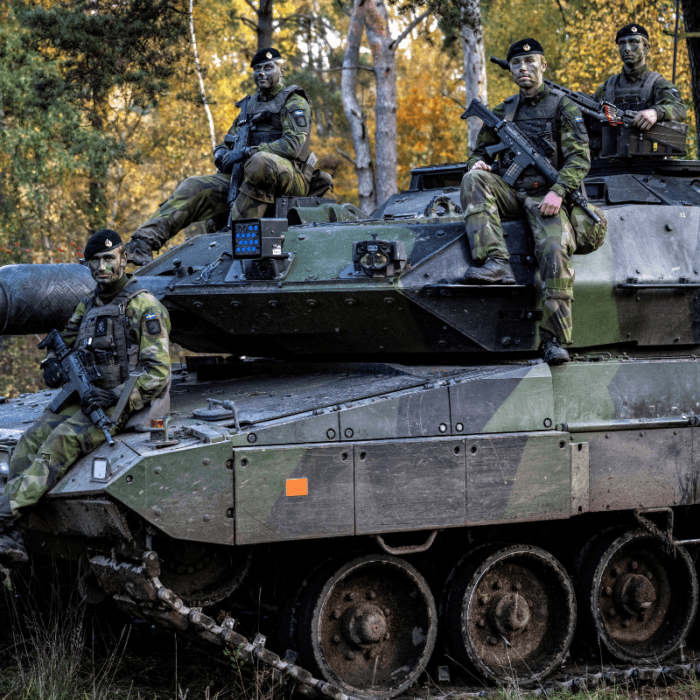
The recent encounter comes as the United States and the rest of the NATO allies increase focus on defending the Arctic. On Feb. 11, NATO launched Arctic Sentry, a wide-scale military exercise in the Arctic and High North.Allied Command Operations will execute a multi-domain exercise, led by Joint Force Command Norfolk, integrating air, land, maritime, and potentially space and cyberspace assets, according to NATO.
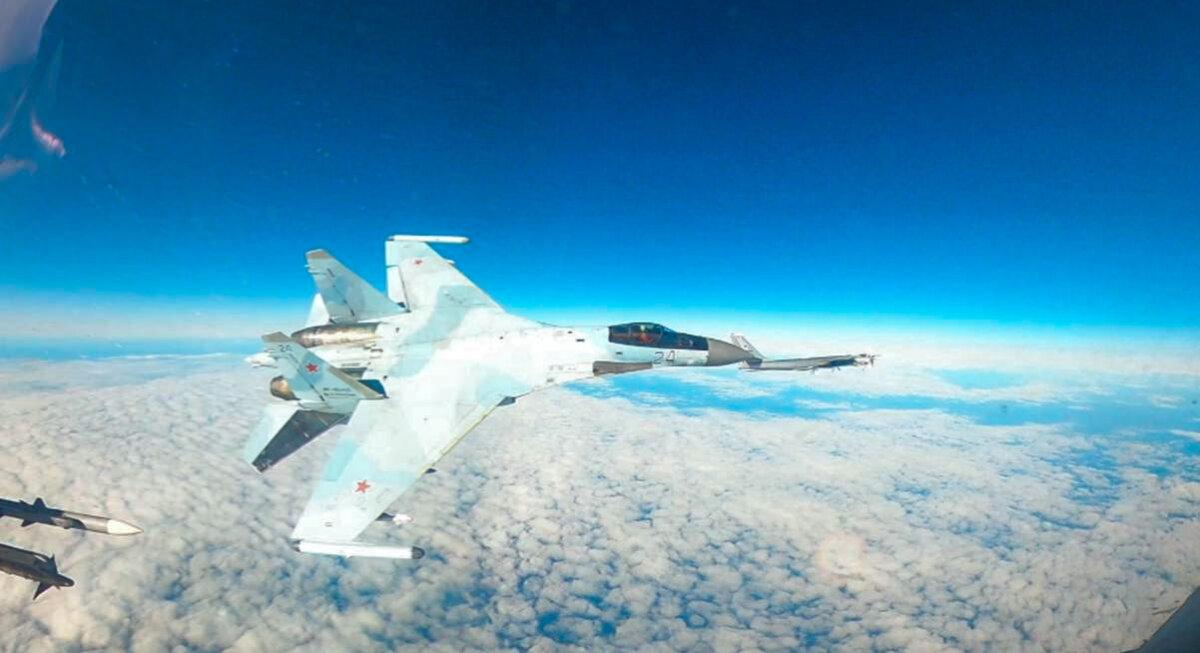
A 15-second video posted by NORAD on social media at the time showed a military jet flying several feet away from the NORAD aircraft, banking to the right and left.
“The conduct of one Russian Su-35 was unsafe, unprofessional, and endangered all—not what you’d see in a professional air force,” Gen. Gregory Guillot, commander of NORAD, said at the time.