Nevada’s rapidly growing population has reached a critical intersection with the region’s worsening water crisis, according to experts.
Some analysts say the urban growth is unsustainable amid increasingly unpredictable water levels in the river, which supplies water for the majority of the state’s population.
However, others believe that existing water supplies could support Nevada’s burgeoning populace if adjustments were made.

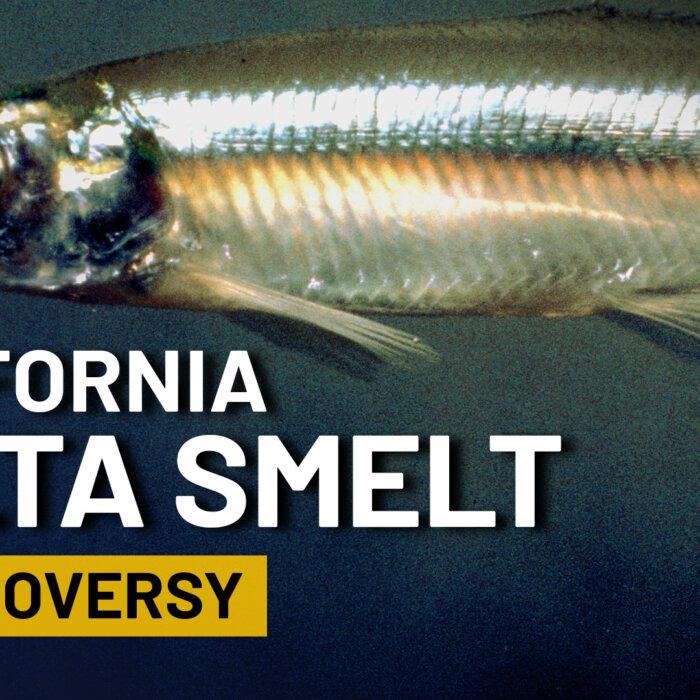
Southern Nevada, home to about 70 percent of Nevada’s population, receives upward of 90 percent of its water from Lake Mead.
About 10 percent of Southern Nevada’s water comes from groundwater, because of limited recharge from sources such as rainfall, although the number can be higher in the summer months.
Concurrently, housing construction is not keeping up with Nevada’s decades-long population boom.
Nevada is the only state in the union that has experienced a 25 percent or more population growth rate over the past three decades, according to university researchers.
Residents from states such as California are drawn to Nevada by the comparatively cheap housing costs. Others are attracted to the state’s lack of state income tax, abundant recreation opportunities, and robust job market.
Doing the Math
“We’re not even talking about what’s happening at Lake Mead. Next summer, the government is projecting some of the lowest levels we’ve ever seen,” Kyle Roerink, executive director of the Great Basin Water Network, told The Epoch Times. The nonprofit organization advocates in Nevada and Utah for sustainable development and water conservation programs.Roerink said the issue requires conservative thinking among state officials, but also “those who are mindful of the cost of reckless expansion on the environment and existing residents.”
Roerink says that the failed bill, like other previous legislation, didn’t address the elephant in the room: How can the housing expansion be supported given the shrinking water supply?”
“I think what usually happens is the politicians ignore the research the SNWA conducts,” he said.
Despite delivering worrying forecasts for future water levels, Roerink said the agency isn’t laying out the “worst case scenario” for the Colorado River.
Ultimately, he said, the issue boils down to how much growth the state can sustain.
“It is well documented and undeniable that the Colorado River has lost about 20 percent of its flows,“ Roerink said, calling the state’s population boom and shrinking water supply an ”inherent math problem” that needs realistic solutions.
“Everybody has to understand that baseline to understand where we’re coming from,” he said.
Legislation reintroduced in March by Sen. Catherine Cortez Masto (D-Nev.) aimed to address the issue of population boom versus shrinking water resources in Clark County, the most populous county in Nevada and home to Las Vegas.
Known as the Southern Nevada Economic Development and Conservation Act, the bill had support from affordable housing advocates including the Nevada Housing Coalition.
Critics of Masto’s proposal say that, while attractive on paper, it lacks conservation guarantees and has the potential to exacerbate the existing water crisis.
Roerink shares that perspective and said existing land proposals don’t guarantee housing for those in middle or lower income brackets.
Growing Inward
Steffen Lehmann, professor of architecture and urbanism at the University of Nevada–Las Vegas, told The Epoch Times that continued urban growth amid ongoing water shortages is possible only if developers focus on more sustainable building and housing models.“We have to do much better. The last 50 years, we didn’t grow sustainably,” Lehmann said. “Right now, everyone is locked into this cycle of consumption.”
As the most populated city in the state, Las Vegas has become ground zero for emergency water conservation efforts.
The federal Bureau of Reclamation determines how much water usage reduction is necessary through a tier system based on the surface level of Lake Mead. There are three tiers in the system, with the third activated when the reservoir reaches a critically low level of 1,025 feet.

In 2022, the Bureau of Reclamation reduced the amount of water that southern Nevada was allowed to draw from Lake Mead by 7 billion gallons. That was followed in 2023 by an additional 1.1 billion gallon reduction.
That puts the city ahead of its 2050 master plan, which aims to reduce water consumption to less than 100 gallons per person per day.
For reference, a shower typically uses about 20 gallons of water, while a load of laundry typically uses 15 gallons to 45 gallons.
Water reductions during the current population boom are important, but Roerink pointed out that the conservation measures don’t account for the usage needs of new housing projects and residents.
“Are we actually conserving water, or are we just repurposing? How many more consumptive uses are you inviting? There are a thousand houses being planned, what is the right balance?”
Lehmann said there’s a knowledge gap when it comes to urban expansion in deserts.
It comes down to “building in,” where existing infrastructure exists, he said, instead of “building out.” He called it “gentle densification.”
The term refers to the development of “middle housing,” such as duplexes, accessory dwelling units, townhouses, and small-scale apartment buildings in existing neighborhoods. In contrast to high-density development, gentle densification aims to increase housing while maintaining the character of existing neighborhoods.
With denser urbanization models, combined with even stricter per capita water usage, Lehmann said, “I think we can keep growing.”
Standard methods of building can create additional stress on water reserves, he said, and it’s not feasible for Las Vegas to continue to pump water to remote suburbs that require all new infrastructure: roads, fire departments, houses, and schools.
Gentle densification and green urban infrastructure could help with water conservation, reducing the amount of water needed for traditional outdoor landscaping and irrigation. Adding components such as “green roofs” and sidewalk berms can also reduce stormwater runoff.
Finding ways to create more housing in existing space with operational infrastructure is the solution to Nevada’s population boom, according to Lehmann.
“We can’t keep repeating the outdated building models of the 20th century,” he said.
Key to that picture is planned green space, he said, citing the “urban island heat effect.”
This phenomenon occurs when green space and trees are removed to create more buildings, which then trap the heat that would normally escape into the cooler desert air at night. As a result, overall nighttime temperatures remain elevated, which in turn increases water demand for irrigation and cooling.
Creating more homes on less land, in addition to conserving water resources, may also be a solution to the high cost of housing and rentals, especially in Las Vegas, Lehmann said.
A plot of land with two or three homes, instead of just one, could potentially reduce the cost burden to residents by boosting supply.
“So yes, we can keep growing ... the optimism here is incredible,” Lehmann said.