NASA appears to have its hands full this week as two historic moments in spaceflight are set to get underway.
The first will be a medically triggered crew departure from the International Space Station, and the second will be the rollout of a Moon rocket from the Vehicle Assembly Building to the launch pad.
Originally set to stay aboard the station for six months, their early departure was triggered by what NASA Administrator Jared Isaacman called a “serious medical concern” that affected one of the crew members on Jan. 7.
The astronaut in question was not named, but was confirmed to be in a stable condition.
NASA officials emphasized that they were not making an emergency evacuation.
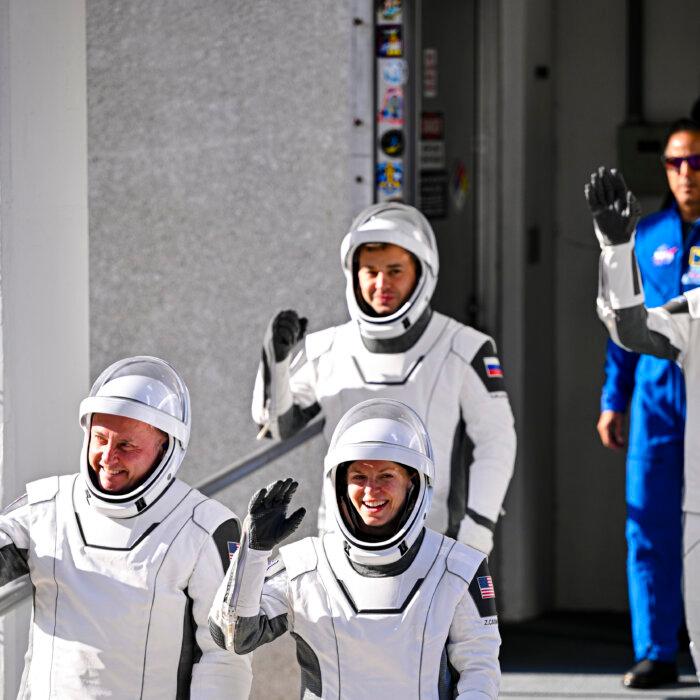

Rather, it was a decision made out of an abundance of caution, recognizing that almost all of the crew’s objectives were already complete. However, they did recognize that this would be a medically induced early departure, the first medical exit in the International Space Station’s 25-year history of crewed missions.

Standard reentry procedures will be carried out, and the capsule is expected to splash down in the Pacific Ocean off California at 3:41 a.m. ET on Jan. 15.
NASA and SpaceX recovery teams are already prepared for various medical contingencies that can occur as the crew is brought aboard the recovery ship.
Meanwhile, Kud-Sverchkov will remain aboard the space station with fellow cosmonaut Sergei Mikaev and NASA astronaut Chris Williams as the remaining members of Expedition 74 until NASA SpaceX’s Crew-12 mission arrives.
NASA Rolls Out Moon Rocket Ahead of Artemis II
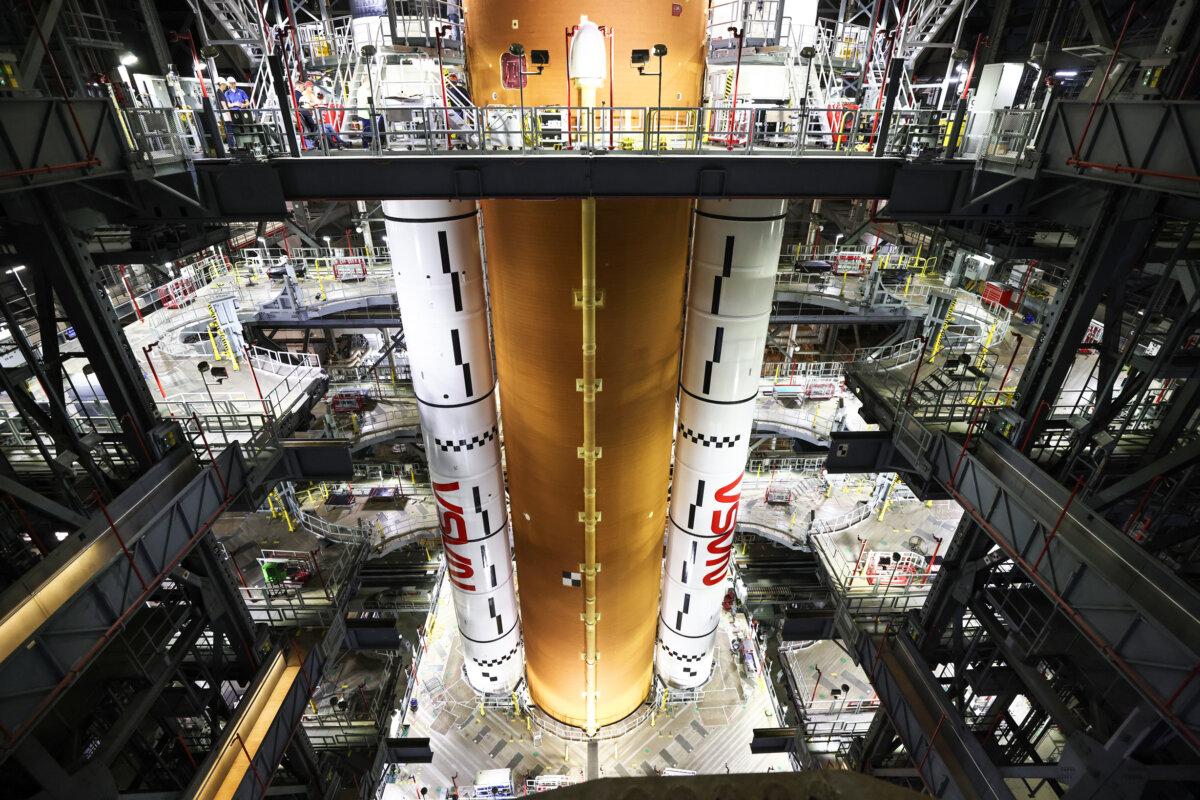
On Jan. 17, back on the East Coast, NASA is scheduled to begin rolling out its behemoth Moon rocket called the Space Launch System.
It is the rocket that will send the Artemis II crew—NASA astronauts Reid Wiseman, Victor Glover, and Christina Koch, and Canadian astronaut Jeremy Hansen—on the first manned mission to fly around the Moon since Apollo 17 in December 1972.
These four will also be the first humans to fly this rocket.
Their 10-day mission is not due to launch until Feb. 6 at the earliest, but the rocket will be carried out to Launch Complex 39B at Kennedy Space Center this week to begin necessary preparations and testing.
That includes connecting ground support equipment and cryogenic propellant feeds, and powering up all integrated systems at the pad for the first time.
The four-mile trek to the launch pad will take 12 hours.
Once those checks are complete, the Artemis II crew will give it a final walkdown, and a “wet dress rehearsal” will commence at the end of the month.
That dress rehearsal is a pre-launch test that includes fueling the rocket with more than 700,000 gallons of cryogenic propellant, safely removing the propellant from the rocket, and conducting a launch countdown in between.
Closeout crews will also be practicing securing the astronauts in the Orion crew capsule at this time, albeit without the real crew present.
Teams also will pay close attention to the effectiveness of recently updated procedures to limit how much gaseous nitrogen accumulates in the space between Orion’s crew module and launch abort system hatches, which could pose an issue for the closeout crew.”
Additional wet dress rehearsals may be required, and the rocket may have to be rolled back to the Vehicle Assembly Building for any necessary work.