NASA Gears Up for Medical Departure From Space Station, Moon Rocket Rollout

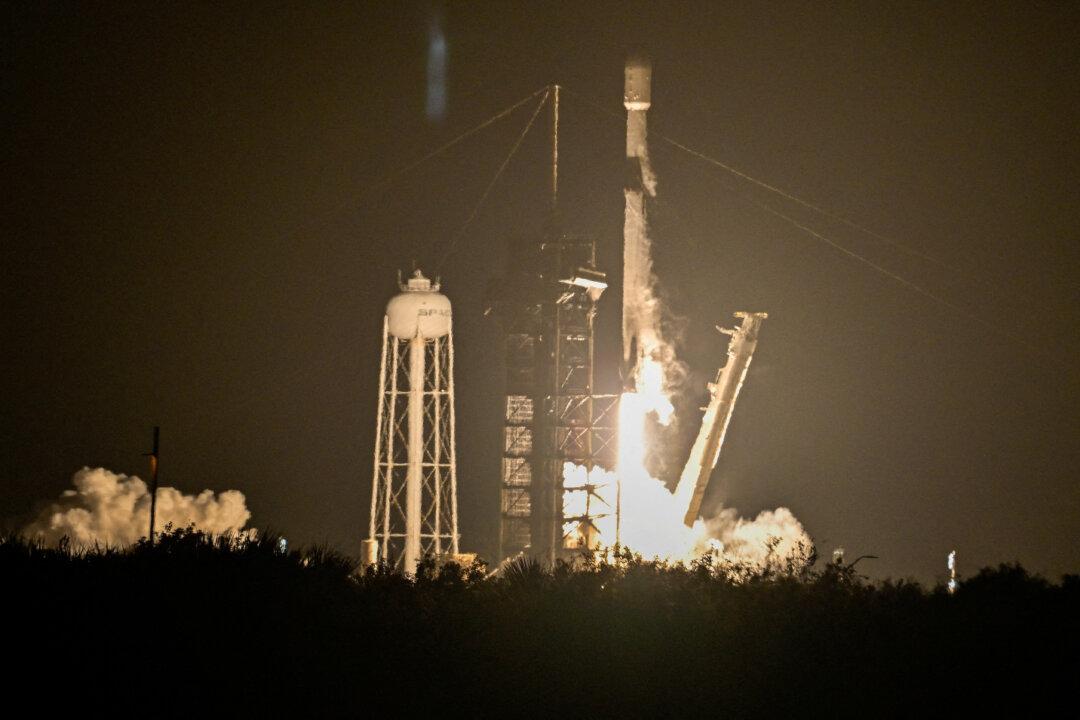
Artemis II is slated to launch after Feb. 6 from Kennedy Space Center, Florida.
NASA Gears Up for Medical Departure From Space Station, Moon Rocket Rollout
Workers pressure wash the logo of NASA on the Vehicle Assembly Building before SpaceX will send two NASA astronauts to the International Space Station aboard its Falcon 9 rocket, at the Kennedy Space Center in Cape Canaveral, Fla., on May 19, 2020. Joe Skipper/Reuters
|Updated:
0:00

NASA appears to have its hands full this week as two historic moments in spaceflight are set to get underway.

The first will be a medically triggered crew departure from the International Space Station, and the second will be the rollout of a Moon rocket from the Vehicle Assembly Building to the launch pad.

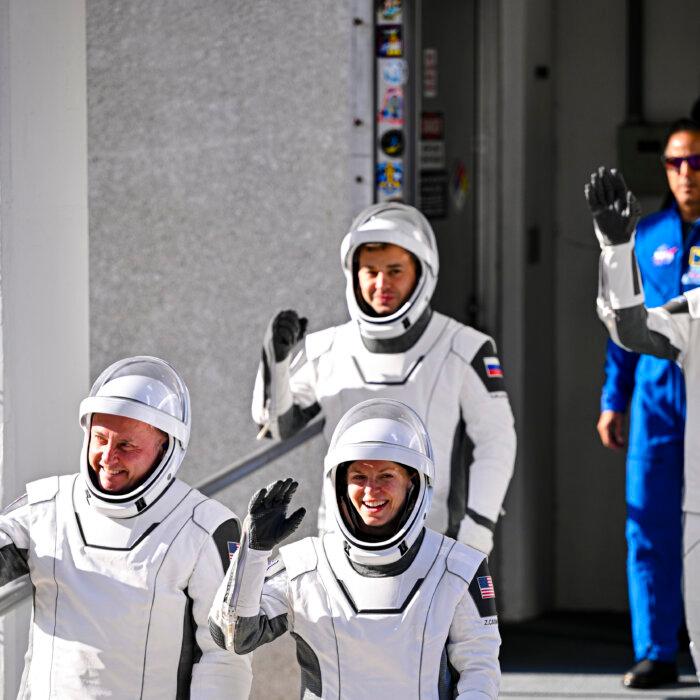
At 5:05 p.m. ET on Jan. 14, NASA’s SpaceX Crew-11, featuring NASA astronauts Zena Cardman and Mike Fincke with JAXA (Japan Aerospace Exploration Agency) astronaut Kimiya Yui and Roscosmos cosmonaut Oleg Platonov, will undock from the International Space Station aboard their SpaceX Crew Dragon spacecraft and begin their journey home several weeks ahead of schedule.

Originally set to stay aboard the station for six months, their early departure was triggered by what NASA Administrator Jared Isaacman called a “serious medical concern” that affected one of the crew members on Jan. 7.

The astronaut in question was not named, but was confirmed to be in a stable condition.

NASA officials emphasized that they were not making an emergency evacuation.
Rather, it was a decision made out of an abundance of caution, recognizing that almost all of the crew’s objectives were already complete. However, they did recognize that this would be a medically induced early departure, the first medical exit in the International Space Station’s 25-year history of crewed missions.

Roscosmos cosmonaut Oleg Platonov (2nd R), Jaxa astronaut Kimiya Yui (R), NASA astronaut Mike Fincke (L), and NASA astronaut Zena Cardman (2nd L) depart the Neil A. Armstrong Operations and Control Building at the Kennedy Space Center for Space Launch Complex 39A in Cape Canaveral, Fla., on July 31, 2025. (Miguel J. Rodriguez Carrillo/Getty Images)
Roscosmos cosmonaut Oleg Platonov (2nd R), Jaxa astronaut Kimiya Yui (R), NASA astronaut Mike Fincke (L), and NASA astronaut Zena Cardman (2nd L) depart the Neil A. Armstrong Operations and Control Building at the Kennedy Space Center for Space Launch Complex 39A in Cape Canaveral, Fla., on July 31, 2025. Miguel J. Rodriguez Carrillo/Getty Images
Fincke handed over command of the space station to Roscosmos cosmonaut Sergey Kud-Sverchkov on Jan. 12, and Crew-11 was given the “go” by mission managers on Jan. 13, as they packed cargo, reviewed return procedures, and transferred hardware.

Standard reentry procedures will be carried out, and the capsule is expected to splash down in the Pacific Ocean off California at 3:41 a.m. ET on Jan. 15.

NASA and SpaceX recovery teams are already prepared for various medical contingencies that can occur as the crew is brought aboard the recovery ship.

Meanwhile, Kud-Sverchkov will remain aboard the space station with fellow cosmonaut Sergei Mikaev and NASA astronaut Chris Williams as the remaining members of Expedition 74 until NASA SpaceX’s Crew-12 mission arrives.

NASA astronauts Jessica Meir and Jack Hathaway, European Space Agency (ESA) astronaut Sophie Adenot, and cosmonaut Andrey Fedyaev are currently scheduled to launch aboard a SpaceX Crew Dragon capsule from Space Launch Complex 40 at Cape Canaveral Space Force Station to the space station no earlier than Feb. 15.

NASA Rolls Out Moon Rocket Ahead of Artemis II
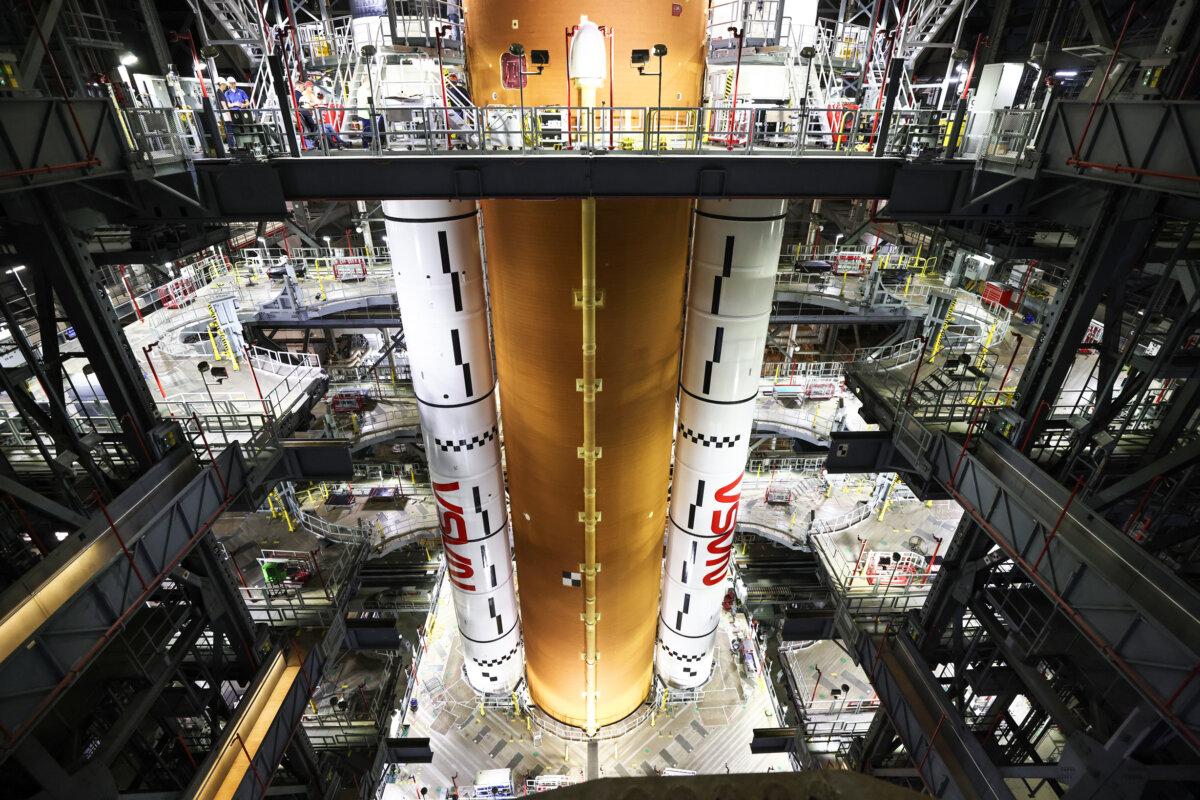
Artemis II Core Stage is lifted into High Bay 3 inside the Vehicle Assembly Building at the Kennedy Space Center in Florida on March 23, 2025. (Frank Michaux/NASA)
Artemis II Core Stage is lifted into High Bay 3 inside the Vehicle Assembly Building at the Kennedy Space Center in Florida on March 23, 2025. Frank Michaux/NASA

On Jan. 17, back on the East Coast, NASA is scheduled to begin rolling out its behemoth Moon rocket called the Space Launch System.

It is the rocket that will send the Artemis II crew—NASA astronauts Reid Wiseman, Victor Glover, and Christina Koch, and Canadian astronaut Jeremy Hansen—on the first manned mission to fly around the Moon since Apollo 17 in December 1972.

These four will also be the first humans to fly this rocket.

Their 10-day mission is not due to launch until Feb. 6 at the earliest, but the rocket will be carried out to Launch Complex 39B at Kennedy Space Center this week to begin necessary preparations and testing.

That includes connecting ground support equipment and cryogenic propellant feeds, and powering up all integrated systems at the pad for the first time.

The four-mile trek to the launch pad will take 12 hours.

Once those checks are complete, the Artemis II crew will give it a final walkdown, and a “wet dress rehearsal” will commence at the end of the month.

That dress rehearsal is a pre-launch test that includes fueling the rocket with more than 700,000 gallons of cryogenic propellant, safely removing the propellant from the rocket, and conducting a launch countdown in between.

Closeout crews will also be practicing securing the astronauts in the Orion crew capsule at this time, albeit without the real crew present.

“While NASA has integrated lessons learned from Artemis I into the launch countdown procedures, the agency will pause to address any issues during the test or at any other point should technical challenges arise,” the space agency said in a press release.
“Engineers will have a close eye on propellant loading of liquid hydrogen and liquid oxygen into the rocket, after challenges encountered with liquid hydrogen loading during Artemis I wet dress rehearsals.

Teams also will pay close attention to the effectiveness of recently updated procedures to limit how much gaseous nitrogen accumulates in the space between Orion’s crew module and launch abort system hatches, which could pose an issue for the closeout crew.”

Additional wet dress rehearsals may be required, and the rocket may have to be rolled back to the Vehicle Assembly Building for any necessary work.

Google LogoMark Us Preferred on Google
T.J. Muscaro
T.J. Muscaro
Author
T.J. Muscaro is an award-winning reporter and NASA Correspondent for The Epoch Times, covering the Artemis program, Space Force, and other public and private ambitions within the growing space industry. Based in Tampa, Florida, he also covers stories of extreme weather and disaster relief, as well as various matters of national and international politics.