The center interviewed more than 5,000 American adults from across the nation over the past few months.
Eileen Yam, director of science and society research for the center, told The Epoch Times that the challenge is much more pronounced among lower-income adults.
“That said, upper-income adults haven’t been completely spared—54 percent of them say higher prices have made it more difficult to eat healthy,” she said.
In addition to cost, Yam said they reviewed other personal preferences and external factors that often shape food choices and healthy eating.
“People also weigh taste, healthiness, and convenience, in addition to the price tag,” she said.


“Of those four priorities, taste tops the list as most important when Americans make food decisions, followed by cost, then healthiness.”
In May, President Donald Trump’s Make America Healthy Again Commission released its report on the childhood chronic diseases crisis, finding a range of contributing factors including poor diet, environmental toxins, lack of sufficient physical activity, chronic stress, and over-medicalization.
The Pew Research Center report also indicates that the standard American diet has shifted dramatically toward ultra-processed foods, which could lead to nutrient depletion, increased caloric intake, and exposure to harmful food additives.
Access to Healthy Foods
Geographic location also plays a role, as some communities may lack stores that offer fresh produce or local farmers’ markets, according to the report. More than 65 percent of respondents said it was easy to find healthy food near where they live, while 13 percent said it was difficult to access healthy food close to home.More than 47 percent of those surveyed placed convenience of access to, and preparation of, food as a major concern in their attempts at healthy eating.
Among adults who marked convenience as very important to their food choices, 23 percent order delivery or takeout at least a few times a week. Almost nine in 10 Americans surveyed believe home cooking is much healthier than going out or ordering in.
The report also notes that the growth of food-delivery apps has contributed to more Americans eating at home.
A quick Google search revealed a wealth of pre-cooked or ready-to-prepare meals for home delivery. Among the most popular are Factor, Sunbasket, Green Chef, Purple Carrot, and Trifecta Nutrition.
Factor advertises an introductory 10-meal option of pre-cooked food for $67.45 per week. Hello Fresh, which allows users to prepare meals themselves with included recipes, charges $59.87 per week for a 12-meal introductory package. Eat Clean, another pre-prepared meal service, charges $54.54 a week for their 10-meal introductory offer.
The survey also found that Americans who eat home-cooked meals more often are more likely to believe their diets are healthy. About three in 10 Americans who eat home-cooked meals daily described their diets as very healthy, compared with just 12 percent among those who cook at home less frequently.
About half of those surveyed said they are knowledgeable about which foods are healthy, while the other half reported having little or no confidence in their understanding of healthy eating.
Preeti Soni, a registered dietitian, certified diabetes care and education specialist, and integrative oncology dietitian at City of Hope Orange County in Irvine, California, told The Epoch Times that eating healthy is not just for heart health but also for preventing diseases overall, including cancer.
“Eating a healthy, balanced diet is one of the most powerful tools we have to support long-term health and reduce the risk of chronic conditions,” she said.
Soni recommends a Mediterranean diet, which is rich in fiber, whole grains, fruits, vegetables, and lean proteins.
“This can help lower inflammation, strengthen immune function, and reduce exposure to harmful compounds that could contribute to disease over time,” she said.
“Simply put, food can be a form of medicine.”
While she admits that accessibility and affordability can be challenging, Soni suggests looking for fruits and vegetables that are in season, as they are often more affordable. She also recommends buying in bulk, which can be less expensive, and looking for items such as rice, beans, lentils, and frozen vegetables.
Affordable Healthy Foods
Checking food labels for items such as sugar and sodium is also important, Soni said.Some budget-friendly breakfast options include oatmeal or yogurt with fruit, whole wheat toast with avocado, or scrambled eggs with vegetables, she said. Healthy lunch choices can include lentil soup with whole grain crackers, tuna salad, plain Greek yogurt, or chopped fresh vegetables with hummus.
“For dinner, you could try a stir-fry with chicken and mixed vegetables, with brown rice, or a baked sweet potato topped with black beans, avocado, and salsa,” Soni said.
For those with time constraints, she suggests batch cooking that can serve a family throughout the week, or healthy grab-and-go options like yogurt, hard-boiled eggs, or fresh fruit. Pre-chopped frozen vegetables, microwavable grains, or pre-cooked proteins can also be time-savers.
“Eating healthy doesn’t mean spending hours in the kitchen,” Soni said.
Some of her other suggestions include one-pan meals with a protein and vegetables, or preparing layered salads in jars for quick lunch options.
Food Assistance
According to the Department of Agriculture, food prices are expected to rise by 2.9 percent this year. As the Pew Research Center survey noted, these price increases pose major challenges for those with low or fixed incomes.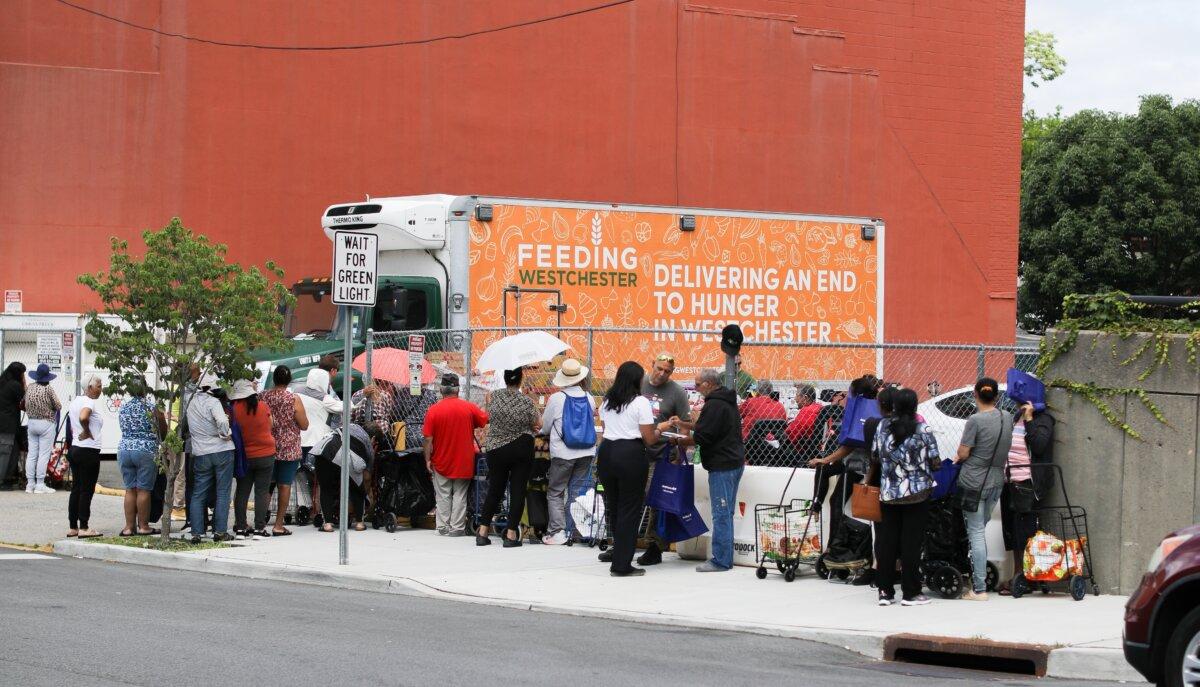
Bruce Jackson, director of marketing and communications for Feeding Westchester, the county’s largest food pantry, said most of their clients facing food insecurity are working one or two jobs.
“A lot of the people we help are not the stereotype you’d expect,” he told The Epoch Times.
“These are families where both adults are working, but just not bringing in enough income. Many of them are seniors, veterans, teachers’ aides, and even some medical professionals.”
In 2024, Feeding Westchester supplied 23 million pounds of food to 175 local food pantry partners throughout the county, located just north of New York City.
“It is ironic that one of the most affluent counties in the nation has so many people in need,” Jackson said.
One of the organization’s goals was to focus on nutritional foods for clients, and today, 40 percent of everything it delivers consists of fresh fruit and produce, he said.
“It’s important for everyone to have access to healthy foods so we make sure we’re not distributing just the most accessible things.”
With the help of private donations and assistance from Westchester County and New York state, the organization buys directly from Hunts Point Market in New York City and also accepts donations from various grocery chains. This year, it plans to expand the warehouse’s refrigeration space to accommodate even more fresh foods.
Jackson said recipients of food at the local pantries typically do not need a referral from a social services agency.
“We just want to be able to help anyone in need,” he said.