More Americans Now Leaning Heavily on Social Security Payments, AARP Survey Finds

Roughly two-thirds of retirees say they ‘rely substantially’ on Social Security payments, up from 58 percent in 2015.
More Americans Now Leaning Heavily on Social Security Payments, AARP Survey Finds
A Social Security card sits alongside checks from the U.S. Treasury in Washington on Oct. 14, 2021. Kevin Dietsch/Getty Images
Jack Phillips
Jack Phillips
Breaking News Reporter
|Updated:
0:00

While Social Security is facing funding challenges in the coming years, more retirees said in a recent survey that they need the payments compared with 10 or 15 years ago, according to AARP.

The survey found that about 65 percent of retired Americans say “they rely substantially on Social Security,” compared with 21 percent who say “they rely on it somewhat.”

That’s up 2 percentage points from 2020, when 63 percent of retired Americans indicated they rely substantially on monthly Social Security payments. In 2010 and 2015, 58 percent of Americans said the same, according to AARP, an interest group that was formerly called the American Association of Retired Persons.

Meanwhile, 62 percent of respondents to the AARP survey that was published on July 21 believe the average Social Security payment of roughly $2,000 per month is too low. That figure is down from 2020, when 65 percent of respondents said the same, but is up from 61 percent in 2015 and 54 percent in 2010.

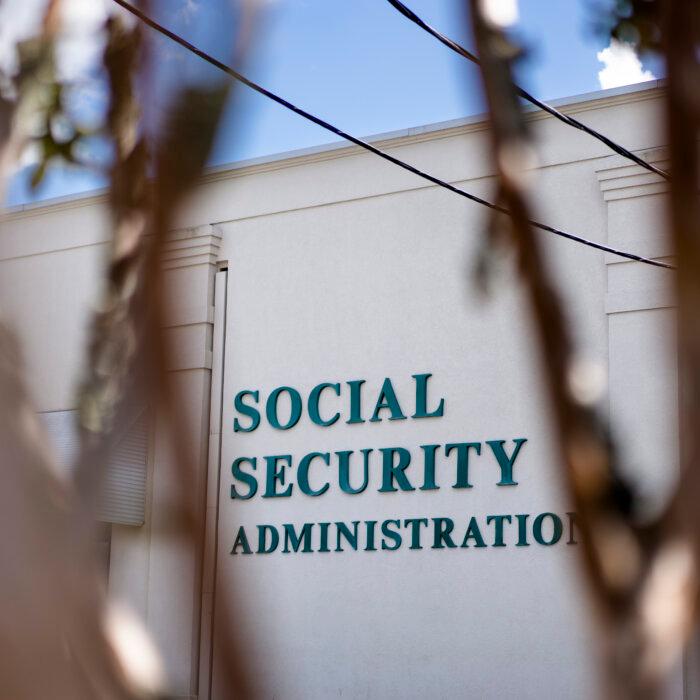
Data released by the Social Security Administration (SSA) last month show that in May, the average Social Security payment reached $2,002.39 per beneficiary, up 4.5 percent from $1,916 a year earlier.

“More than 69 million Americans rely on Social Security today and as America ages, we expect at least 13 million more people to rely on it by 2035.” Myechia Minter-Jordan, the CEO of AARP, said in a statement. “For 90 years, Social Security has never missed a payment, and Americans should have confidence that it never will.”

AARP’s findings come as the go-broke dates for Medicare and Social Security trust funds have moved forward, according to a report issued in June by their trustees.

The date at which the programs will no longer have enough funds to pay full benefits was pushed up to 2033 for Medicare’s hospital insurance trust fund, according to the new report. Last year’s report put the go-broke date at 2036.

Social Security’s trust funds will be unable to pay full benefits beginning in 2034, instead of last year’s estimate of 2035. After that point, Social Security would only be able to pay 81 percent of benefits, the report found.

A fiscal responsibility group said this week, however, that Social Security payments may see an estimated 24 percent cut by late 2032 if no congressional action is taken.

“We estimate that this would be equal to an $18,100 annual benefit cut for a dual-earning couple retiring at the start of 2033,” the Committee for a Responsible Federal Budget said in an analysis.

The SSA said in its most recent update in July that more than 74 million Americans receive monthly Social Security or Supplemental Security Income benefits.

The survey was commissioned by AARP of 3,599 adults ages 18 and older, conducted June 18 to June 23 through telephone and online.

The SSA did not immediately respond to a request for comment on the AARP survey’s findings.

The Associated Press contributed to this report.
Google LogoMark Us Preferred on Google
Jack Phillips
Jack Phillips
Breaking News Reporter
Jack Phillips is a breaking news reporter who covers a range of topics, including politics, U.S., and health news. A father of two, Jack grew up in California's Central Valley. Follow him on X: https://twitter.com/jackphillips5
twitter