Democrats consider the November race a must-win in their efforts to retake the Senate from GOP control. As with any other race, a key question for Democrats is electability.
Stevens has underscored this attribute as an advantage over El-Sayed.
“Poll after poll shows I’m the strongest Democrat to beat Mike Rogers. But MAGA Republicans and their billionaire donors are trying to boost my opponent to shut down our momentum,” Stevens wrote in a campaign text sent on Aug. 2.
Polls between Stevens and El-Sayed have shown her trailing by double digits, but polls gauging hypothetical matchups with Rogers have painted a more complex picture.
While two surveys gave Stevens a lead over the Republican, a third poll gave El-Sayed the edge.
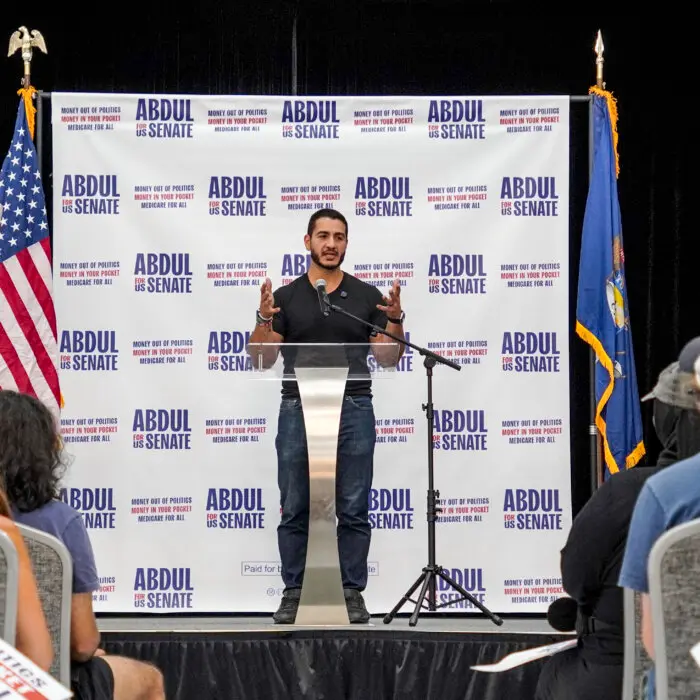
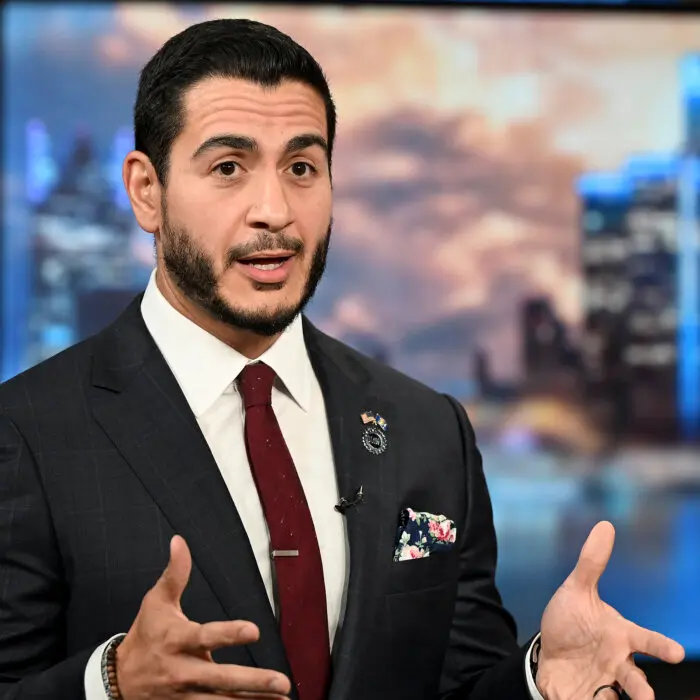
In the days leading up to the election, forecasters have also given El-Sayed overwhelmingly high odds despite his support for more left-wing positions on Medicare for All, abolishing Immigration and Customs Enforcement (ICE), and opposing U.S. military funding for Israel.
By contrast, Stevens has emphasized her record in Congress while pushing to bring manufacturing back to the Great Lakes State.
But even with El-Sayed’s recent surge, can a candidate with his positions win statewide in a purple battleground state like Michigan, which flipped to President Donald Trump twice since 2016?
“I think that’s the million-dollar question about this race and maybe the broader electoral cycle,” Joshua Koss, an assistant professor of political science at Eastern Michigan University, told The Epoch Times.
Polls and Electability
Voters have consolidated around Stevens and El-Sayed after state Sen. Mallory McMorrow, a Democrat, suspended her campaign last month.
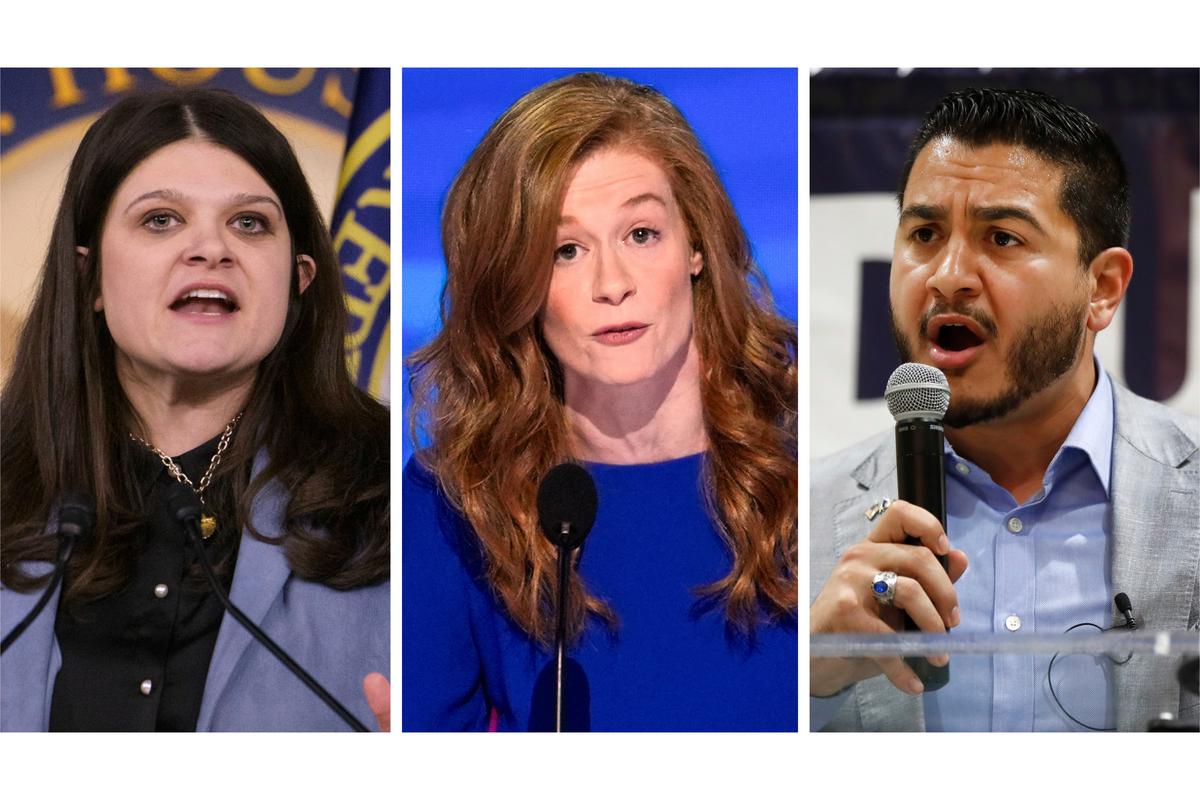
While El-Sayed has maintained a growing lead over Stevens in primary polls, his competitiveness with Rogers is still uncertain.
Stevens led Rogers by 0.8-percentage-points in a Glengariff poll released on July 28, while El-Sayed trailed the Republican by double digits.
A different poll released on Monday by EPIC-MRA gave her a two-point lead in November, while El-Sayed’s deficit on Rogers narrowed to three points.
But then El-Sayed tied with Rogers, and Stevens trailed the Republican by four points, in a Mitchell Research poll released on July 31.
The issue, according to Koss, is that it’s difficult to gauge voter sentiment with nearly 100 days before the general election, since so much can happen that changes voter sentiment.
There’s also the impact of outside spending.
Super political action committees (PACs) have spent more than $60 million to support Stevens, with the American Israel Public Affairs Committee (AIPAC) and its aligned groups spending more than $30 million alone, making it AIPAC’s biggest election investment in history.
“I think Abdul tries to make the case, maybe effectively, that his electability advantage over Stevens is that he has this grassroots support that will be sustained through the general,” the political science professor said.
However, if El-Sayed prevails, there’s a huge chance that AIPAC will pool its resources behind Rogers, whereas the group might remain “agnostic” if the matchup is between the Republican and Stevens, Koss said.
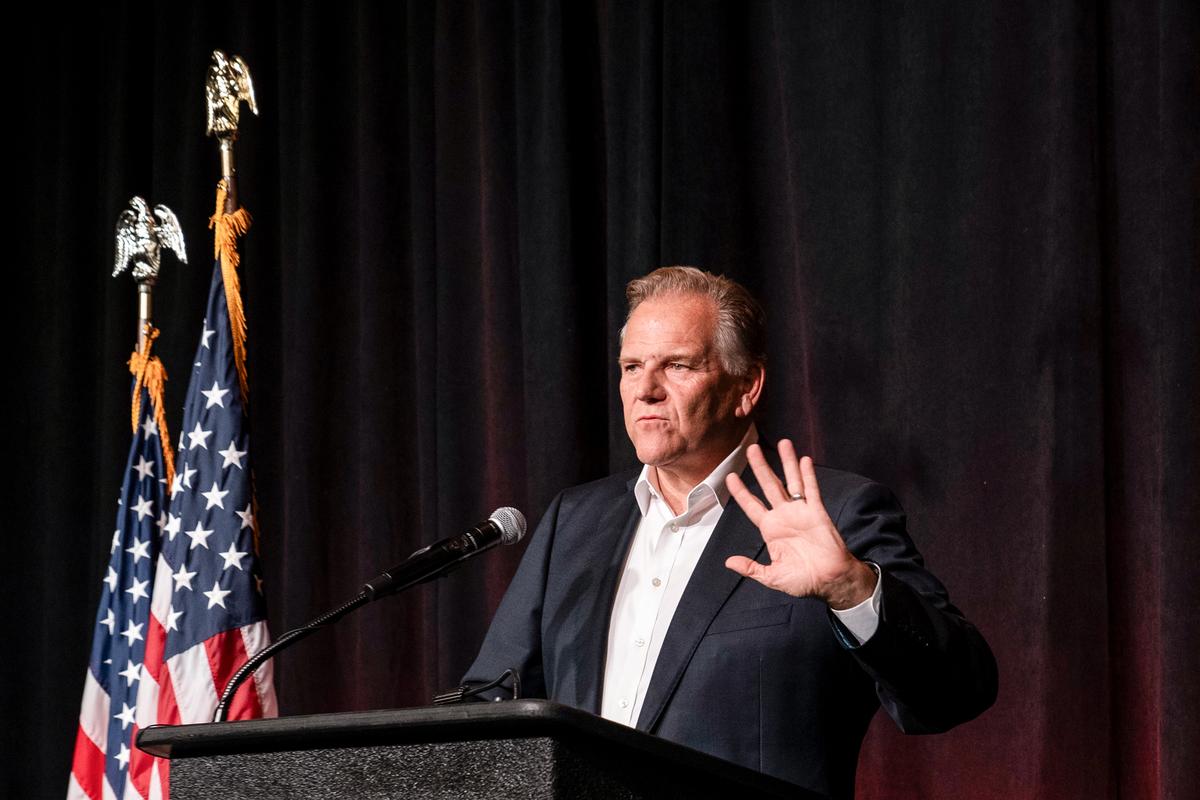
Retiring Sen. Gary Peters (D-Mich.), who has endorsed Stevens, said there would be a lot of money spent on Michigan “regardless of what happens,” when asked if AIPAC would rally for Rogers if El-sayed is the nominee.
Name and Electability
El-Sayed, son of Egyptian immigrants, has said Stevens and her supporters in Washington question his electability because of his name and faith.
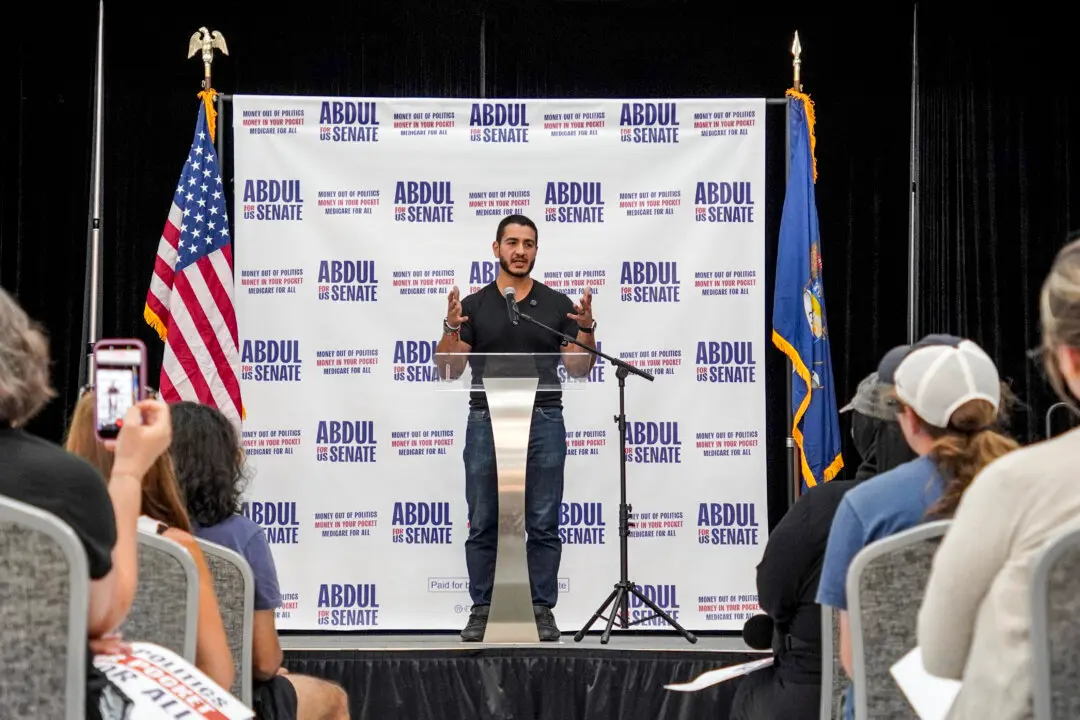
“For most of my life, I thought my name meant that I would be fundamentally unelectable,” El-Sayed told a crowd of hundreds at the Yemeni American Cultural Center in Dearborn, Michigan, in late July.
The Rhodes Scholar would be the first Muslim senator in U.S. history. But if he wins, he would also represent the state with the second-largest Arab American population in the country, behind California.
“The experience of being an Arab and a Muslim in Michigan is the experience of consistently watching as your state uplifts and empowers and embraces you … and so I get real pissed off when they say, ‘Oh, you’re unelectable because your name is Abdul.’ Because for me, I push back and say you don’t know Michigan like I know Michigan,” El-Sayed told a crowd in Dearborn, noting that many were Arab Muslims like himself.
State Rep. Ruwa Romman, a Democrat who is the first Muslim woman to be elected to the Georgia state House of Representatives, told The Epoch Times that El-Sayed is facing the same kind of scrutiny over his faith and ethnicity that she has experienced.
Some who have voted for El-Sayed ask this question as well, including retired National Guardsman Paul Tramp, who lives in Ypsilanti.
Tramp, a union member who works for Ford, told The Epoch Times that he worries the candidate’s last name “doesn’t play well with the demographic in our state.”
Ground Game Differences
The campaigns’ diverging ground strategies have also impacted the electability debate.
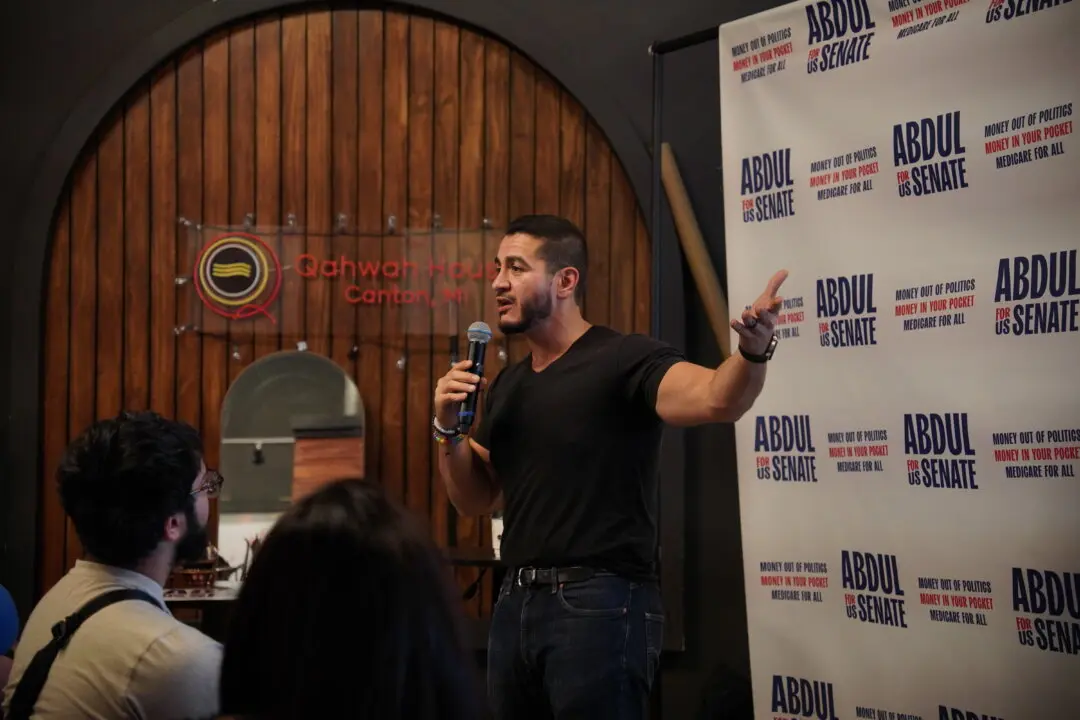
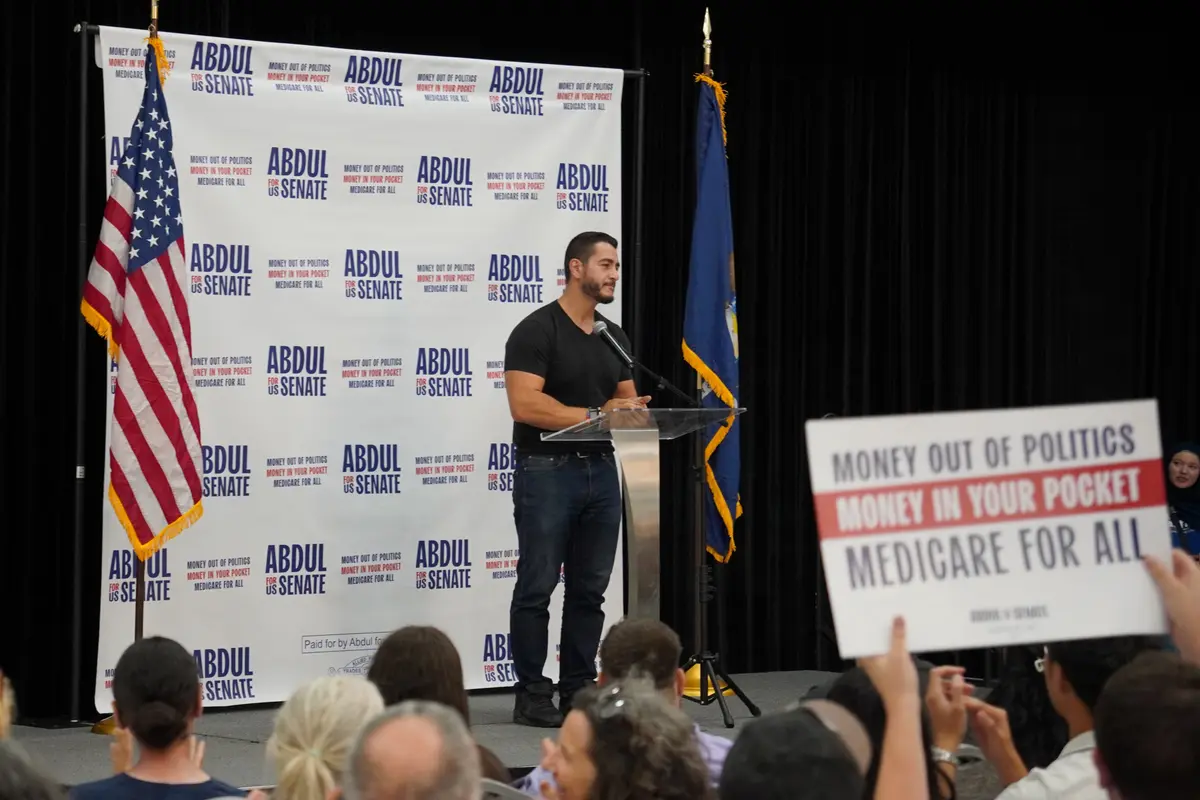
El-Sayed has hosted back-to-back rallies in the closing weeks, while drawing on a vast resource of canvassers and volunteers going door-to-door to discuss his progressive platform.
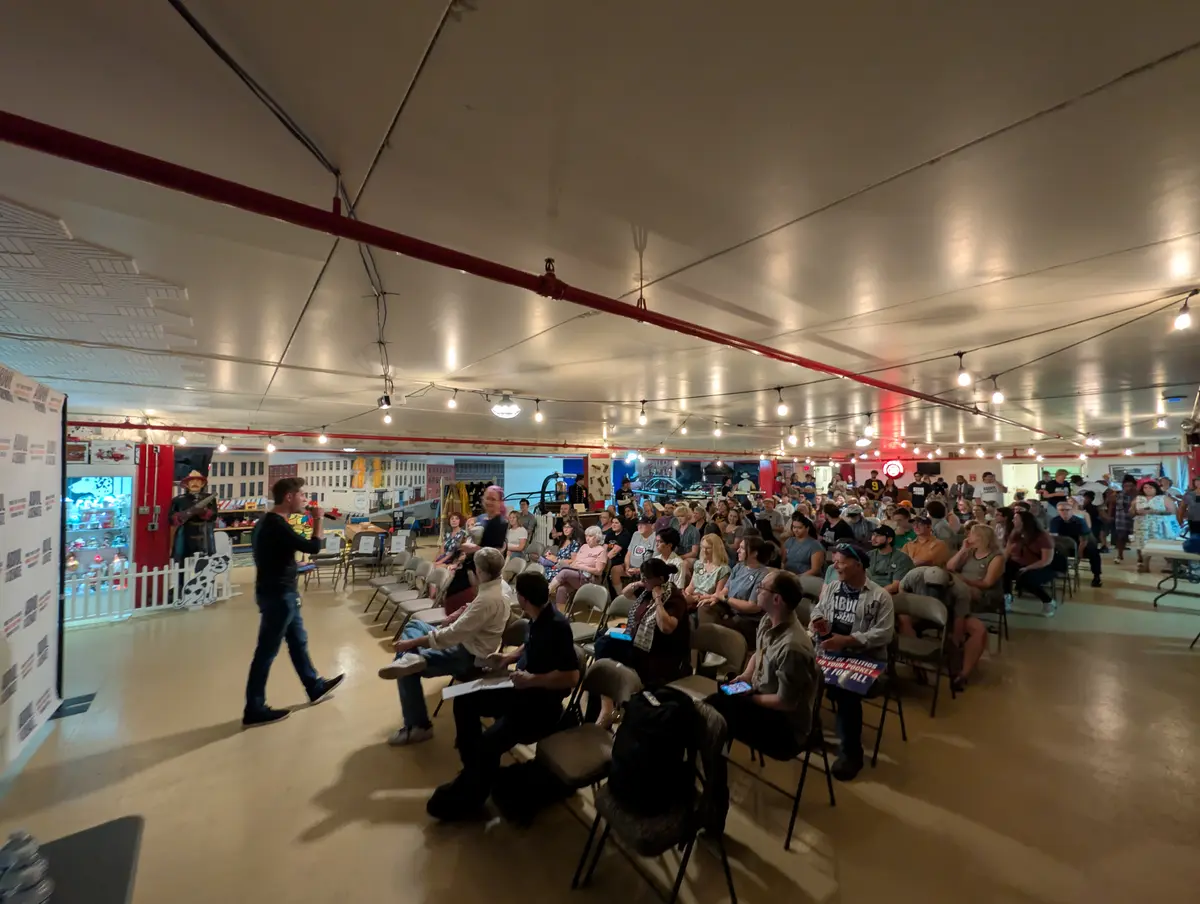
The Stevens campaign also has volunteers canvassing, but has hosted virtually no larger public events throughout the race.
McMorrow criticized this in a June social media video before suspending her campaign, questioning the congresswoman’s broader appeal if she is reluctant to take direct questions from voters and reporters.
El-Sayed has argued that “if you can’t get elected without $60 million, you’re not electable.”
“So I don’t take seriously the idea that there’s a gigantic movement on the other side of what we’re building. I take seriously that we got one,” he told The Epoch Times after a rally in Ypsilanti in late July.
The Stevens campaign did not respond to a request for comment by publication time.
The contrast can be seen driving down residential and rural roads throughout Wayne, Washtenaw, and Livingston counties during the final days of the race.
There are dozens of “Abdul for US Senate” yard signs in various communities in and beyond the Detroit metropolitan area, including cities such as Ann Arbor, Ypsilanti, Chelsea, Northville, and Brighton, but it’s difficult to find homes displaying Stevens signs.
Kristen Kolka, who lives in Scio Township and works in education, said she supports El-Sayed’s healthcare policies and worries that Stevens is “more of a Republican in disguise.”
However, she has heard other Democrats say they’re worried that without Stevens on the ticket, there’s no other way to prevent a Republican from taking Michigan’s Senate seat.
“The only things I’m hearing from people in my circle that make them hesitant to vote for him is they’re worried that the broader population won’t vote for his name,” she told The Epoch Times at Ann Arbor’s Gallup Park.
Some—such as Trianthy and Matthew Sepsakos, who live in Canton Township—are staying out of the primary.
Concerned about the rising cost of living and toxic waste harming Michigan’s environment, they both said they would support whichever Democrat wins the nomination.
“It could swing either way,” Trianthy Sepsakos told The Epoch Times, when asked which Democrat is more electable against Rogers.
Coalition Building
But with how contentious the race has become, can either candidate consolidate the other’s supporters into a broader coalition?
Koss said this will be difficult no matter who wins, but will likely be “a little bit more organic” for El-Sayed due to his grassroots support and his efforts to widen the party’s tent.
Stevens may have a tougher hill to climb “because I think a lot of [her attacks on El-Sayed] probably offend a lot of people that you’re going to need to win the general,” Koss said.
Attack ads in support of Stevens have painted El-Sayed as having a history of “disrespecting women,” which some of his supporters have interpreted as a discriminatory reference to his Muslim faith.
Arlene Cormier and Sachiko Woods, who work for the Detroit Public School system and attended El-Sayed’s rally in Dearborn in late July, said they are still struggling with the decision to support Stevens if she wins.
“I’ve gone through this many times,” Woods told The Epoch Times.
Despite casting his ballot for El-Sayed, Tramp said he thinks “Stevens has a greater chance of pulling people who are disaffected from the right” in a head-to-head with Rogers.
If El-Sayed wins the primary, he will have to bring in Stevens’ camp. But he said he plans to keep having direct conversations with voters leading up to Nov. 3.
“I think in the absence of all the lie money that’s being spent, I think it’s a lot easier to just have a straight conversation when people aren’t being bombarded with money in false advertising,” he told The Epoch Times.
But much is still uncertain. While Peters told The Epoch Times that he will endorse El-Sayed if he wins, Rep. Hillary Scholten (D-Mich.) has refused to say if she will support the progressive candidate.
The Current National Moment
Even if El-Sayed beats Stevens, he will still have to win over independents to become a senator.
“In a general election, the electorate is different than a primary, and it’s made up of a lot of independent voters … [who] play a big, big role in determining who the ultimate winner is,” Peters told The Epoch Times in mid-July.
This has been Stevens’ “main source of appeal,” according to Koss, but he cautioned that the current political climate complicates this argument.
For one, Rogers lost to Sen. Elissa Slotkin (D-Mich.) in 2024, a year when not only Trump won statewide at the top of the Michigan ticket, but also when Republicans had the ballot advantage nationwide.
Not only has Trump’s approval rating recently dropped into the 30s, but rising gas prices from the Iran war have reignited inflation, and Democrats are optimistic about their growing ballot advantage nationwide in the 2026 midterms.
If El-Sayed can win statewide in a purple swing state like Michigan, this might be a unique national moment for progressive candidates, Koss said, potentially proving the movement can spread beyond safer blue districts in cities such as New York, Philadelphia, and Denver.
Progressive candidates might also be better equipped to energize the party’s base, compared to moderate Democrats.
A leaked Republican memo, reported by investigative reporter Ken Klippenstein, suggests the GOP is worried about this scenario with socialist Francesca Hong, who is dominating the Democratic gubernatorial primary in Wisconsin and has a strong chance of becoming the party’s nominee.
If El-Sayed could similarly energize higher voter turnout than a moderate Democrat like Stevens, could this be the opening for a progressive to win statewide in Michigan for the first time in history?
“I think it might be. My hope is that the way things have gone the last 10 years, it’s hopefully showing some people that we’re more on the red side, [and that] this isn’t the direction our country should be going in,” Kolka said.