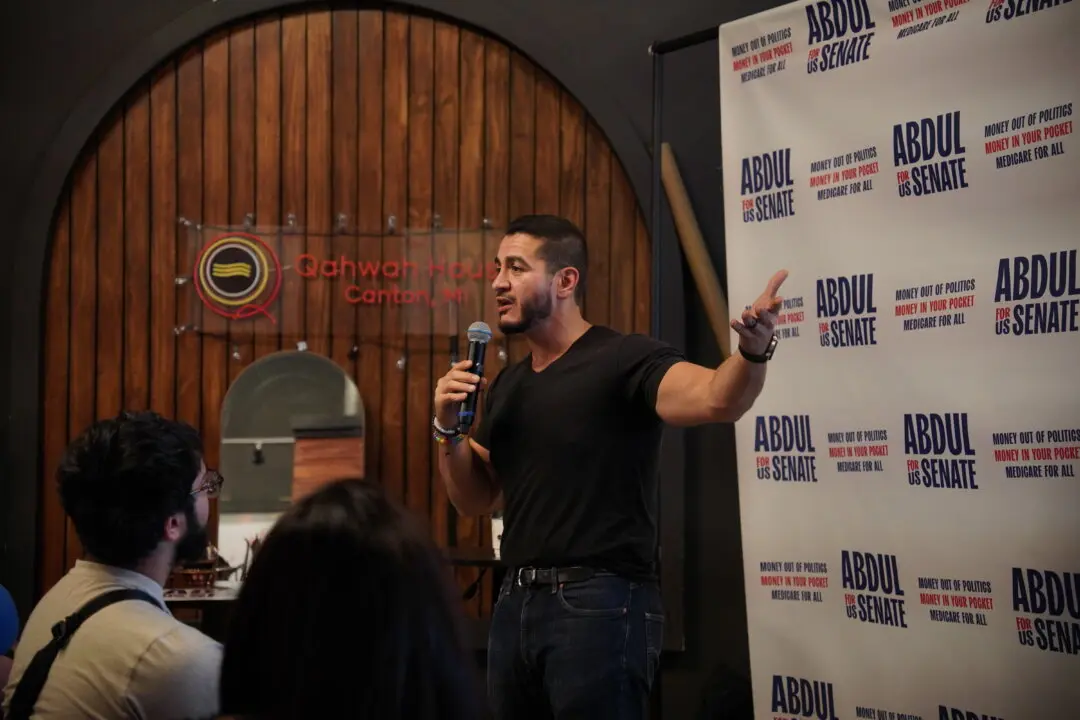
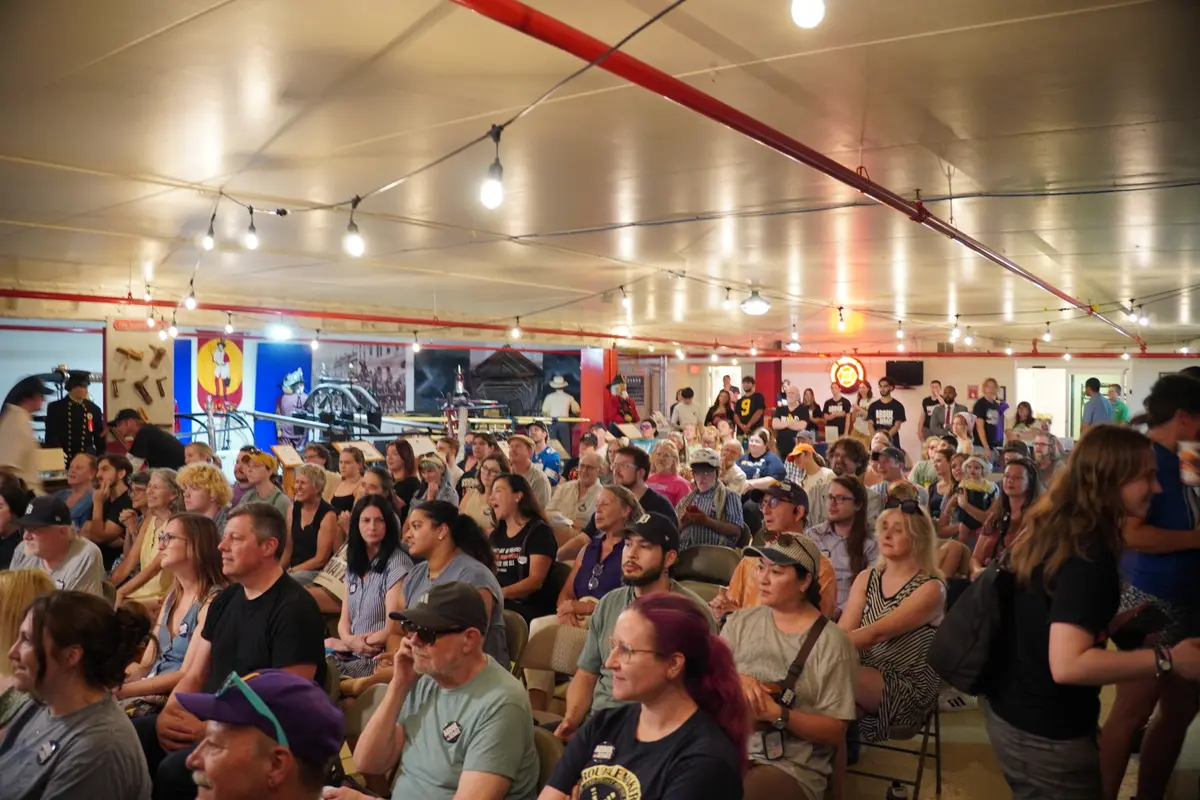
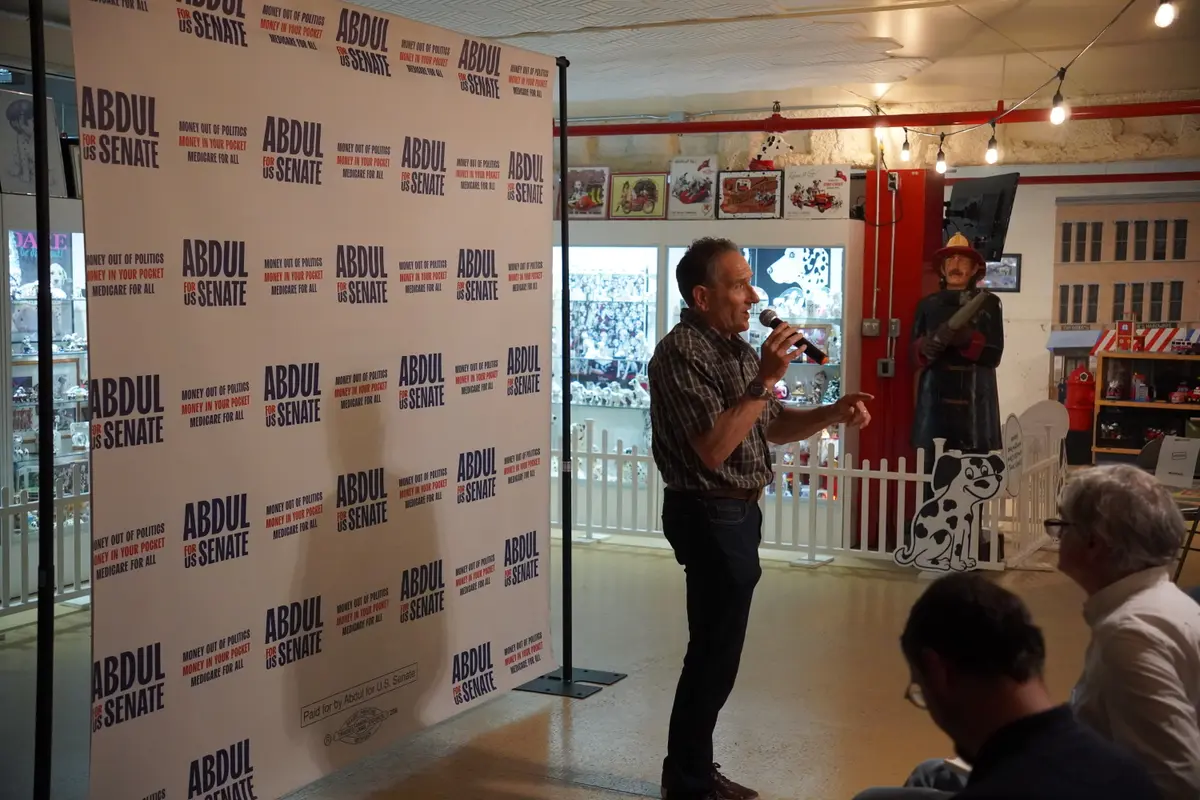
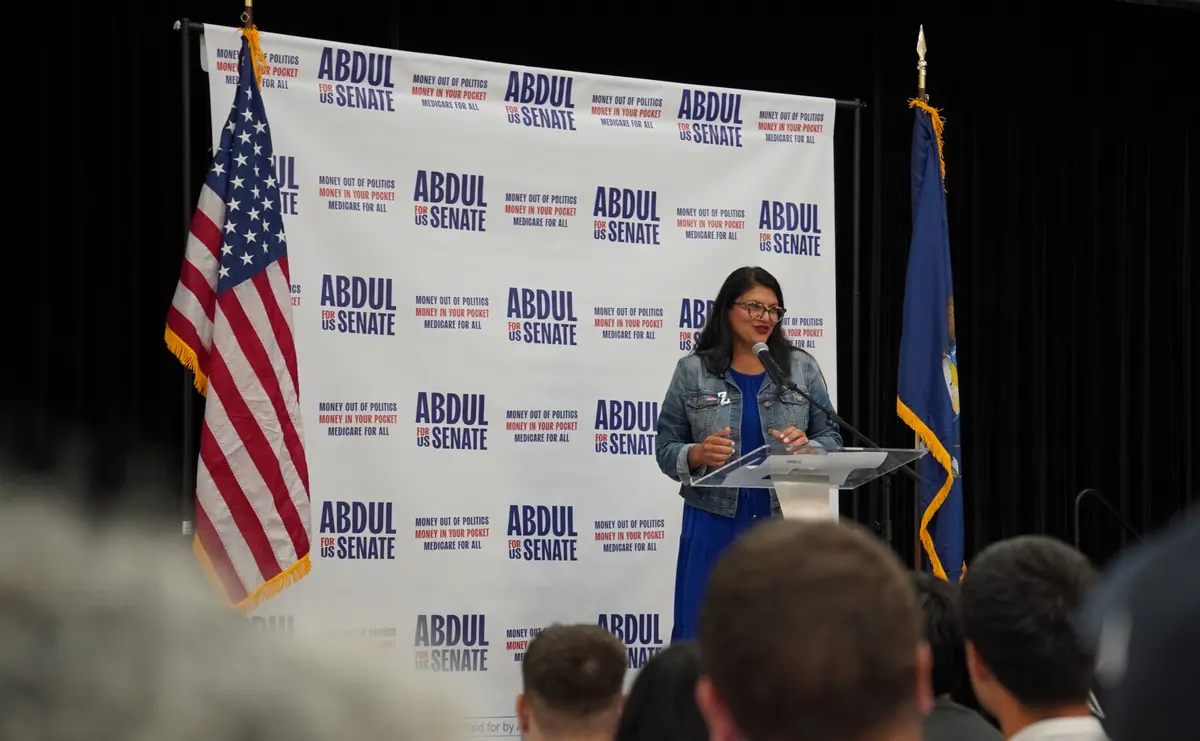
DEARBORN, Mich.—Hundreds of voters who packed into an event hall in Dearborn, Michigan, on July 31 to support Abdul El-Sayed, a Democratic Senate candidate and left-wing populist, were met with a promise to chart a new future away from the party’s past.
“There is something special happening in Michigan,” Rep. Ilhan Omar (D-Minn.) said amid a crescendo of cheers at Dearborn’s Yemeni American Cultural Center.
“I am seeing so much hope in the politics of what’s possible. For far too long, establishment Democrats have told voters we can only achieve incremental progress, but that is simply not true,” Omar said.
“Abdul is showing us what politics should be about.”
After a near nonstop blitz of rallies in the final hours of one of the most expensive Senate primaries in U.S. history, the event was packed with appearances by the Democratic Party’s left wing, including progressives and democratic socialists, offering a message of change from the party’s centrist faction.
“In a lot of ways, the Michigan Democratic Senate primary resembles a microcosm of some of this broader discussion we’re seeing within the Democratic Party at the national level,” Joshua Koss, an assistant professor of political science at Eastern Michigan University, told The Epoch Times.
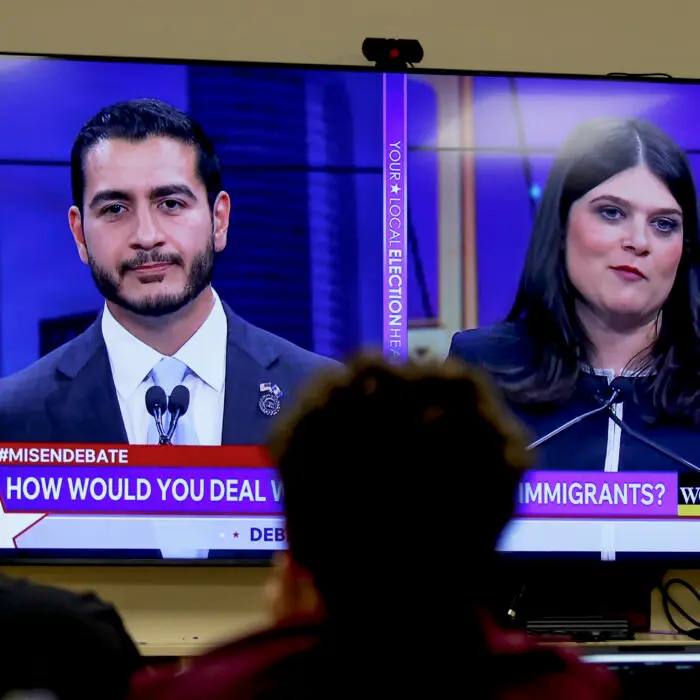
The current political climate has contributed to the Aug. 4 Michigan Senate primary becoming a proxy battle in the ongoing war for the future of the Democratic Party.
For one, this isn’t El-Sayed’s first rodeo running against an “establishment” Democrat. When he challenged now-Gov. Gretchen Whitmer in the 2018 Democratic gubernatorial primary, the dynamics between the candidates were similar, but the stakes and national attention were much lower.
The difference now, according to Koss and many other analysts watching this race, is simple: Control of the U.S. Senate and the math required to achieve it.
Democrats are defending two Senate seats in states that President Donald Trump won in 2024, Michigan and Georgia. If they hold those seats and flip an additional four, they will retake the Senate in 2027.
But if Democrats lose Michigan, the flip column would increase to five—an even more difficult task, despite states such as Ohio, North Carolina, Texas, Alaska, and Iowa becoming more competitive since last year, when Democrats were overwhelmingly the underdogs in the Senate race.
Koss said this is why the race has become a proxy war for divisions in the national Democratic Party.
Even though Democrats have retained control of both Michigan Senate seats since 2001, the Great Lakes State is much more purple than blue. Trump has won over Michiganders twice since 2016, even when the same voters pushed Sen. Elissa Slotkin (D-Mich.) over the line against former Rep. Mike Rogers (R-Mich.) in 2024’s Senate election.
But much has changed in two years. Trump’s approval rating has decreased, hovering at around 39.2 percent in the latest RealClearPolitics average. Gas prices have remained stubbornly high as the Iran war continues.
And what makes many Democrats increasingly optimistic about November is their growing generic ballot advantage, which surveys potential voters on which political party they would vote for if the midterm elections were held today. A July 30 SSRS/CNN poll placed it at 8 percentage points. This is despite 51 percent of respondents expressing an unfavorable opinion of the Democratic Party.
A combination of voter frustration with the current political elite and high unfavorability for the mainstream Democratic Party has given its more progressive wing an opening this year, with progressive candidates winning primaries nationwide.
After Sen. Gary Peters (D-Mich.) announced his retirement last year, El-Sayed’s decision to enter the race created a unique opportunity and a real test for the national progressive movement.
It would mean sending a progressive like Sen. Bernie Sanders (I-Vt.) to the Senate in a true battleground swing state during a time of increasing criticism from the party’s left flank of U.S. foreign policy and of the continued military and financial support of Israel.
El-Sayed has made both of those critiques central to his platform, drawing ire from some in the party’s moderate camp, which has largely consolidated around his opponent, Rep. Haley Stevens (D-Mich.), after state Sen. Mallory McMorrow suspended her campaign last month.
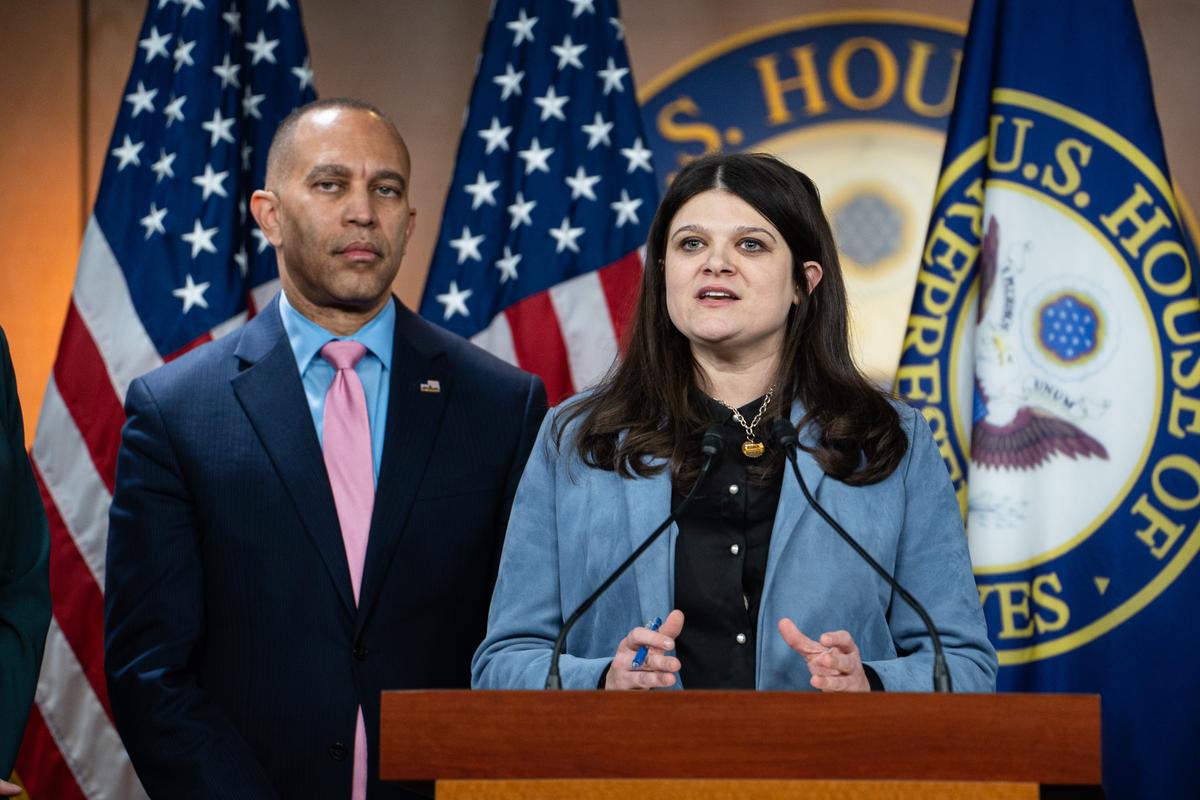
Both Peters and Whitmer have endorsed Stevens. El-Sayed, who previously ran the Wayne County health department, has been endorsed by Sens. Sanders, Elizabeth Warren (D-Mass.), Chris Van Hollen (D-Md.), Tina Smith (D-Minn.), and Ed Markey (D-Mass.).
Record Outside Spending
The battleground primary has drawn in massive outside spending.
That makes it the costliest Senate primary in the Democratic Party’s history and the second costliest primary of the year after the GOP Senate primary in Texas.
Campaigns haven’t been the ones spending the lion’s share of cash in the primary. Outside groups, particularly super political action committees (PACs), have poured millions into the race.
Stevens has received disproportionally more support, with more than $60 million compared to just over $4.6 million for El-Sayed.
“I find it so deeply offensive that we live in a country right now where billionaires can pour money into our politics in a way that I think is inherently corruptive,” Sen. Cory Booker (D-N.J.) told reporters on July 27.
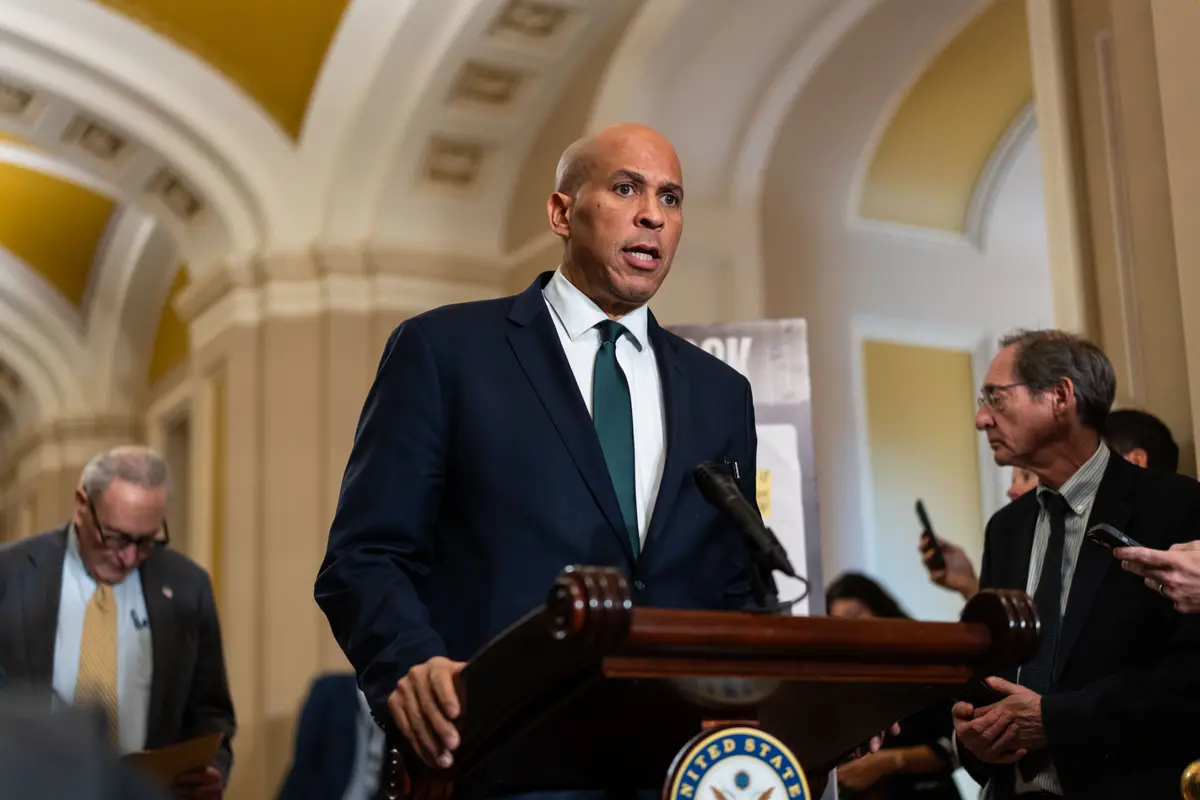
Booker described super PACs as “metaphorical loaded political gun[s]” being aimed at great leaders.
The United Democracy Project super PAC, affiliated with the lobby group American Israel Public Affairs Committee (AIPAC), has spent $30.6 million on the race as of July 30, making the primary the largest investment in AIPAC’s history.
El-Sayed, who supports Medicare for All, a moratorium on U.S. data centers, and abolishing Immigration and Customs Enforcement (ICE) in favor of bringing back the Immigration and Naturalization Service (INS), has made the outside spending figures central to his campaign, arguing that AIPAC is trying to “buy” the race from Michigan voters.
Stevens, a centrist who has spoken about lowering the cost of living and returning the Great Lakes State to its past manufacturing glory, has been criticized for accepting AIPAC’s support and for pledging to always “fight for the people of Israel.”
AIPAC also threw its weight behind Stevens in 2022, when post-census redistricting pitted her against another progressive, then-Rep. Andy Levin (D-Mich.), in the primary for Michigan’s 11th District.
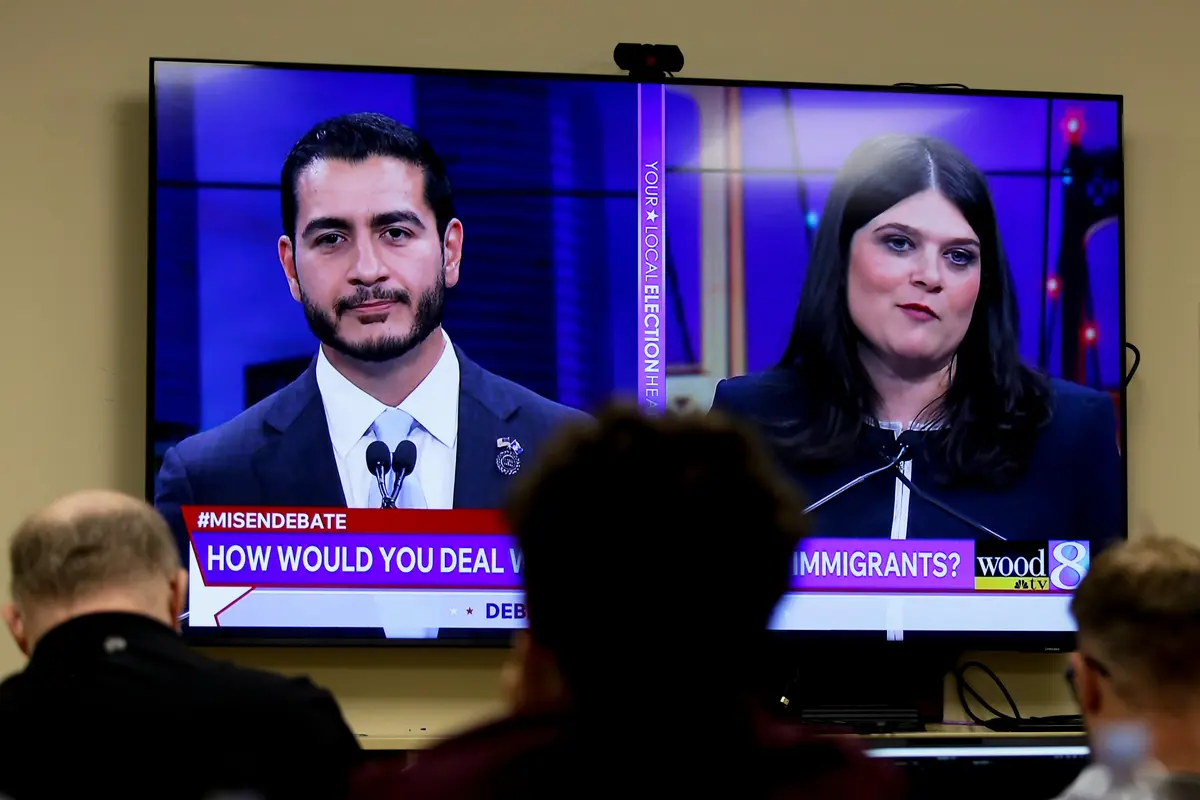
Asked about AIPAC’s ongoing support for her election during a July 27 debate, Stevens suggested El-Sayed was also accepting “millions of dollars” from another super PAC, but didn’t say which one.
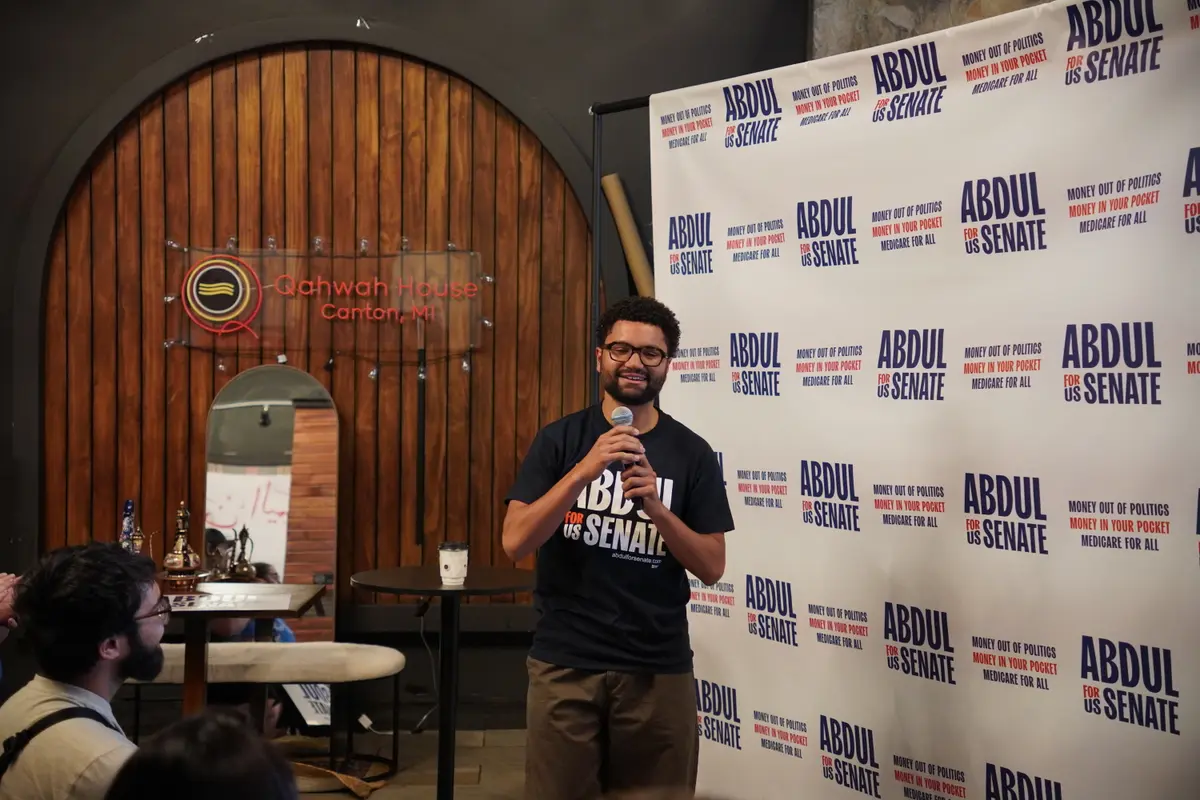
After a rally in a coffee shop in Canton Township on July 29, El-Sayed told reporters that he believes American taxpayer money is being wasted on bombs.
“We pay more for all we have to buy. We’re paid less for the work we do. [We] watch as our tax dollars get misappropriated to drop bombs and buy tanks for foreign countries instead of building schools and healthcare for our own,” El-Sayed said.
‘Party Tent’ Tension
The Michigan Senate primary has similar dynamics to Democratic presidential candidate Hillary Clinton’s contentious rivalry with Sanders in the 2016 Democratic Primary—another high-profile battle between the left’s progressives and centrists.
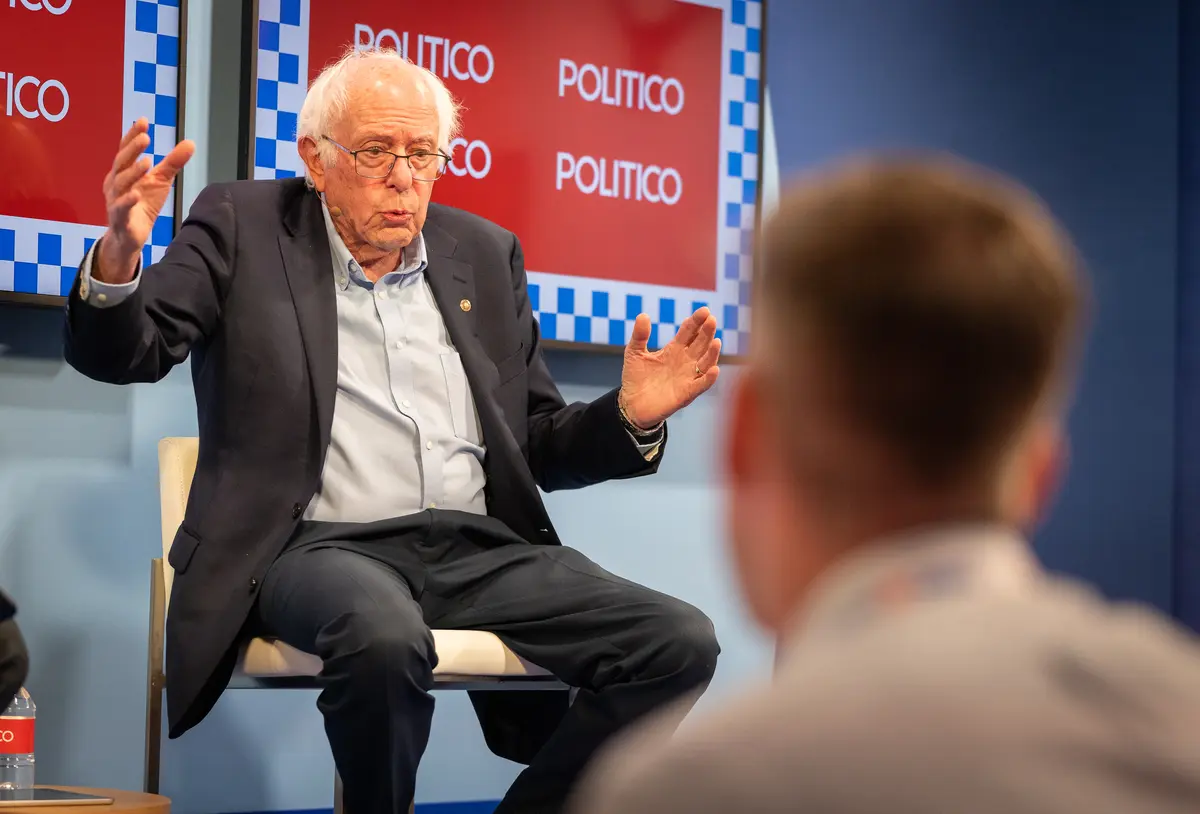
Sanders, along with fellow self-described democratic socialist Rep. Alexandria Ocasio-Cortez (D-N.Y.), has waded into the battle, endorsing El-Sayed and even stumping for him in Michigan.
Despite receiving endorsements from members of the progressive Democratic Socialists of America (DSA), including Rep. Rashida Tlaib (D-Mich.) and Ocasio-Cortez, and inviting several on stage for rallies throughout the state, El-Sayed is neither a member nor endorsed by the group.
During last week’s debate, the Rhodes Scholar and epidemiologist said he is a capitalist.
“I am not a socialist. I am a capitalist who understands how capitalism works. The biggest threat to capitalism was never the idea of regulation; it was always monopoly,” El-Sayed said, arguing it “should not be legal” for two to three companies to dominate a significant number of industries.
Throughout his rally speeches, El-Sayed has said that the party’s focus should be on working for the people and widening the tent for those who want money out of politics and a new path forward for Democrats.
Stevens has claimed that El-Sayed’s platform is “unelectable” in a general election against a Republican such as Rogers, suggesting that a wider tent is not capable of sustaining the support needed to win the Senate seat in purple Michigan.
As far as Senate Democrats are concerned, many say they have no issue with a “big tent” in the party, even if that means working alongside progressive or socialist candidates.
“I’ve served in the Senate with an avowed socialist, Bernie Sanders, for years. Found him to be a good person to work with, that I agree with many times. So I think the tent for the Democratic Party can accommodate diversity,” Sen. Dick Durbin (D-Ill.) told reporters on July 22.
Sen. Tim Kaine (D-Va.) said he believes in a big tent.
“That’s a good thing about the Democratic Party. I’m not a DSA person, but the big tent—I don’t have a problem with it, conceptually. Everybody really stands on their own record,” he told The Epoch Times on July 23.
A healthy party is one that “has arguments,” Sen. Chris Murphy (D-Conn.) told reporters in mid-July.
“An unhealthy party is a party that operates like a cult. You know, when the Republican Party had divisions, they were winning, and I think you know our party should be debating ideas, should be having hotly contested primaries,” Murphy said.
Asked if those disagreements can extend to Israel policy, the senator said, “Some arguments … are harder than others.”
“What has happened in the Middle East is serious, and if you aren’t having a spirited debate about what to do about the future of the Middle East, then you’re probably not serious about your job,” Murphy added.
Sen. Andy Kim (D-N.J.)—who, like many national Democrats, has declined to issue an endorsement—told The Epoch Times last week he hopes a candidate who can unify the party wins. He said that for Democrats, maintaining the Michigan Senate seat is “incredibly important” to their hopes of retaking the Senate.
But not every Democrat has been open to including progressives or socialists in the party’s left wing.
“These people aren’t Democrats. That’s not a big tent situation,” Sen. John Fetterman (D-Pa.) told reporters on July 27.

Asked what he thinks the implications would be if Stevens loses to El-Sayed on Aug. 3, Fetterman said a progressive nominee would “put the Michigan seat in serious play,” calling Rogers a “strong” candidate for the final race in November.
“That’s part of why I’m never going to embrace these DSA,” Fetterman told The Epoch Times.
Beyond the Intra-Party Proxy War
“Abdul’s not winning to have some sort of national conversation. He’s running because Michiganders can’t afford [expletive], and he’s gonna fight to make sure that we have an economy that works for the people,” Frost said.
“The reason why people are very eager to form this race into this national debate is, quite frankly, because it makes it easier for certain people to raise money and rile up the troops because they see this as some sort of proxy battle, which it is not,” he said.
The Stevens campaign did not respond to a request for comment by publication time.
El-Sayed denied running against “any wing of any party.”
“I’m running for the future of the people I want to serve. What’s interesting is that a lot of the establishment has decided that that is an anathema to our politics, so they’re spending record amounts of money to beat me,” he told The Epoch Times.
“But winning isn’t spending money to dictate a politics that doesn’t actually answer to people,” he said. “We can’t keep running on, ‘We’re not Donald Trump.’ Okay, great. We’re not Donald Trump. But then what are we? I’m just offering a vision for what we can be.”