With the U.S. Supreme Court declining to hear a last-ditch appeal, a long-planned Arizona copper mine could break ground in early 2026 and, once fully operational, supply up to 25 percent of the nation’s domestic demand for the critical mineral.
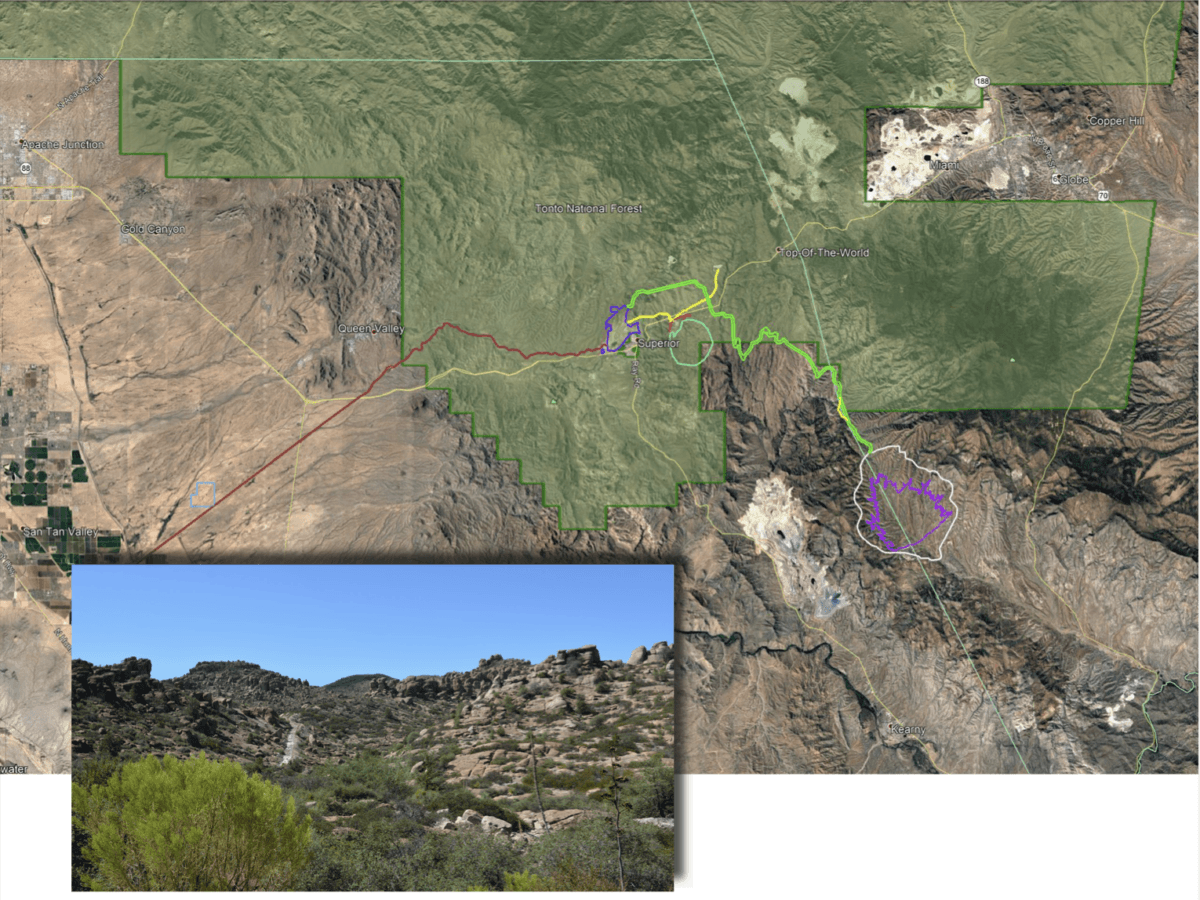
For the second time in five months, the high court on Oct. 6 denied Apache Stronghold’s petition to hear its lawsuit challenging a land exchange that Resolution Copper needs to build a 7,000-acre copper mine near Superior in Pinal County, 70 miles east of Phoenix and 70 miles north of Tucson, in Arizona’s “Copper Triangle.”
The swap would allow Resolution Copper to trade 5,400 acres of conservation land that it owns in Arizona for 2,422 acres within Tonto National Forest that the company estimates contains up to 40 billion pounds of high-grade copper worth $150 billion. The land transfer was originally approved by President Barack Obama and endorsed by Congress in 2014.
Apache Stronghold, a nonprofit representing the Western Apache and the 16,800-member San Carlos Apache Tribe, objected because the national forest land includes Oak Flat, or Chí’chil Biłdagoteel—a “Flat with Acorn Trees”—where tribes have practiced religious ceremonies for centuries.
The U.S. Court of Appeals for the Ninth Circuit in March 2023 determined that the swap did not violate the act by imposing a “substantial burden” on Apache religious practices.
However, the court apparently didn’t see relevance in that ruling and Apache Stronghold’s case.
On the last of 39 pages in its Oct. 6 orders, the court stated: “The petition for rehearing is denied. Justice Gorsuch would grant the petition for rehearing. Justice Alito took no part in the consideration or decision of this petition.”
“We’ll also keep urging Congress, the President, and federal agencies to stop the destruction of Oak Flat and protect our ancestral sacred land,” it stated. “Oak Flat deserves the same respect and protection this country has long given to other places of worship.
Priority Project
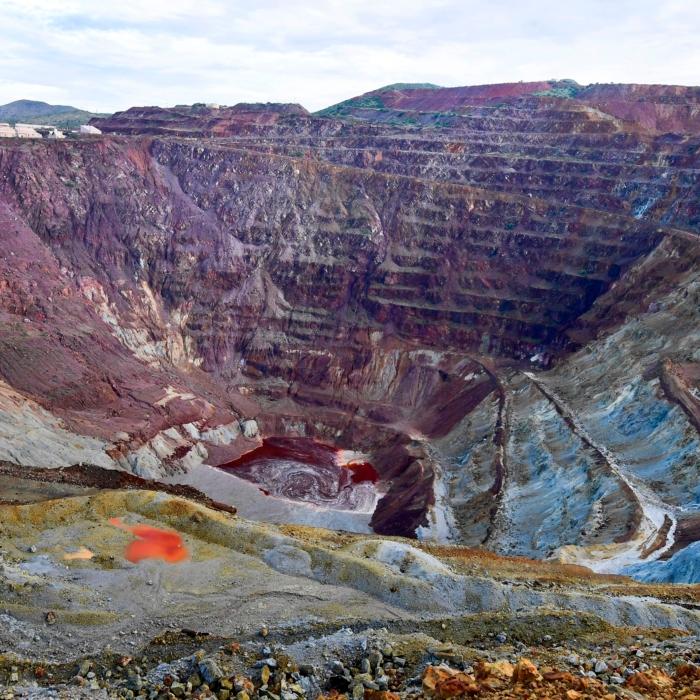
It was uncertain on Oct. 9 when, or if, the Ninth Circuit will lift its injunction to restart the review and comment period on the Forest Service’s June 25 Final Environmental Impact Statement and draft Record of Decision.Resolution Copper’s plan, which calls for a 1.8-mile-wide, 1,100-foot deep open pit and a 3-mile-long, 500-foot-tall dam to access a copper deposit nearly 7,000 feet below the surface, needs approval from the Arizona State Mine Inspector’s Office and state water, air quality, waste, and reclamation permits.
Under the most accelerated timelines, Resolution Copper could break ground in February or March of 2026.
But the company did not speculate in an emailed response to queries from The Epoch Times.
“We are pleased the Court has once again reaffirmed that the Ninth Circuit’s decision will stand,” Resolution Copper said in a statement without addressing when the project, which it says will create 3,700 jobs and “add $1 billion a year to Arizona’s economy,” will begin.
“The Resolution Copper mine is vital to securing America’s energy future, infrastructure needs, and national defense with a domestic supply of copper and other critical minerals,” it stated.
The United States also has limited refining capacity, with its only two copper smelters in Arizona: the Freeport-McMoRan plant in Miami, Arizona, near the San Carlos Apache Reservation, and the ASARCO’ plant in Hayden, closed since a 2020 labor strike.
Resolution Copper is jointly owned by two of the world’s largest multi-national, publicly traded mining corporations. Resolution Copper Company, a subsidiary of Rio Tinto PLC, owns 55 percent of Resolution, and BHP Copper Inc. owns 45 percent.
London-based Rio Tinto operates in 35 countries and has more than 60,000 employees. The Aluminum Corporation of China Limited (Chinalco), a Chinese state-owned company, is its largest single shareholder, holding about 14 percent of its stock.
BHP, with headquarters in Melbourne, Australia, operates mines in Australia, Chile, Peru, Brazil, Canada, and the United States and has more than 90,000 employees.