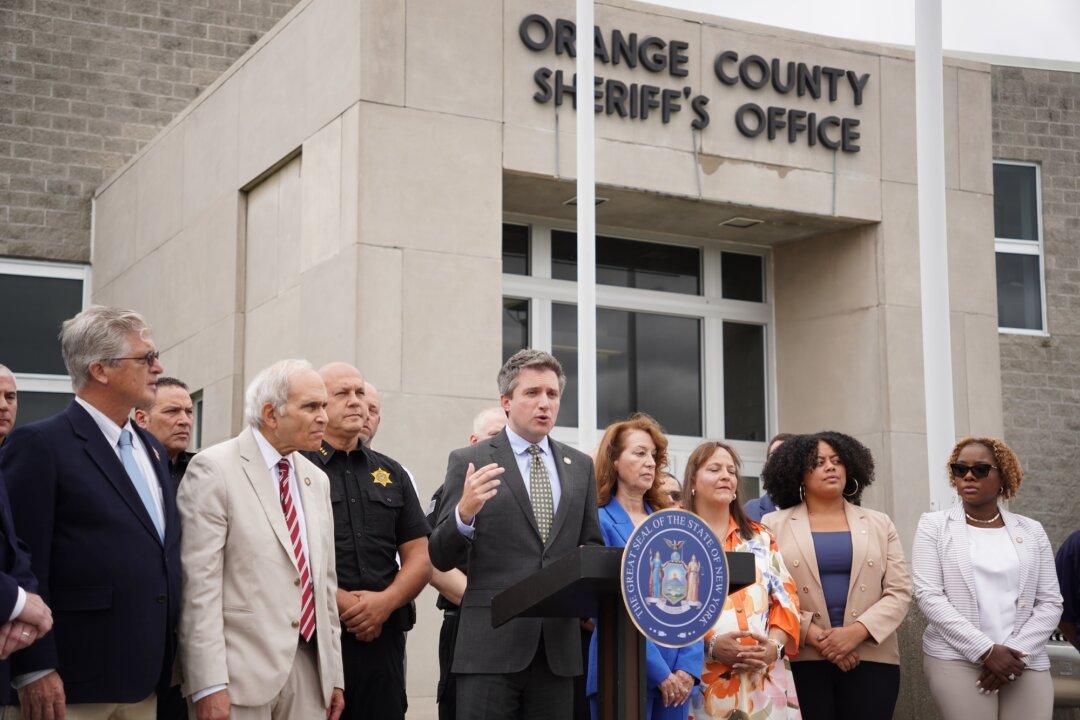
MIDDLETOWN, N.Y.—A piece of legislation that would fix a major tax distribution error is currently awaiting New York Gov. Kathy Hochul’s signature.
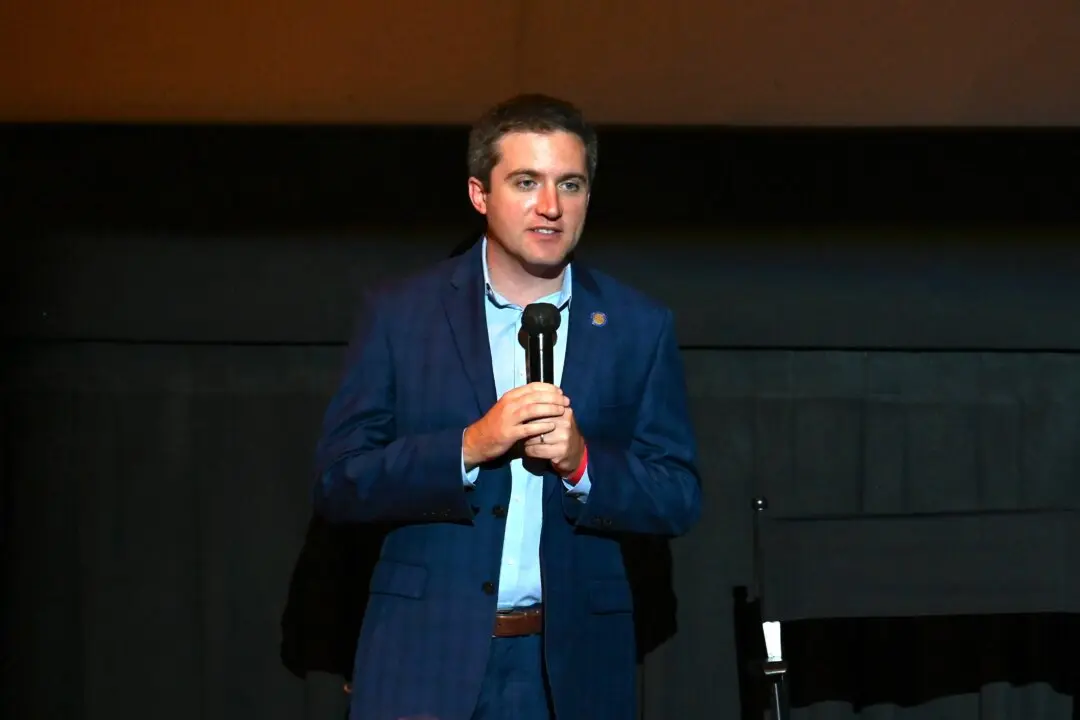
The bill was sponsored by state Sen. James Skoufis, a Democrat who represents most of Orange County, and co-sponsored by state Sen. Rob Rolison, a Republican who represents Newburgh. It was first introduced on May 5 and spent several months being developed in the state assembly, senate, and committees. It was delivered to the governor on July 10.
The bill seeks to repeal a certain code in law that restricts the use of tax funds by the Orange County government. The county was informed of their tax distribution violations by the Office of the New York State Comptroller earlier this year, which caused the county to send a home rule legislation request to the state government on April 28. The home rule request was presented with the bill.
The issues with the sales tax distribution began in 2004, when Orange County began taxing 3.75 percent sales tax instead of the legal New York limit of 3 percent. The county is able to tax more than standard with approval from the state legislature every two years.
The county began sharing the 0.75 percent of taxes with cities, towns, and villages in 2014. The issue is that the 0.75 percent is not allowed to be shared with municipalities, and the county has been violating the regulation unknowingly since then.

County Attorney Rick Golden told the Orange County Rules Committee in April that the laws were not followed because the specific regulation was uncodified. Laws and documents that are uncodified can be difficult to find due to not being organized with other related laws.
When the error was discovered, Skoufis warned that failure to pass a solution would cause enormous property tax hikes by municipalities and service cuts.
Sales tax revenue that the county distributes is an important source of revenue for many municipalities. Orange County legislator Barry Cheney said during a legislative session in April that the sales tax is likely a top two source for municipalities in the county, noting that the village of Warwick receives $1.2 million of its $5 million annual budget from county sales taxes.