
The Department of Justice (DOJ) is waging a nationwide courtroom battle against states that have implemented bans on federal officers wearing face masks.
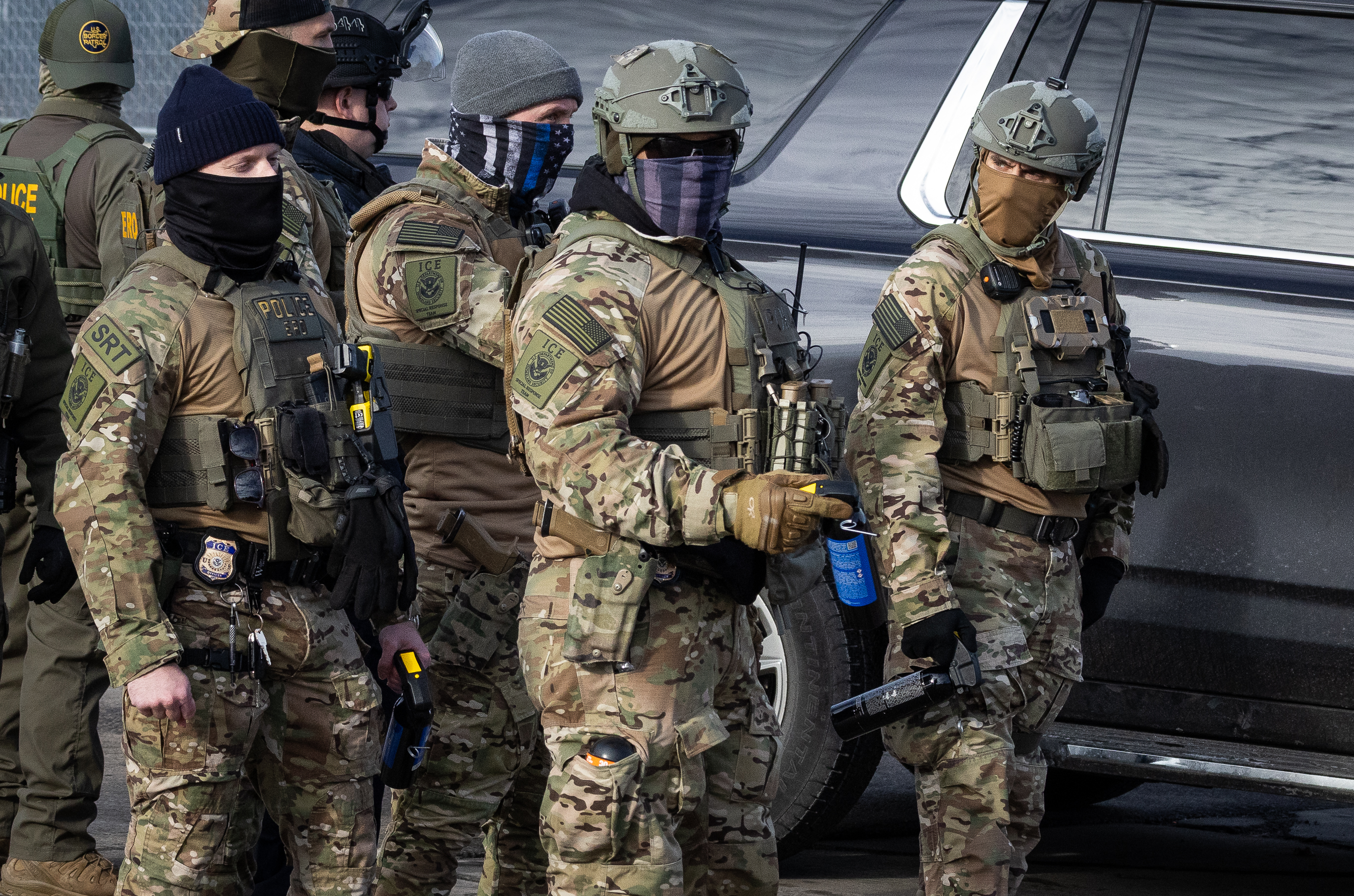
Federal enforcement operations targeting illegal immigration across the country have been met with protests, riots, and violence, making it necessary for federal officers to be able to wear masks, the Trump administration has argued. Without them, agents could face increased risks to their livelihood and their families.
Some have been doxxed and stalked by opponents of immigration enforcement. Others face harassment and assault.
Meanwhile, Democratic officials have accused Immigration and Customs Enforcement (ICE) and Border Patrol officers of acting as a secret police force by concealing their identities.
Here’s a rundown of states’ actions and the DOJ’s lawsuits.
Cities, States Implementing Mask Bans
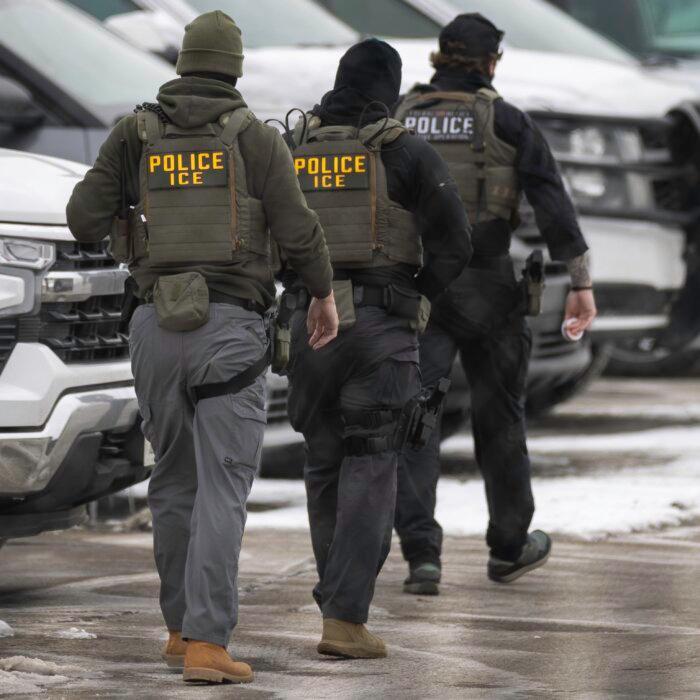
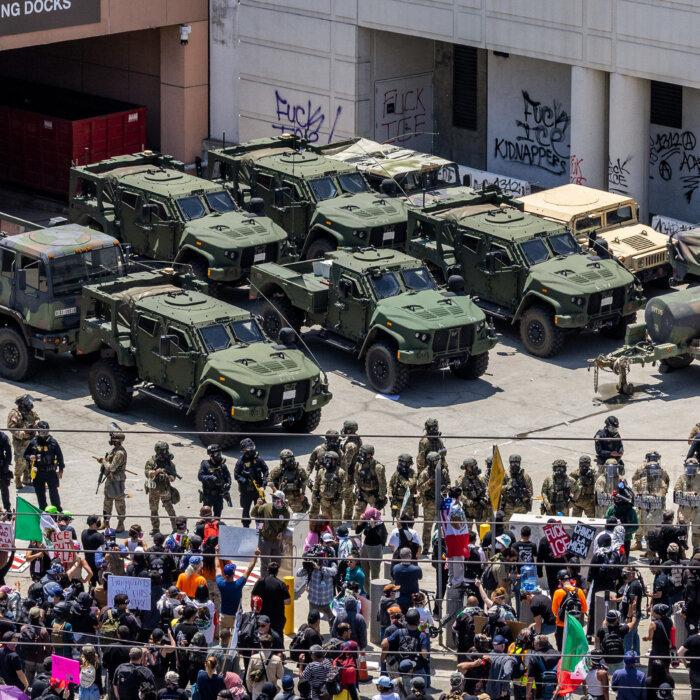
Lawmakers in California, New York, Virginia, Connecticut, New Jersey, Philadelphia, and Denver have implemented policies to unmask federal officers. Denver is the only one not facing a DOJ lawsuit.
California began the trend a year ago. On Sept. 20, 2025, Gov. Gavin Newsom signed the No Secret Police and No Vigilantes Acts into law.
The No Secret Police Act prohibited local and federal—but not state—law enforcement from wearing masks, with exceptions, making it a misdemeanor if an officer was in violation. The No Vigilantes Act required all law enforcement officers to wear identifiable features, such as badge numbers or names.
Newsom called the laws a step in pushing back against the “authoritarian tendencies” of the Trump administration.
“It’s like a dystopian sci-fi movie. Unmarked cars, people in masks, people quite literally disappearing. No due process, no rights in a democracy where we have rights,” Newsom said at the time.
These types of comments have been seen across the board from Democratic officials in states enacting similar laws, including New York Gov. Kathy Hochul, who accused ICE of “terrorizing people.”
She signed a state budget bill in May that included a mask ban on federal officers and an end to 287(g) agreements, which allow local police to perform immigration enforcement with ICE supervision. An agent in violation could face up to 15 days in jail for a first offense and up to a year for additional ones.
New Jersey Gov. Mikie Sherrill signed the Law Enforcement Officer Protection Act on March 25. The law requires local, state, and federal—including ICE, Border Patrol, FBI, and Drug Enforcement Administration—agents to remove face coverings and present identification before making arrests.
Virginia Gov. Abigail Spanberger signed laws on May 20 that included a mask ban, identification requirements, and a ban on 287(g) agreements. Officers in violation could be charged with a misdemeanor punishable by up to a year in jail or up to $2,500 in fines.
“Law enforcement officers wearing masks on American streets undercut basic expectations of accountability, sow fear and confusion, and erode the public trust,” she said.
Connecticut Gov. Ned Lamont signed the Act Concerning Democracy and Government Accountability on May 4, prohibiting face coverings, requiring identification, and obligating federal agents to adhere to the state’s use-of-force policies.
In Philadelphia, the city council passed on April 23 a legislative package on immigration enforcement that included a face mask ban.
DOJ Lawsuits
The Justice Department is mostly presenting the same arguments in each of its lawsuits, as President Donald Trump and other top personnel from the administration denounce the mask and identification laws as unconstitutional, saying federal agents will not comply with them.
In some instances, the DOJ has stopped these policies.
The agency sued California on Nov. 17, 2025, alleging its laws were an unconstitutional overreach and posed a serious threat to agents already facing harassment, assault, doxing, and stalking.
A federal district court blocked California’s No Secret Police Act on Feb. 9, finding it was applied unevenly and discriminated against federal officers.
On April 22, a federal appeals court permanently blocked the No Vigilantes Act, ruling it unconstitutional because of the supremacy clause of the Constitution, which holds that federal law supersedes state law when they are in conflict.
Another mask ban effort was renewed by California lawmakers earlier this year, but the DOJ’s prior success in stopping the Golden State’s policies could become the basis for its other lawsuits.
The Justice Department in its June 18 action against Philadelphia, called the city’s policies “straightforwardly invalid” because of the appeals court decision on California’s No Vigilantes Act.
“We regrettably had to sue the birthplace of this great Nation,” Associate Attorney General Stanley Woodward said.
Similarly to the suit against California and other states, the DOJ is accusing Philadelphia of attempting to illegally govern federal law enforcement.
The California decision was mentioned in the action against New York as well. Both sides filed dueling lawsuits on June 22, asking judges to decide whether states can regulate how federal officers operate within their borders.
As the Empire State’s new legislation also seeks to end 287(g) agreements, the DOJ is arguing this violates the Constitution’s Contracts Clause, which maintains that states cannot pass a “law impairing the obligation of contracts.”
Acting Attorney General Todd Blanche said New York’s “anti-law enforcement policies regulate the federal government and are designed to create risk for our agents.”
These statements and arguments from DOJ officials and lawsuits are seen across its actions.
The agency called Virginia’s policies “blatantly unconstitutional” in its June 11 suit.
“Governor Spanberger cannot tell Federal officers how to do their job,” Woodward said.
Likewise, in the Connecticut suit filed on May 19, Blanche said, “Law enforcement officers risk their lives every day to keep Americans safe, and they do not deserve to be doxed or harassed simply for carrying out their duties.”
Enforcement of these policies and the threat of prosecution amount to a chilling effect on agents’ ability to perform their duties and protect themselves, the DOJ has argued.
The New Jersey lawsuit, filed on April 29, said there’s a “Hobson’s Choice” for officers: “Either put themselves at risk by unmasking and providing individual identification, at the cost of officer safety, the safety of their families, and operational effectiveness or face legal consequences.”
Why Do Officers Wear Masks?
DHS has reported an 8,000 percent increase in death threats, a 1,300 percent increase in assaults, and a 3,300 percent increase in vehicle assaults against federal agents.
ICE officers have been ambushed, attacked with vehicles, obstructed by protesters, stalked, doxed, and faced with bounties and plots to kill them.
Earlier this year, two women were convicted in Los Angeles of stalking an ICE agent to his home while livestreaming on social media. They face up to five years in federal prison.
Officers’ relatives have told The Epoch Times that mask ban policies have made them fear for their safety.
“It’s already a high-risk, dangerous job,” the wife of a Border Patrol agent said in a previous interview. “Being called a Nazi is heartbreaking.”
Department of Homeland Security Secretary Markwayne Mullin offered a compromise to lawmakers during congressional testimony on June 4.
“If we want to eliminate the officers from having to wear masks, then increase the penalties,” he said. “If they doxx them, they threaten them in any way whatsoever, it should be a very stiff penalty.”
White House border czar Tom Homan offered a different approach on May 15 for sanctuary jurisdictions pushing back against immigration enforcement.
He said these places will see an increase in ICE personnel on the ground if they do not allow local officers to cooperate with them.
“Federal law always trumps state and local law,” Homan said. “And while threats are up over 8,000 percent, masks is a non-starter, so good luck enforcing that.”
Brad Jones contributed to this report.