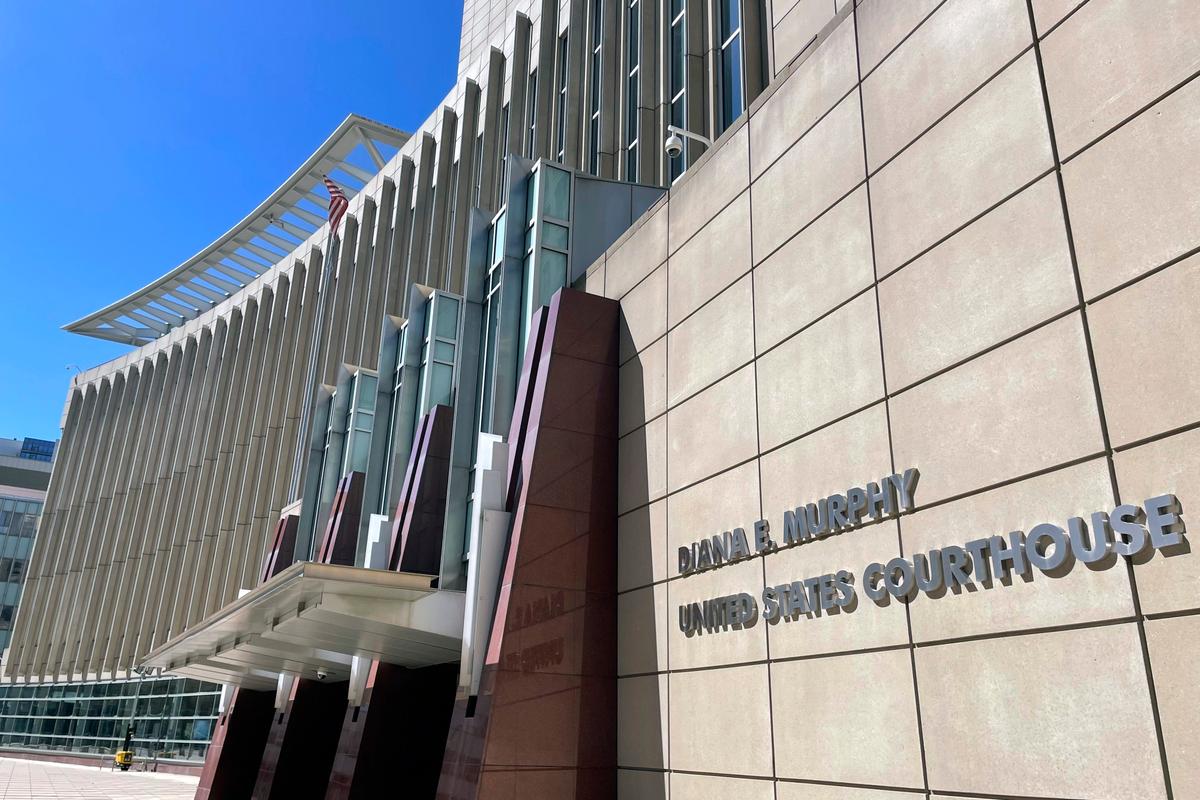
A district court judge tossed out the Trump administration’s lawsuit on March 27 against Minnesota laws that allow illegal immigrants to pay in-state tuition rates, or in some cases have tuition waived, for college and university classes, ruling that the state law doesn’t violate federal law.
“As Defendants point out, there are multiple ways a student could qualify for Resident Tuition without residing in Minnesota, such as attending a Minnesota high school while living in a neighboring state, or by attending a Minnesota boarding school,” Menendez wrote in the decision.
The federal government sued Minnesota Gov. Tim Walz and other state officials over the state’s laws that allow foreign nationals to receive lower or free college tuition.
The law also states that illegal immigrants must give the state proof that they have complied with federal selective service registration requirements and have filed to obtain lawful immigration status in order to qualify for in-state tuition.
Menendez also agreed with Walz and Minnesota Attorney General Keith Ellison, who argued that they should not have been included in the lawsuit by the Department of Justice (DOJ) because “none of the Minnesota statutes mention either official, and nowhere in the Complaint does the United States allege specific actions of involvement by either official.”
The judge dismissed the case with prejudice, meaning that it stands as the final judgment and can’t be refiled.
In addition to the in-state tuition law, Minnesota passed the North Star Promise Program, signed by Walz in 2023, which gives illegal immigrants who attend high school for three years in the state the ability to qualify for free tuition, scholarships, grants, and stipends if their families make less than $80,000 annually.
The DOJ’s lawsuit concerned the interpretation of federal immigration law that limits eligibility and preferential treatment of immigrants not lawfully present in the United States.
The law states that immigrants who are not lawfully present in the country “shall not be eligible on the basis of residence within a state for any postsecondary education benefit unless a citizen or national of the United States is eligible for such a benefit without regard to whether the citizen or national is such a resident.”
In the lawsuit, the DOJ alleged the state’s policy to provide reduced and free tuition for illegal immigrants unlawfully discriminated against U.S. citizens.
Federal law prohibits higher-learning institutions from providing postsecondary education benefits to immigrants that are not offered to U.S. citizens, according to the DOJ.
The DOJ and Walz’s and Ellison’s offices did not immediately return requests for comment about the decision.