The Pentagon’s Golden Dome space-based missile defense system is at risk of being delayed if Congress can’t figure out how to continue funding the program, Space Force Gen. Mike Guetlein said Aug. 11.
“If they don’t figure it out, there is no Golden Dome because there is no funding,” Guetlein told audience members at the annual Space and Missile Defense Symposium in Huntsville, Alabama, according to Defense Daily.
The Pentagon has funded the program through budget reconciliation since it was first launched by President Donald Trump in 2025.
The multilayered defense system is designed to protect the United States from aerial threats, including complex ballistic, cruise, and hypersonic missiles.
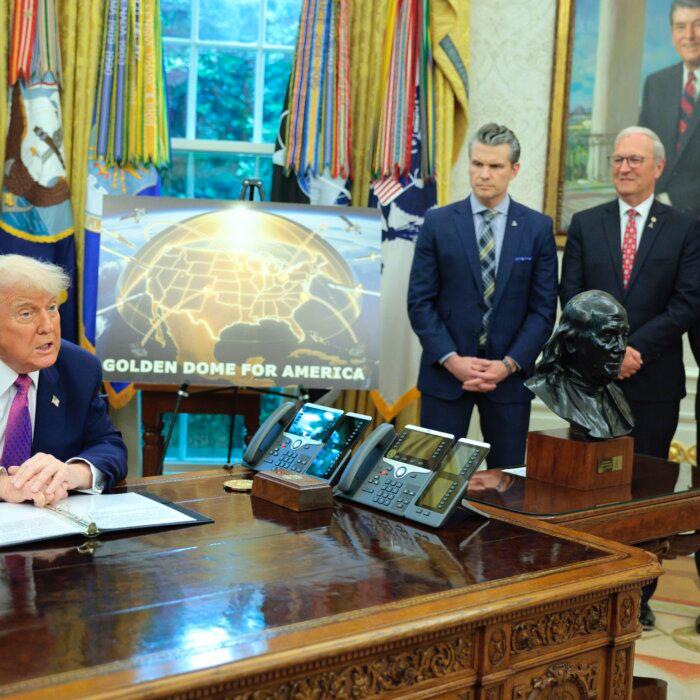
The Department of War is funding the Golden Dome through a $25 billion allocation in the 2025 reconciliation bill but needs continued funding for operations if they want to meet a 2028 deadline set by Trump, Guetlein told reporters at the symposium.
“As a nation, we’re going to figure this out just because the sense of urgency is so great,” Guetlein said. “It is a tough situation that we find ourselves in as a nation.”
The program also cleared another hurdle Aug. 11 with a successful test of weapons technologies at White Sands Missile Range in New Mexico.
SpaceX, Northrop Grumman Corp., and other companies involved in a $185 billion initiative successfully completed the first round of critical tests for space-based missile interceptors, Guetlein said.
The companies will now move into the next phase, which involved demonstrating the technologies’ capabilities in space.
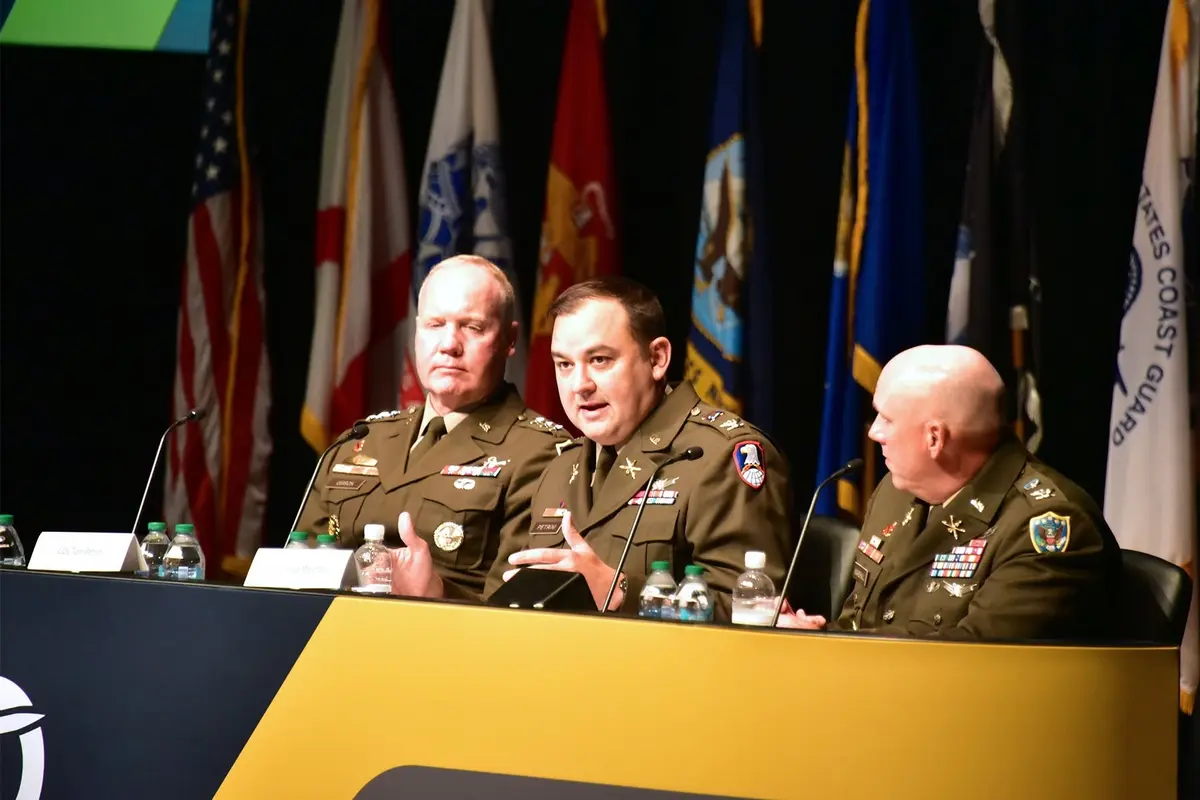
Some members of Congress have argued against funding the program, raising concerns about the viability of the technology.
Sen. Mark Kelly (D-Ariz.) questioned the reliability of the dome system and said it had problems with cost reliability.
“We need some confidence that the system is going to deliver the capability that’s being promised. And to me, right now, it’s clear that it won’t,” Kelly said July 15 during a Senate Armed Services Committee hearing. “The most ambitious elements of Golden Dome is the space-based interceptor layer and that is going to face significant technical challenges.
“The cost, the physics, the likely reliability, in my view, do not support a full-scale space-based intercept architecture,” Kelly said. “This means that we could spend more than a trillion dollars and end up with a system that doesn’t work and does’t meaningful improve our security.”
Threats at Home
The threat of an attack in North America is real, Guetlein said.
“The adversary has been watching the way we fight and they have become very determined to counter us in many different domains,” Guetlein told the audience. “But worse yet they’ve become very capable and very determined in doing that. That includes holding the homeland at risk. It has come to point that we’ve got to address those threats, and that’s what the Golden Dome is going to go after.”

Gen. Gregory Guillot, U.S. Air Force Commander of the Northern Command and North American Aerospace Defense Command described the heightened threat environment in February 2025.
“Today, our competitors have the capability and capacity to threaten all of North America with a range of advanced nuclear, conventional, and non-kinetic systems while employing disruptive grey-zone, cyber, and information operations against the United States and our international partners,” Guillot told the Senate Armed Services Committee.
Strategic cooperation between the United States’ four main adversaries—Iran, Russia, North Korea, and China—has grown since the beginning of the Ukraine War, increasing the likelihood of a direct conflict with the United States, the general said.