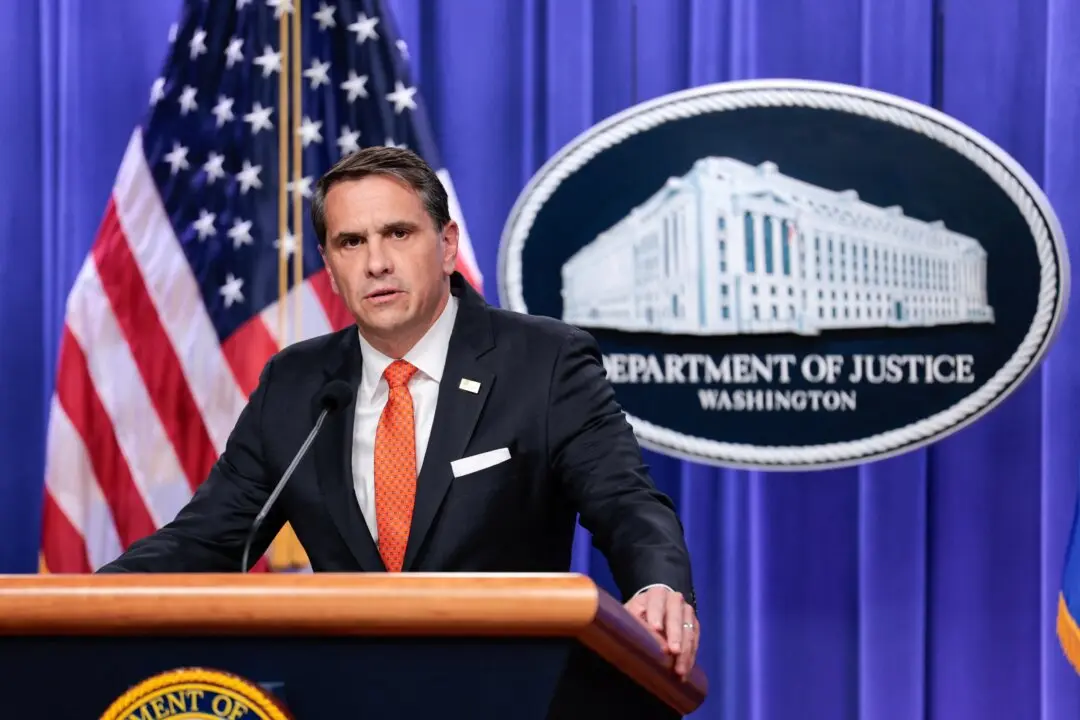
A Rhode Island judge on April 17 delivered another blow to the Trump Administration’s quest for voter-registration rolls nationwide.
U.S. District Judge Mary McElroy denied what she called “unprecedented demands for unredacted voting rolls” from the state of Rhode Island.
In a ruling that echoed similar decisions from judges in several other states, McElroy said Department of Justice (DOJ) lawyers provided neither a legal nor a factual basis for the records.
Two federal laws require each U.S. state to make a “reasonable effort” to ensure that its voter-registration lists are accurate, the judge noted. But those laws do not allow “DOJ to conduct the kind of fishing expedition it seeks here,” McElroy wrote.
DOJ lawyers, in a demand letter issued to Rhode Island, stated that they sought the records to ensure the state’s voter rolls met legal requirements. Yet the lawyers cited no specific evidence suggesting problems with Rhode Island’s voter records, the judge said.
In contrast, in a demand letter issued to Michigan, the DOJ “pointed to several purported anomalies” in that state, including “a high percentage of registered voters, a low confirmation notice rate, a low voter removal rate, and a high duplicate registration rate,” the judge said.
McElroy noted that judges in “nearly identical cases” ruled against the DOJ’s requests for unredacted voter-registration information. Those cases occurred in California, Oregon, Michigan, and Massachusetts.
While supporters of the federal effort to obtain voter rolls say it could help ensure integrity of U.S. elections, opponents raise concerns over voter-data privacy and ways in which the government might use the information.
In Rhode Island, the DOJ was seeking records that included the last four digits of registered voters’ Social Security numbers and their Rhode Island driver’s license numbers, which McElroy said are “sensitive information.”
Since May 2025, the DOJ has been demanding electronic copies of election-related data, ballots from past elections, and access to voting machines. The federal government sued 30 states and the District of Columbia for refusing to hand over the records, according to a tracker that the Brennan Center for Justice, a nonprofit organization with offices in Washington and New York City, compiled.
At least a dozen states “have either provided or said they will provide their full statewide voter registration lists,” the Brennan Center said. Those states are Alaska, Arkansas, Indiana, Louisiana, Mississippi, Nebraska, Ohio, Oklahoma, South Dakota, Tennessee, Texas, and Wyoming.
“Chief election officials from 10 states sought clarification from the DOJ and Department of Homeland Security in November on how the statewide voter registration lists will be used,” according to the Brennan Center. Those states are Arizona, California, Colorado, Maine, Minnesota, Nevada, New Mexico, Oregon, Vermont, and Washington.