Rep. Mary Miller (R-Ill.) introduced a companion bill on July 23 to ban Chinese entities from buying American farmland and homes.
The bill, cosponsored by 12 Republicans, seeks to ban Chinese companies, entities, or individuals linked to the Chinese Communist Party (CCP) from buying, owning, or leasing U.S. agricultural land.
If the bill becomes law, Chinese companies and CCP affiliates that own or are renting U.S. farmland will have to divest within a year.
They are also banned from owning U.S. homes, although the ban includes a sunset clause, meaning the president will decide whether to extend the ban after two years.
Writing on X on Thursday, Miller called the CCP “the greatest threat” to U.S. national security, and said the CCP’s “aggressive push to buy up our farmland and homes is a direct attack on our sovereignty.”

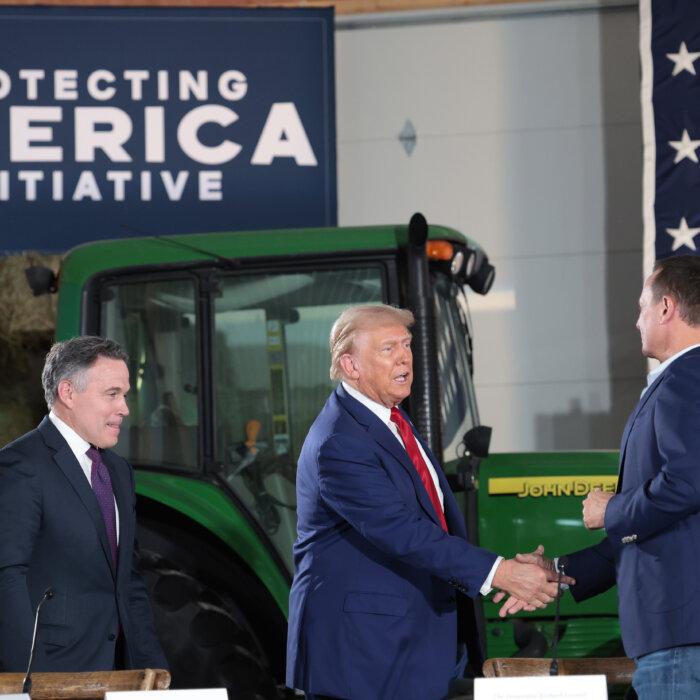
“It’s long past time we take back control and put America’s food supply and communities back in American hands—where they belong,” she said.
In an email to The Epoch Times, the Department of Agriculture (USDA) said: “For far too long, foreign adversaries have taken advantage of our farmland. While USDA doesn’t currently have the authority to prevent the purchase of farmland by foreign nationals, we are actively working to improve the accuracy of foreign-owned farmland reporting so that the public, Congress, and State governments have the relevant data needed to make informed policy decisions. This is just one of the many actions outlined in our recent National Farm Security Action Plan to defend the homeland.”
In 2016, Texas Agricultural Commissioner Sid Miller was alarmed when a retired Chinese military officer bought 140,000 acres of Texan land, including several ranches within 80 miles of the Laughlin Air Force Base and within some of the base’s pilot training zones, for a wind farm project.
In 2022, more lawmakers became alarmed when it was revealed that a Chinese agriculture company with links to the CCP bought hundreds of acres of farmland in Grand Forks, North Dakota, near another Air Force base.
Citing the acquisition of the largest American pork producer, Smithfield Foods, Inc., by a subsidiary of the Chinese company WH Group, the USCC said that by offshoring hog farms to the United States, China can “augment its domestic pork production at a scale and speed not possible at home,” because of easier access to U.S. feeds, and avoid “the health impacts these farms can have on surrounding communities.”
The report said that China’s theft of U.S. agricultural IP can harm U.S. economic competitiveness, and that agricultural genetic technologies could be used for military purposes.