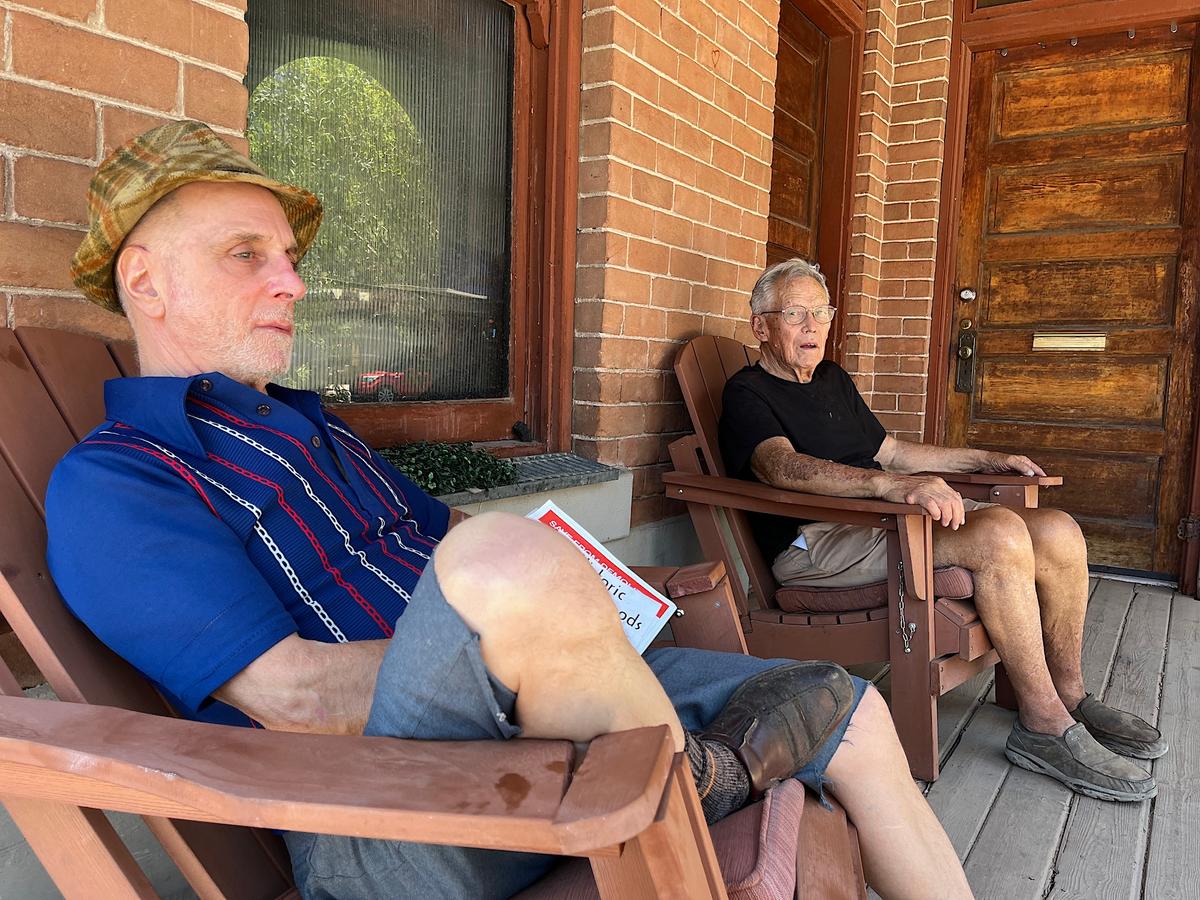
PHOENIX—Gone are the days when tenant Barry Schwartz watched blazing sunsets spill across downtown Phoenix from the windows of the historic Louis Emerson House.
Back then, the sky felt bigger than the skyline, he said.
Then came the towers.
Over eight years, Schwartz, 67, watched the Evans-Churchill neighborhood at Fourth and Pierce streets change around him. High-rises, parking lots, and steady traffic replaced the open vistas that once stretched beyond his windows.
Today, the century-old house at 623 N. Fourth St. stands as a lonely holdout amid what Schwartz calls the area’s “correctional facility” architecture.
“It has real character,” Schwartz said. “If you look at it in contrast to everything else around it, there’s no other character here.”


Now, the house itself is under threat: Arizona State University is moving to take the property through eminent domain for a new medical and health campus.
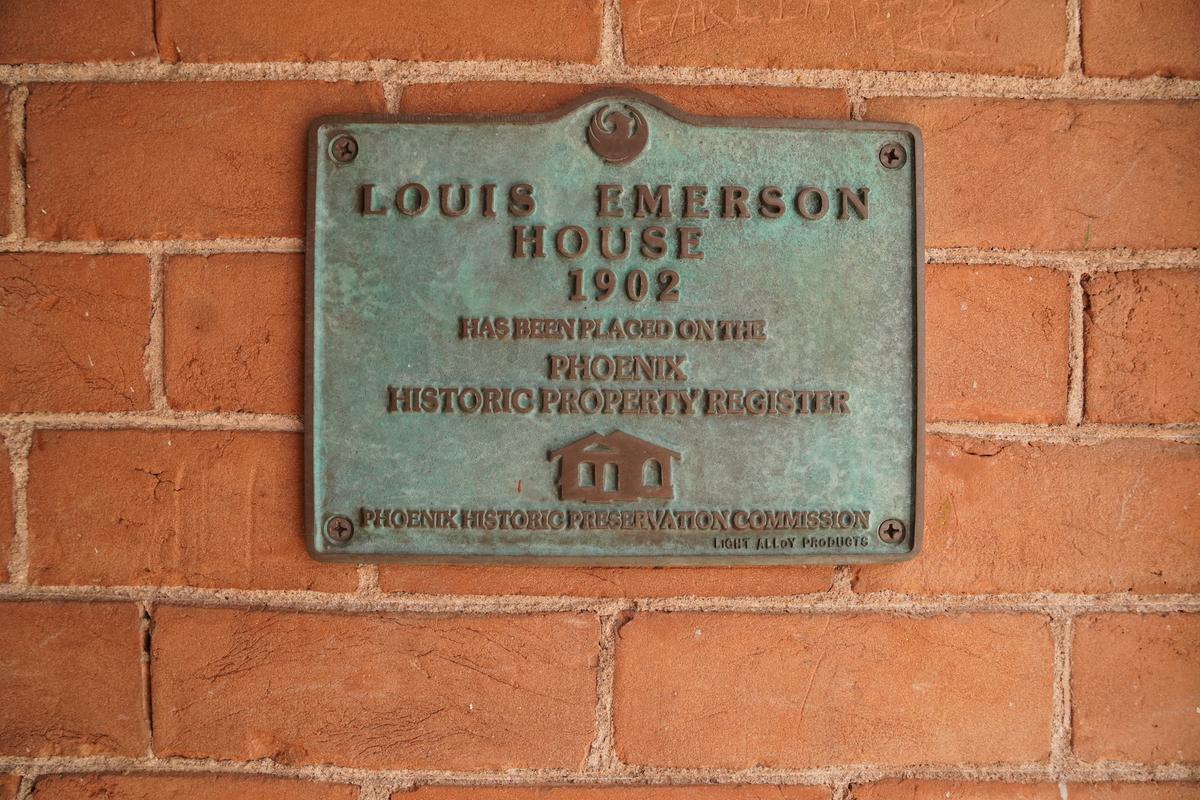
Construction on the project began in May on adjacent land. The Louis Emerson House, built in 1902 and listed on the Phoenix Historic Property Register, sits next door.
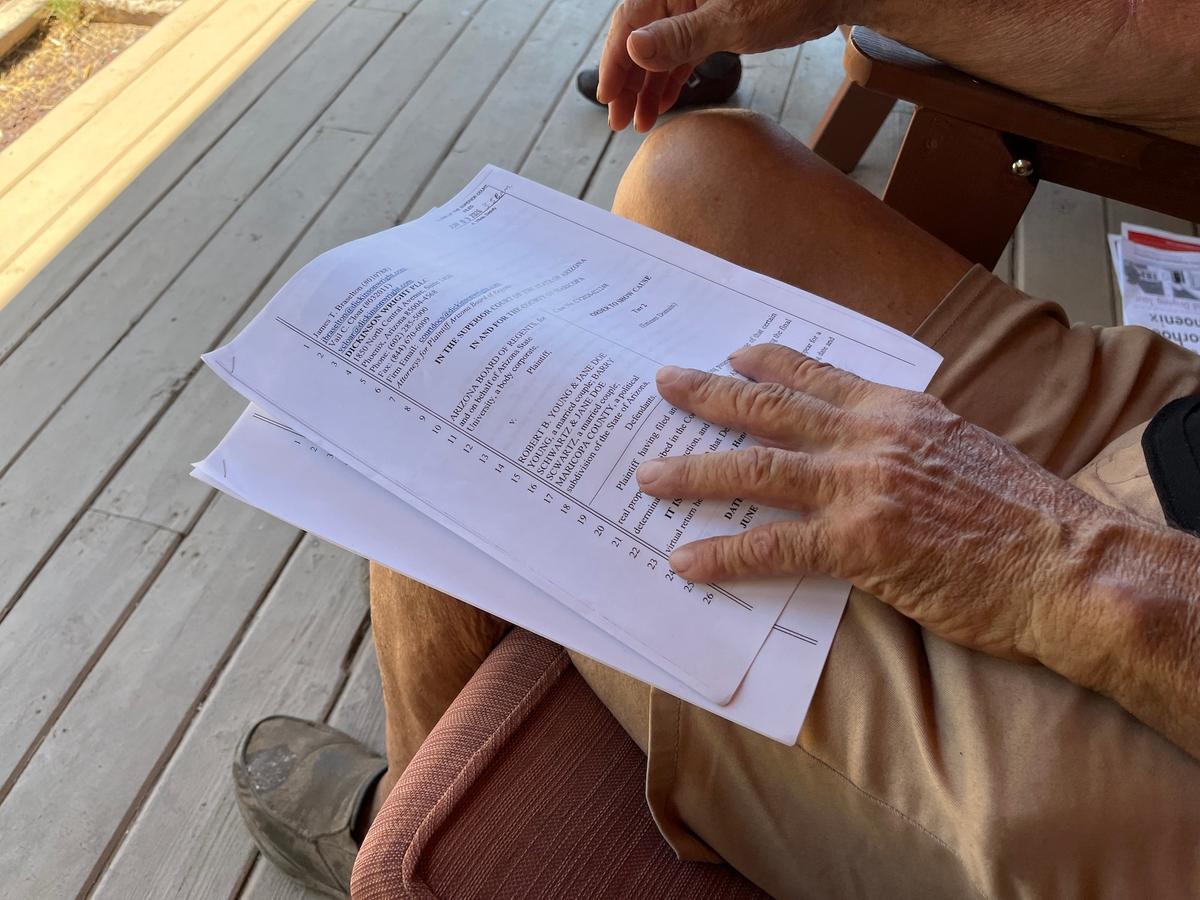
On May 22, ASU and its Board of Regents served property owner Robert Young with a condemnation summons, formally moving to take and demolish the property for public use. The complaint names Young and Schwartz as defendants.
In Arizona, eminent domain allows the government to take private property without the owner’s consent, according to the Institute for Justice.
Under the Fifth Amendment, however, it must serve a “public use,” traditionally limited to projects such as roads and bridges. Owners are also entitled to “just compensation” for their property.
The university says it needs the site for its expanding health campus, placing the historic house directly in its path.
A hearing is scheduled for June 19 in Maricopa County Superior Court.
Outcome Uncertain
“I have no confidence” he said about his chances of winning in court. But Young said he is prepared to stand in front of bulldozers if he has to.“It’s what we call a fait accompli,” the former criminal defense attorney and town counsel in Arizona said.
“They’re filing basically on the assumption that what they’re doing would be in the public interest. That’s their argument.”
An ASU spokesperson told The Epoch Times that the university made several offers to purchase the property before pursuing eminent domain. The offers included options that would have allowed the house to be relocated.
Modern Facility
The new 175,000-square-foot ASU Health Facility will house the John Shufeldt School of Medicine and Medical Engineering, which blends medicine, engineering, and artificial intelligence.It will also include the School of Technology for Public Health, along with training programs from the Edson College of Nursing and Health Innovation and the College of Health Solutions.
ASU broke ground on the project in April, with city, state, and healthcare leaders in attendance, including Arizona Gov. Katie Hobbs.

The Arizona Medical Association praised the university’s “forward-looking approach” to training physicians who can integrate engineering, technology, and the humanities into patient care.
“As the landscape of healthcare continues to evolve at break-neck speeds, this kind of out-of-the-box innovation will be critical for preserving quality patient care,” the association said on its website.
It’s the ‘Principle’
Young said the university made three offers for the property, ranging from $190,000 to $815,000. He ignored the first offer and said the final offer would not have covered the cost of moving the historic structure, which he estimated at two to three times that amount.He said he looked into moving the house elsewhere in Phoenix but found no suitable site for the 124-year-old building.
“They’ve had plenty of time to work out a compromise with me, but they never even came to me—no negotiations,” Young said from an Adirondack chair on his front porch.
“They didn’t tell me whether there would be encroachment or not. The house has no value [to ASU]. It’s the land.”
For Young, it’s the “principle.”
The Louis Emerson House is one of the neighborhood’s last pre-statehood Victorian cottages. Its Queen Anne features include a red-brick facade, a sunburst gable, and decorative porch spindlework.
The building was moved several feet off its original foundation once, in 1968, under a court order to clear the way for municipal development.
Young purchased the house and adjoining parcel for $17,500 in 1975 and has since invested thousands in its upkeep. He owns at least 16 other residential properties in Phoenix.
Schwartz, an electrical impressionist artist, said he was drawn to the two-bedroom home for its historic character and quiet setting.
Over time, he said, he has watched many of Phoenix’s historic buildings disappear, replaced, in his view, by a landscape lacking architectural character.
“It’s a horrible feeling,” Schwartz said. “I don’t know where I’ll go. I have no idea. Right now, I can’t look at that—because if I do, it becomes an obstacle. I’ve just got to worry about here and now, right now, and figure out the fight.”
‘David Versus Goliath’
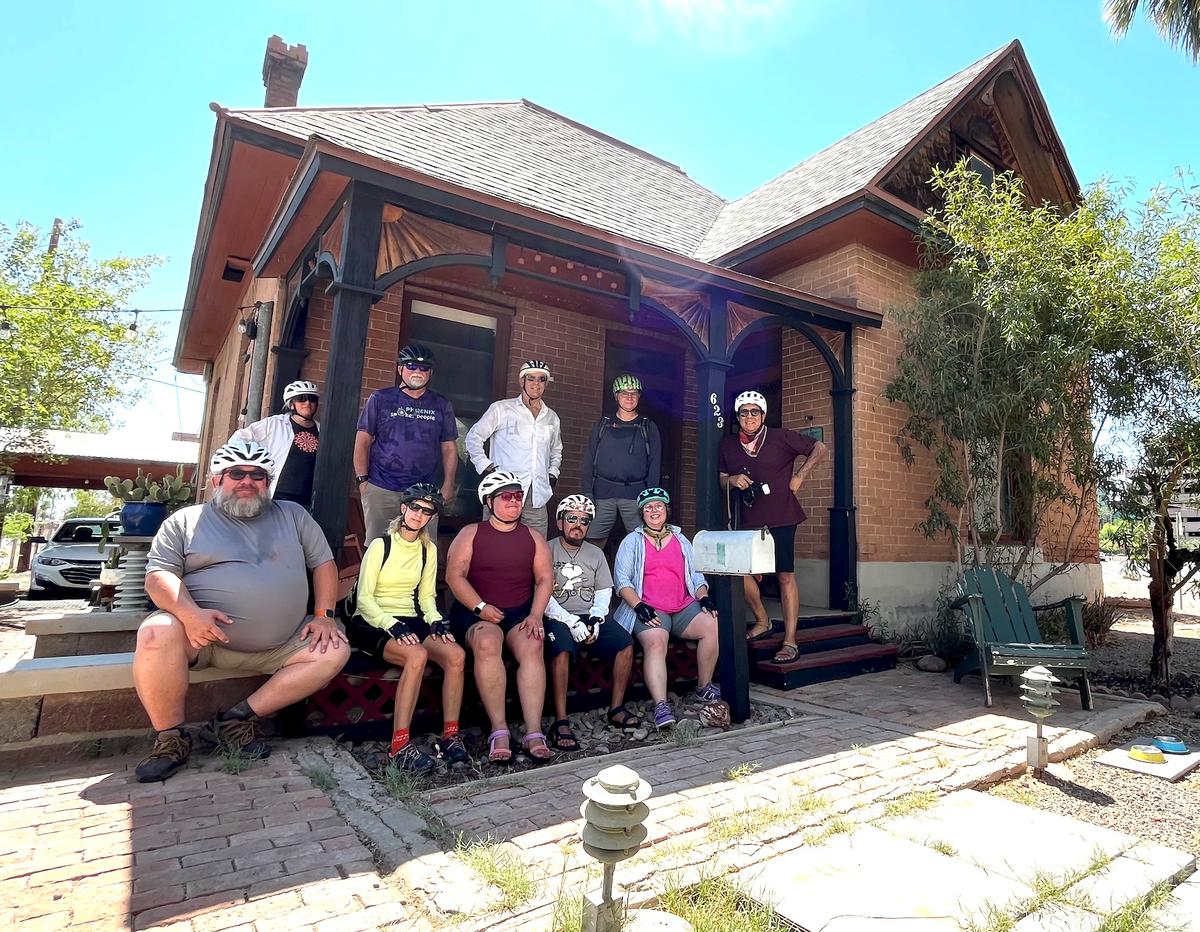
In late May, Schwartz created a Change.org petition opposing the ASU lawsuit and calling for preservation of the Louis Emerson House. It has since drawn more than 6,000 signatures.Every day, he said, visitors stop by to ask about the house and the legal fight. On June 13, members of the Phoenix Spokes People, a cycling group, rode up to show support.
Phoenix Spokes People board member Bill McComas called it a “classic David versus Goliath kind of situation.”
“I think sometimes, when the community gets behind it, it makes a difference,” he said. “Phoenix is notorious for tearing down old buildings. There’s not many left.”
The dispute has drawn national media attention and even support from a country-western singer.
Young said he is preparing for a long legal battle but remains open to a compromise that preserves the house while meeting ASU’s needs.