Lawmakers could vote as soon as this week on a 3,086-page bill to authorize key military and national security programs.
Known as the National Defense Authorization Act (NDAA), the sweeping legislation describes the various programs and policies that the U.S. government may pursue in a given fiscal year. This authorization is separate from the defense appropriations act that’s needed to fund these authorized programs.
The latest House NDAA language provides for $901 billion in defense authorizations.
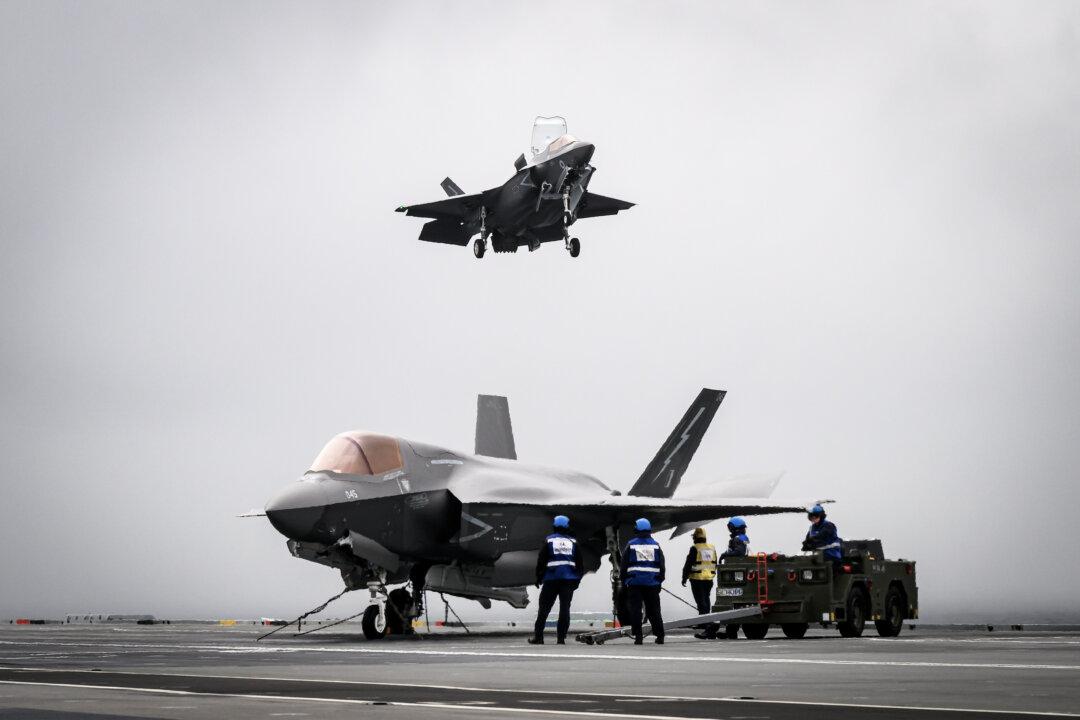
Golden Dome, F-47, Other Weapons
Provisions within the new NDAA language would modify existing U.S. missile defense programs to reflect Trump’s “Golden Dome” initiative, which seeks to develop advanced missile and air defense capabilities to cover the United States and participating allies.

Another $25 billion is authorized for efforts to replenish various missile and artillery stockpiles, and $4 billion is authorized for the procurement and modification of various military ground vehicles.
Guardrails on European Troop Reductions
A provision limiting the Pentagon’s ability to pull troops from Europe could create friction for the Trump administration’s foreign policy strategy. The provision in question blocks funds for the Pentagon to reduce force levels below 76,000 personnel or separate from any bases there without certification to Congress from the secretary of war and the commander of the U.S. European Command that they consulted European allies and determined that such steps were in the interests of U.S. national security.Previous versions of the NDAA included similar language limiting U.S. force reductions in Europe.
Oversight on Boat Strikes
Another provision nestled in the sprawling defense authorization bill conditions the availability of funds for the secretary of war’s travel on the release of video footage taken of recent military operations around Latin America.The provision states that the war secretary’s office could forfeit one-quarter of its travel budget unless the Pentagon provides the House and Senate Armed Services Committees with “unedited video of strikes conducted against designated terrorist organizations in the area of responsibility of the United States Southern Command.”
Lawmakers have increasingly scrutinized a recent campaign of U.S. military strikes on drug boats operating in the Caribbean Sea and eastern Pacific.
Halting Certain Military Initiatives
The new NDAA includes additional provisions affirming Trump administration policy preferences and executive orders constraining cultural and environmental initiatives in the military.One provision prohibits the establishment of diversity, equity, and inclusion programs and offices throughout the military.
Another seeks to discontinue a policy within the Department of War to prioritize the purchase of electric and hybrid vehicles.
Border Security
House Republicans said the NDAA would support several of Trump’s border security policies, including fully funding troop deployments along the U.S.–Mexico border and the establishment of new National Defense Areas along the border.The bill authorizes about $1 billion in Department of War funds for drug interdiction and counter-narcotics programs.
The Department of War is also authorized to enter into contracts with U.S. Customs and Border Protection to share detection and monitoring capabilities, transportation and logistics, aviation, and other support functions for border security.