President Donald Trump on Nov. 16 said that Republicans are working on legislation to impose sanctions on countries doing business with Russia.
When asked whether it was time for Congress to put pressure on Russian President Vladimir Putin, Trump told reporters: “I hear they’re doing that, and that’s OK with me. The Republicans are putting in legislation—very tough, it’s sanctioning—on any country doing business with Russia.”
Trump said that Iran could be added to that list.
“Any country that does business with Russia will be very severely sanctioned,” he said.
Kremlin spokesman Dmitry Peskov told reporters on Nov. 17 that such a move would go over poorly with Moscow.
“We'll see how this bill progresses and what details are involved,” Peskov said. “We would, of course, take a very negative view of that.”
A bipartisan group of senators is pushing for strong measures to force Putin to the negotiating table and end the war with Ukraine. A bill sponsored by Sen. Lindsey Graham (R-S.C.), submitted in April, proposes high tariffs on Russia and its trading partners.
Earlier Sanctions
The administration has already imposed secondary tariffs as deterrents to trade with Russia. On Aug. 6, Trump introduced steep penalties on India, doubling import tariffs on the South Asian country to 50 percent, linking the increase to the purchase of Russian oil.The move could expose other buyers—including China, India, and buyers in Europe—to secondary sanctions.
After the U.S. sanctions were announced, Putin indicated that Russia would not bow to such pressure.
The Russian president told reporters that U.S. and Western sanctions were an “unfriendly” act and “will have certain consequences, but they will not significantly affect [Russia’s] economic well-being.”
“This is, of course, an attempt to put pressure on Russia,” Putin said. “But no self-respecting country and no self-respecting people ever decides anything under pressure.”
Relief for Hungary
Hungarian Prime Minister Viktor Orban, who has a good relationship with Trump, was concerned over secondary sanctions on the purchase of Russian oil and gas, as the landlocked eastern European country is dependent on Russian pipelines for its energy supply.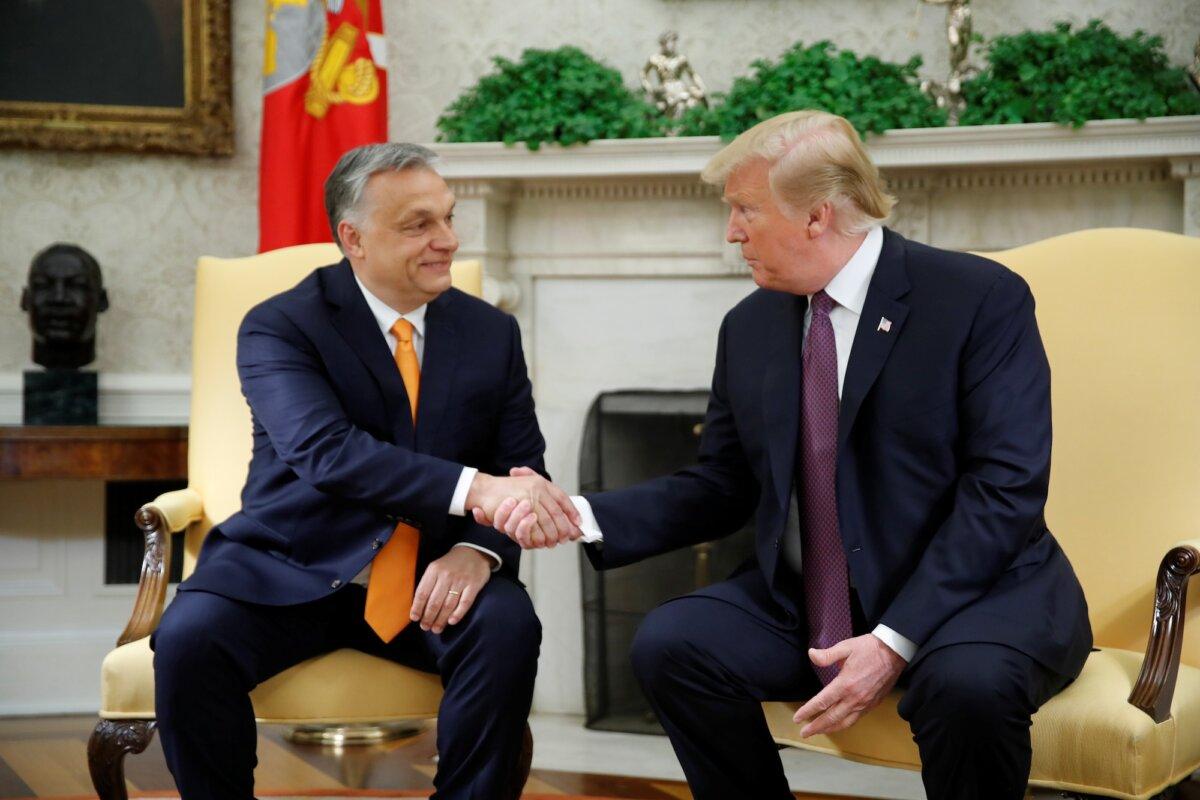
As part of the discussions, Hungary agreed to buy U.S. liquefied natural gas and will work with the United States on nuclear energy.